A March 2026 recall puts a common spring-cleaning tool under fresh scrutiny and gives Canadian owners a clear next step: stop using it and request the official repair kit.
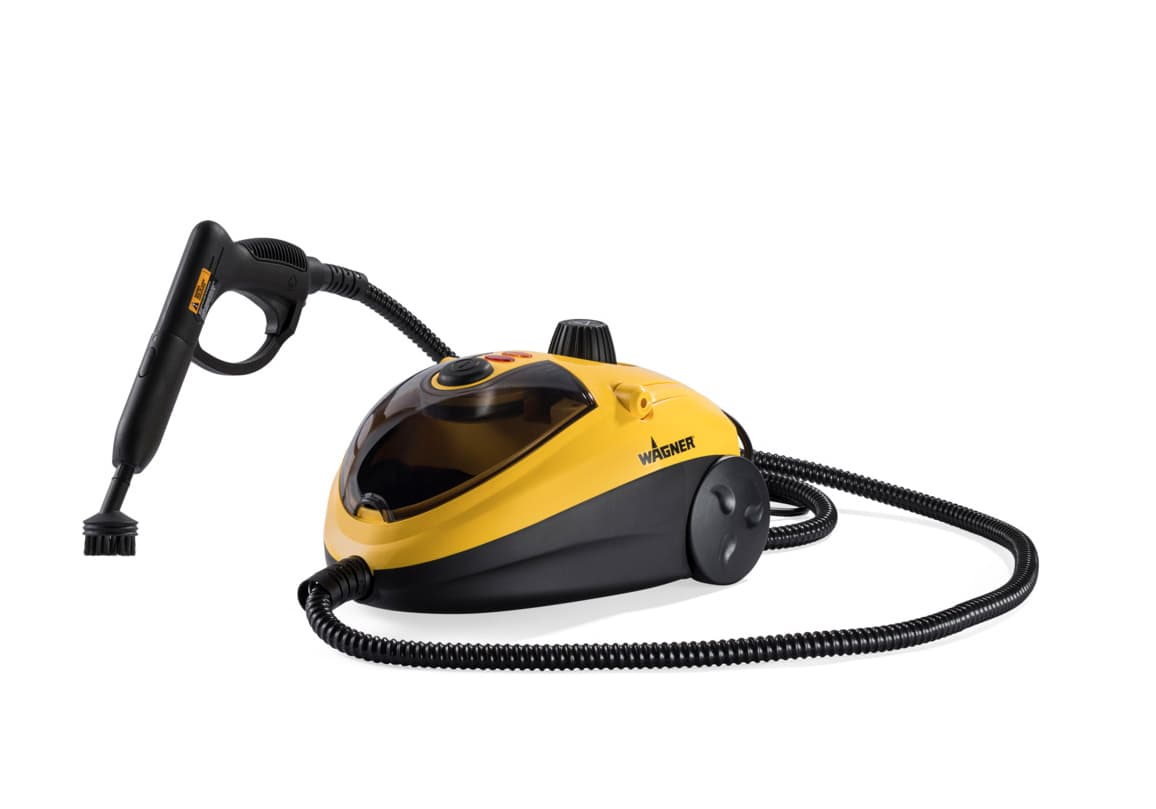
A Wagner steam cleaner, subject to a product recall, due to safety concerns involving its design and operational features. (Credit: Homeowner.ca)
In a March 19, 2026 Health Canada recall notice, Health Canada announced recall RA-81762 for Wagner 900 Series power steamers in coordination with the U.S. Consumer Product Safety Commission and Wagner Spray Tech Corporation. The action covers the 905e Auto Steamer, 915e On-Demand Power Steamer, and 925e Steam Machine Elite Steamer. About 8,000 affected units were sold in Canada, which is enough to make this more than a niche product bulletin for homeowners and renters.
The hazard is specific and easy to understand. The attached hose can become hot, and the nozzle can expel hot water during use and after the trigger is engaged, creating a burn risk at exactly the point where a user’s hands, feet, or face may be closest to the tool. As of March 13, 2026, six Canadian incidents had been reported, with no injuries disclosed in Canada. In the United States, Wagner reported 156 incidents and 50 burn injuries affecting arms, hands, feet, and faces, with some injuries described as first- or second-degree burns.
That timing matters because this is prime spring-cleaning season. Steamers like these tend to come out when people are tackling grout, bathrooms, upholstery, windows, entryways, and other jobs that have been put off through winter. For affected owners, the useful questions are not abstract. They are practical: is your unit part of the recall, how do you identify it, and what is the official remedy path?
The recall is limited to three Wagner 900 Series products, but they share a common platform that should make at-home identification easier. All three use the same yellow-and-black pressurized boiler base with “Wagner” printed on the sides, and all three connect to a hose-and-nozzle cleaning setup. If you have a Wagner steamer in storage, in a utility room, or already out for spring cleaning, the model name is the first thing to check.
The sale window is broad enough that many owners may still think of these as relatively recent purchases. Health Canada says the affected units were sold from December 2021 through February 2026, which spans several full cleaning seasons. In practical terms, that means this is not just a recall for people who bought a steamer in the last few weeks. It also reaches back to households that may have used the machine last year, stored it, and are only now bringing it back into service.
That is part of what makes this recall especially relevant right now. Seasonal-use tools create a false sense of distance. A product can sit quietly for months, then become an immediate safety issue the moment it is plugged in and pressurized again.
Many recalls describe a defect in technical terms that feel remote from everyday use. This one does not. A hose that becomes too hot can make the tool harder to control safely, and a nozzle that expels hot water can turn a routine cleaning pass into an instant burn hazard. What elevates the risk here is that the hot-water release is not limited to one narrow moment. The recall says it can happen during use and after the trigger is engaged, which means the danger is tied to the way the tool behaves under heat and pressure, not just to obvious misuse.
That matters in real homes, not just in test conditions. Steamers are often pointed down toward floors, tubs, tile walls, baseboards, upholstery, and other surfaces while a user leans in close to guide the nozzle. In that position, hands and lower legs are naturally exposed, and the face may not be far away either. The injury pattern reported in the United States fits that reality: these are the body areas most likely to be near a hose or nozzle when hot water escapes unexpectedly.
It also explains why prior uneventful use is not reassuring. A recalled product is not judged safe simply because it worked yesterday. Once regulators and the manufacturer have identified a defect pattern that can produce burns, the relevant question shifts from “Has mine been fine so far?” to “Is mine one of the affected units?” For Wagner 900 Series owners, that is the question to act on now, especially before another round of spring-cleaning chores.
Start with the model designation. If the steamer is a 905e, 915e, or 925e, it is part of the recall. If the label is hard to read, move to the common visual cues: the recalled units share a yellow-and-black pressurized base, Wagner branding on the sides, and the same general hose-and-nozzle format. Accessories can vary and attachments can get mixed up over time, but the base unit is the most dependable place to match what you have at home against the recall description.
Then think about when the machine was bought. The official Canadian sale window runs from December 2021 through February 2026. That range matters because it captures both newer units and products that may already feel like established household tools. A steamer purchased for a renovation cleanup two years ago is still inside the recall window. So is a machine bought more recently for seasonal deep cleaning.
If you are unsure but the model and appearance line up, treat the product as affected until Wagner confirms otherwise. That is the safest interpretation and the most consistent one with how recalls are meant to work. The point is not to prove the defect on your own unit. The point is to recognize that your unit belongs to a recalled product group and respond accordingly.
Under Health Canada’s remedy instructions for the Wagner recall, consumers should stop using the recalled steamers immediately and contact Wagner for a free repair kit. The kit includes a hose sleeve, a nozzle cover, and a funnel. That detail matters because it signals that the official remedy is not simply a warning or registration update. It is a manufacturer-supplied fix involving physical components tied to the product’s safe use.
For homeowners, the safest reading is the most straightforward one: do not finish one last cleaning job, do not keep the unit in rotation for light-duty tasks, and do not improvise your own workaround. A recall like this changes the product’s status immediately. Even if your machine appears to be functioning normally, it should be treated as a known hazard pending the official remedy.
Wagner’s contact channels, as listed in the recall, include:
us-wagnerrecall@wagner-group.comRecalled consumer products cannot be redistributed, sold, or given away in Canada. If your steamer is one of the affected models, the right next step is to stop using it and go through the official remedy process.
Health Canada also invites consumers to report health or safety incidents involving this or other consumer products through its incident reporting system. That is worth remembering during spring cleaning, when seasonal-use tools tend to come back into circulation and real-world incident reports can rise simply because more people are using the product again.
The Wagner recall is not evidence that every steamer is unsafe, but it is a reminder that burn-hazard failures in heat-and-pressure cleaning tools are not unique to one product line. In a separate Health Canada recall for the Dupray Neat Steam Cleaner, the agency warned that boiler overfilling, corrosion, and a pressure-release valve malfunction could lead to rupture and serious injury. The mechanics differ from Wagner’s hose-and-nozzle issue, but the broader pattern is familiar: once a cleaner depends on heated water, pressure, hoses, and handheld delivery, component failures can turn into direct burn risks very quickly.
That is the useful homeowner takeaway this spring. Not broad alarmism. Not a sweeping warning about every appliance in the garage or closet. Just a narrow, practical reminder that steamers and other pressure-based cleaning tools deserve a recall check before seasonal use, especially when they have been sitting idle for months. In this category, the failure points that matter most tend to be the same ones that are hardest to judge by casual inspection: heat, pressure, hoses, valves, nozzles, and release mechanisms.
For Canadian households, the message from the March 2026 Wagner recall is clear. If you own a 905e, 915e, or 925e power steamer, stop using it, confirm the model, and start the repair-kit process with Wagner. The lack of reported Canadian injuries does not make the hazard theoretical. It remains a documented defect pattern with a real burn history in the United States and an active recall in Canada.
This is also exactly the kind of notice that matters more in March than it would in the middle of summer or deep winter. Spring cleaning is when stored tools become active tools again. For Wagner 900 Series owners, that makes this recall immediate, practical, and worth acting on before the next cleaning job starts.