A March 20 Health Canada Recall Is a Reminder To Check Every Corded Blind in Your Home, Not Just the One on the Notice
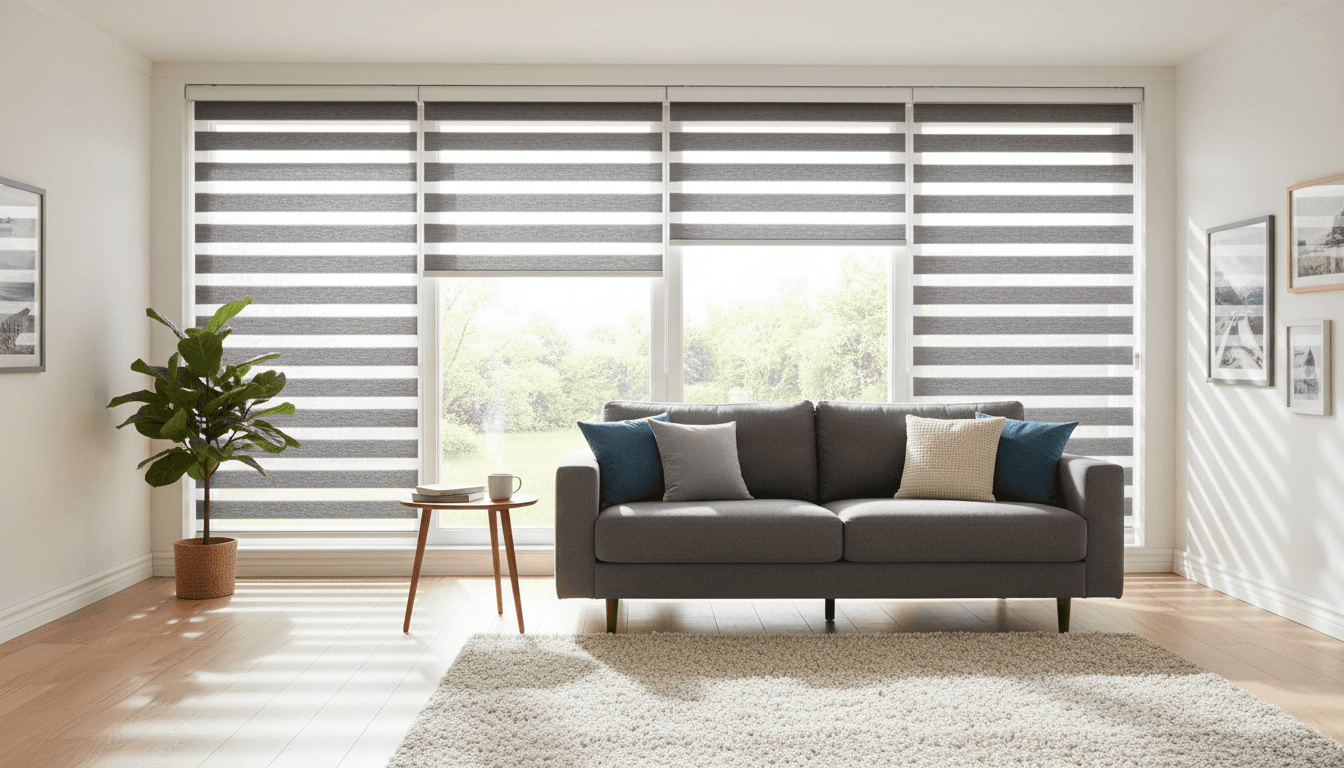
Modern living room light falls through zebra blinds, where sleek design meets hidden cord dangers for children. (Credit: Homeowner.ca)
On March 20, 2026, Health Canada’s recall notice for Zebra Blinds by B&B Blinds said the grey-and-beige striped blinds, operated by a lift/lower cord, do not meet Canada’s Corded Window Coverings Regulations. Health Canada says young children can pull looped cords around their neck or become entangled in them, creating a strangulation hazard, and that small parts can also detach and create a choking hazard. As of March 9, 2026, the company had reported no incidents or injuries in Canada, but consumers were still told to stop using the product immediately and contact B&B Blinds for more information.
That last point matters. A recall does not need a reported injury to be urgent when the failure mode is child strangulation. For Canadian homeowners, renters, caregivers, grandparents, and property managers, this is the real takeaway: corded window coverings remain one of the most stubborn child-safety risks in the home, even after years of public warnings, redesign efforts, and tighter federal rules. The practical response is not panic. It is a calm, room-by-room check of the blinds and shades already hanging in your home.
According to Health Canada’s overview of the Corded Window Coverings Regulations, the rules came into force in 2021, apply to corded window coverings manufactured, imported, advertised, or sold in Canada, and are meant to help eliminate the risk of strangulation associated with these products and protect children’s health and safety.
In plain language, the regulations are not just about putting a warning sticker on a risky blind. They are meant to stop dangerous, child-accessible cords and loops from existing in the first place. That is why this recall deserves attention even in homes that do not own this exact B&B product. If a blind can still create a reachable loop, or if it depends on ageing accessories and perfect installation to stay safe, it belongs on your audit list.
This is also why “it has been there for years and nothing happened” is not a strong safety argument. Window covering incidents are rare, fast, quiet, and catastrophic. A product can sit in place for months or years before the wrong combination of furniture placement, child curiosity, and accessible cord turns it into an emergency.
For a practical screening benchmark, Health Canada’s 2023 recall of HT Blinds Zebra Blinds noted that the product could create loops exceeding 44 cm. Homeowners cannot self-certify regulatory compliance with a tape measure alone, but a long, reachable loop is a clear sign that a blind deserves immediate scrutiny.
As you move from room to room, look for these red flags:
Prioritize children’s bedrooms and play spaces first, then guest rooms, living rooms, and any home where grandchildren or visiting children spend time. For landlords and property managers, turnover units deserve special attention because older blinds often stay in place long after anyone remembers where they came from.
A useful rule of thumb is this: if a child can reach the cord, loop, or lower operating hardware without unusual effort, the product should not be treated as “probably fine” just because it is familiar.
If your blind is the recalled B&B product, stop using it right away and contact the company. If it is not the recalled model but it still has a reachable loop or obvious cord hazard, treat it as a replacement priority rather than a nuisance to deal with later.
Here is the practical order of operations:
A recalled blind is not something to “be extra careful with.” It is something to remove from ordinary use and keep out of resale, donation, and hand-me-down circulation.
This is also the wrong category of problem for improvised DIY fixes. Cutting, re-routing, tying, or modifying hardware without manufacturer guidance can create a different hazard or leave you with a blind that still fails the safety goal. The safer mindset is replacement, repair through the manufacturer where offered, or removal.
For households that have delayed replacement because of cost, the price gap is not always as severe as people assume. In BlindsPlanet’s 2026 Canadian pricing guide, switching from a basic chain or cord mechanism to a cordless spring system typically adds about 10 to 20 per cent to the base price.
At the premium end, Home Depot Canada’s blinds installation cost guide says motorized blinds in Canada start at about $380 per window installed, with higher prices depending on size, material, and features.
A practical 2026 budgeting lens looks something like this:
That does not mean every home needs a full motorized refit. For many families, the smarter plan is phased replacement: start with the rooms children use most, then work outward. Safety does not require the most expensive solution. It requires removing the accessible cord.
This B&B recall is not an isolated event. In a 2022 Health Canada recall covering various corded window coverings, the department again pointed to exposed operating cords that could create loops and put children at risk. The pattern is familiar: different brands, different styles, same fundamental danger.
That persistence is why a “window safety audit” is worth doing even when you have not bought new blinds recently. Window coverings move from house to house. They stay behind after a sale. They get reused in basements, cottages, rentals, and children’s rooms. They are bought second-hand, installed years ago, or inherited with missing parts and missing instructions.
The safest response to this recall is not to memorize one product name and move on. It is to look at every corded blind or shade in your home and ask one simple question: could a child reach something here that can form a loop or wrap around a neck? If the answer is yes, that window covering has moved from décor to safety priority.