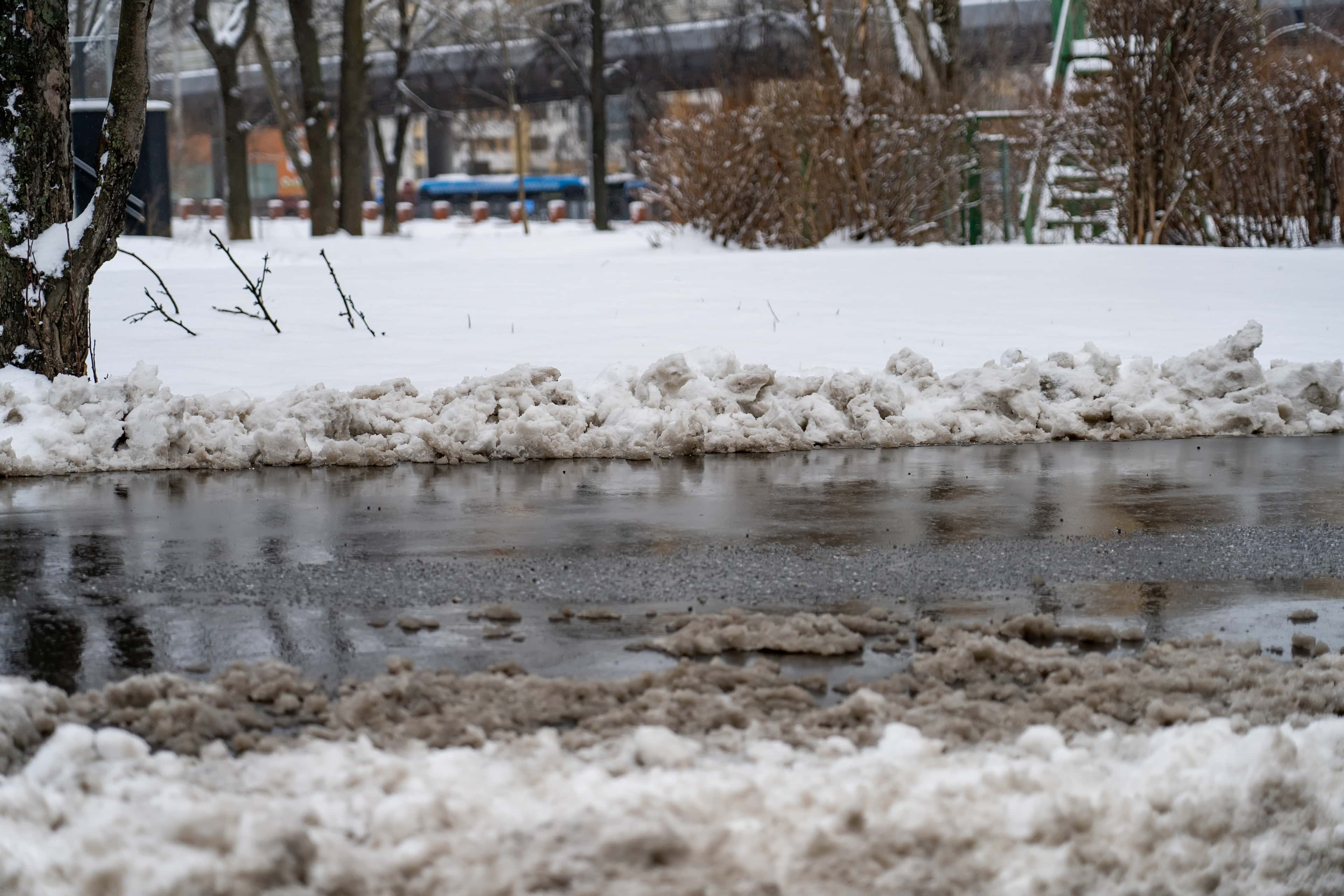
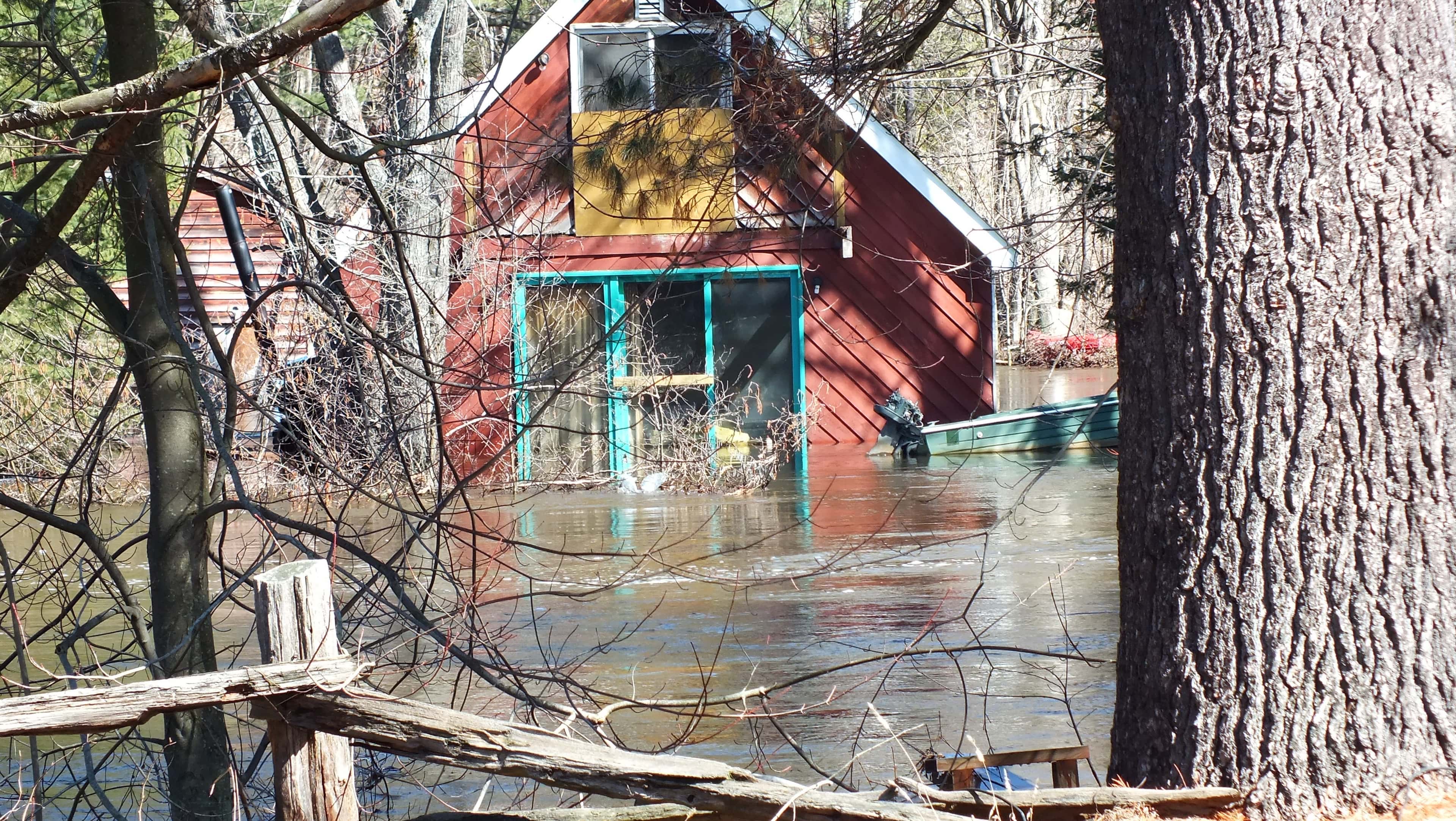
A Tight Prevention Window Before Spring Thaw Turns Snowpack Into Runoff
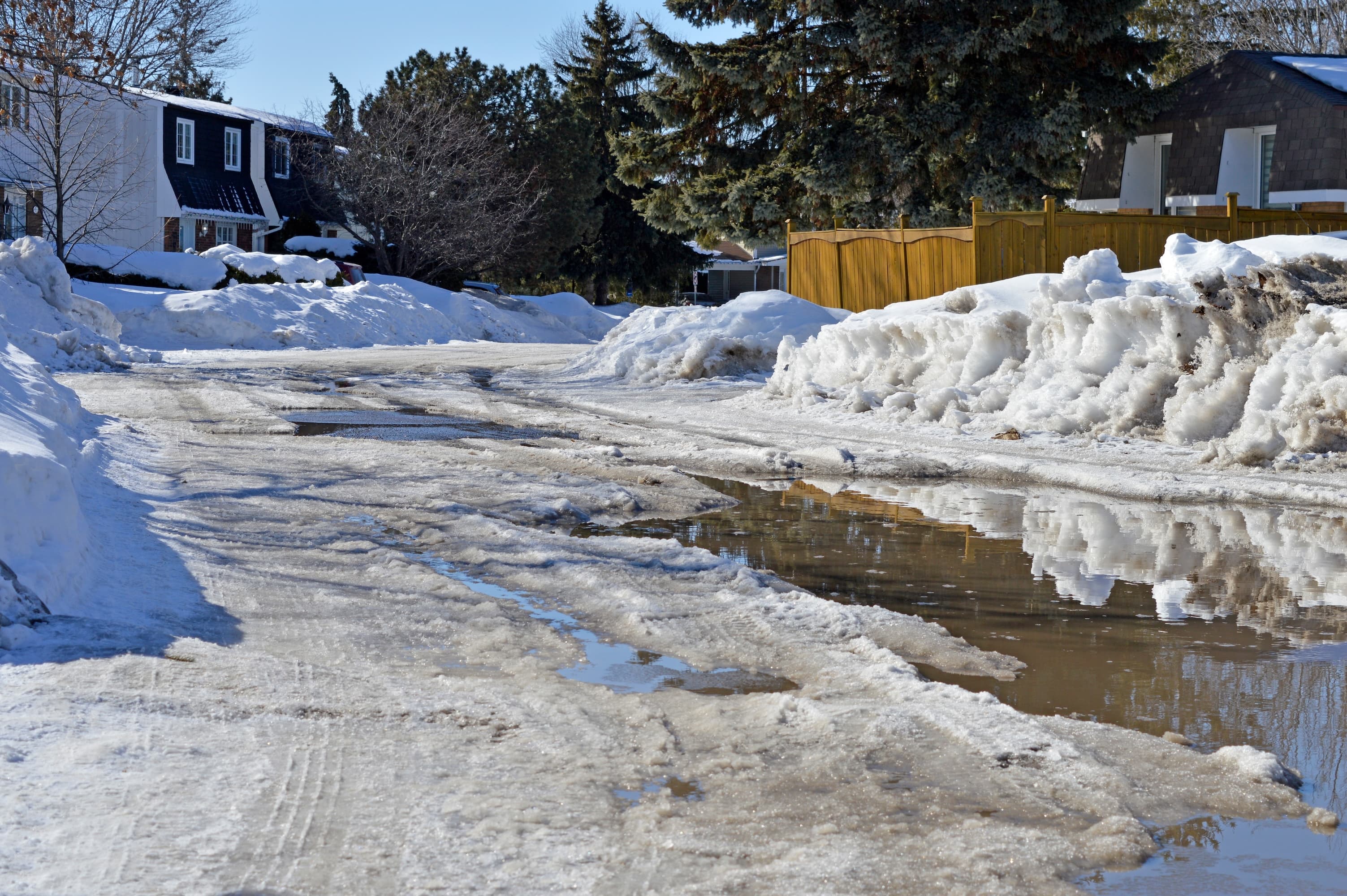
Melting snow and glazed ice pool along a quiet street as spring runoff threatens basements. (Credit: Shutterstock)
On March 3, 2026, in its Spring Safety Message 2026, the Toronto and Region Conservation Authority (TRCA) warned of significant flood potential this spring, pointing to a snowpack comparable to—or exceeding—last year’s levels and holding more water than the same point last season. For homeowners in the Greater Toronto Area and nearby watersheds, the message is direct: rising temperatures, melting snow, and river ice breakup can push water levels higher than usual, and a quick warm spell combined with rain can turn “spring melt” into a localized flood event.
Manitoba is carrying a similar theme, even if the geography looks different. The province’s spring flood outlook for late winter places major river systems on watch with moderate flood risk, a rating that matters because it signals elevated potential for high flows and localized flooding where conditions align. Add in a national spring pattern that points to a colder, wetter start and a later abrupt warm-up, and you get the kind of “stored water → fast release” setup that catches homeowners off guard.
This is a prevention-window story, not a cleanup story. If you’re in a basement home, in a low-lying area, or near a river, creek, or shoreline, the next several weeks are when you can still change outcomes: reduce the odds of seepage, decrease the chance of sewer backup, and avoid insurance surprises by learning what your policy actually covers.
If you’re reading this and thinking, Does this mean my street will flood?—not necessarily. The language in official spring messaging and flood outlooks is about risk conditions, not guarantees. It’s closer to “the ingredients are on the counter” than “dinner is already served.”
Two concepts help translate the warnings into homeowner-relevant terms:
TRCA’s message emphasizes a mix of conditions that can amplify spring risk in its watersheds: cold winter temperatures, widespread river ice, and snowpack with higher water content than last year. For homeowners, that translates into two practical implications:
Even if you’ve “never flooded before,” spring can still produce first-time seepage in basements when meltwater runs along the surface and pools near foundations.
In the February 2026 Flood Outlook Report, Manitoba’s outlook places the Red, Pembina, Assiniboine, Souris, and Qu’Appelle systems at moderate flood risk, reflecting how snowpack, soil conditions, and runoff potential can combine into above-normal spring flows. For homeowners in Winnipeg and along major tributaries—or anyone living in low-lying prairie terrain—“moderate” is best read as:
Spring flooding isn’t just about one storm. It’s often about the sequence.
When March and April stay colder and wetter, snow and river ice persist longer. That keeps water “stored” on the landscape instead of melting gradually. Then, when temperatures finally shift and rain arrives, runoff can spike because:
This is why an “abrupt transition” matters more than a single day of mild weather. As The Weather Network’s Ontario 2026 Spring Forecast describes it, a sluggish March–April pattern with near- to above-normal precipitation followed by a warmer May setup can create exactly the kind of late-release melt that drives short-notice flooding concerns.
A useful way to interpret these warnings without getting lost in meteorology is to picture two parts:
When the reservoir is large and the drain is slow, the odds of water going where you don’t want it—your basement, window wells, garage slab edges, or floor drains—go up.
You can’t control river levels, but you can control how your home handles water on your lot. The goal isn’t to “flood-proof” everything—it’s to reduce the chance that water reaches your foundation, and to limit damage if it does.
Public Safety Canada’s Flood Ready guidance emphasizes simple, high-impact steps like moving valuables out of basements, confirming sump systems work, and keeping key documents accessible—exactly the kind of work that fits this prevention window.
If you have a basement (finished or unfinished), focus on the systems that move water away before it becomes an indoor problem:
Sump pump readiness
Floor drains and plumbing entry points
Basement storage triage
Exterior water management is often where the biggest gains are, and it doesn’t require renos to make a difference:
Eavestroughs and downspouts
Surface grading and melt paths
Window wells and below-grade entries
Driveway and walkway runoff
This isn’t about expecting the worst—it’s about reducing chaos if you need to act fast:
If your home relies on a sump pump to stay dry, treat it like life-safety equipment for your basement: test it early, confirm drainage direction, and make sure you have a backup plan for power interruptions.
Spring is one of the few predictable times of year when policy details become immediately relevant. The core issue for many Canadians is that “flood” is not a single peril—insurers separate water damage into categories, and the category determines whether you’re covered.
The Insurance Bureau of Canada’s flooding and insurance FAQ explains that overland flood coverage—generally referring to freshwater flooding like river overflow or surface water entering the home—may be optional, may not be included by default, and can vary based on location and risk level. For homeowners near waterways or in low-lying neighbourhoods, this is exactly why a pre-thaw review matters: you want clarity before the phone lines light up.
Overland flood and sewer backup are commonly confused because both can end with water in the basement—but they’re not the same loss mechanism. In its sewer backup and water damage explainer, the Insurance Bureau of Canada describes sewer backup coverage as protection against water entering through drains when municipal storm or sanitary systems back up.
From a homeowner perspective, that distinction leads to a practical checklist of questions for your insurer or broker:
The goal of this review isn’t to “optimize” a policy—it’s to avoid assumptions. Even a 10-minute call can prevent a costly misunderstanding when a claim becomes time-sensitive.
Once you’ve done the home-side preparation, staying informed becomes the next best tool—because spring risk is dynamic.
For Ontario homeowners in TRCA watersheds, monitor:
For Manitoba homeowners, keep an eye on provincial outlook updates and river-basin bulletins. Manitoba’s Flood Information portal explains the province’s outlook and bulletin process and is a practical starting point for tracking where conditions are shifting as late winter moves into spring.
Not every risk shows up on a street map, but a few cues should move you into “pay attention” mode:
If you check those boxes, the most valuable mindset is simple: prepare early, then monitor continuously. Spring flood events often become neighbourhood news only after they’ve already begun.
KelownaNow. (n.d.). BC Faces Cool Start to Spring Before Possible Sharp Turn to Heat (Weather Network). Retrieved from https://amp.kelownanow.com/watercooler/weather/news/Weather/BC_faces_cool_start_to_spring_before_possible_sharp_turn_to_heat_Weather_Network
Insurance Bureau of Canada. (n.d.). Flooding and Insurance FAQ. Retrieved from https://insurancebureau.ca/resources/flooding-and-insurance-faq
Insurance Bureau of Canada. (n.d.). Sewer Backup and Water Damage. Retrieved from https://insurancebureau.ca/resources/sewer-backup-and-water-damage
Government of Canada, Publications. (2019). En4-368-2019-eng (PDF). Retrieved from https://publications.gc.ca/collections/collection_2019/eccc/En4-368-2019-eng.pdf
Toronto and Region Conservation Authority. (2026, March 3). Spring Safety Message 2026. Retrieved from https://trca.ca/news/spring-safety-message-2026/
Government of Canada. (n.d.). Flood Ready: Insurance. Retrieved from https://www.canada.ca/en/campaign/flood-ready/insurance.html
Government of Canada, Public Safety Canada. (n.d.). Flood Ready. Retrieved from https://www.canada.ca/en/public-safety-canada/services/emergency-preparedness/preparing-responding-disasters/flood-ready.html
Government of Canada. (n.d.). Build a Basic Emergency Kit. Retrieved from https://www.getprepared.gc.ca/cnt/kts/bsc-kt-en.aspx
Government of Manitoba. (n.d.). Flood Information. Retrieved from https://www.manitoba.ca/floodinfo/
Scribd. (2026, February). February 2026 Flood Outlook Report. Retrieved from https://www.scribd.com/document/1003876201/February-2026-Flood-Outlook-Report
The Weather Network. (2026, February 25). Ontario 2026 Spring Forecast. Retrieved from https://www.theweathernetwork.com/en/news/weather/seasonal/ontario-2026-spring-forecast