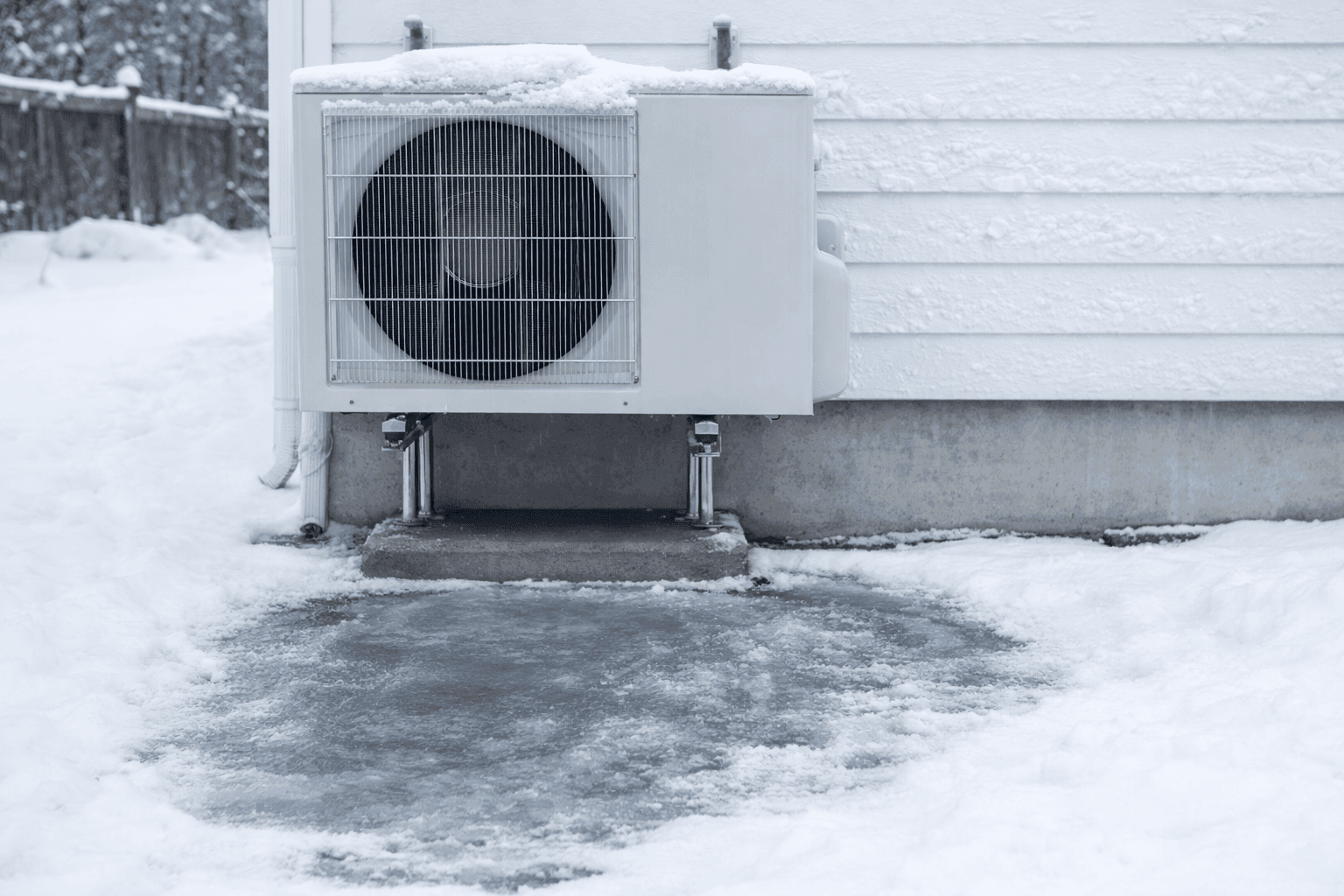
Canadian winters put heat pumps in a uniquely awkward position: they’re trying to pull heat out of cold, damp air, while snow, freezing rain, and refreezing meltwater are working against the outdoor unit every day. The result is that a perfectly healthy system can look “wrong” at first glance—frost on the cabinet, a puff of steam, or the outdoor fan stopping for a few minutes.
At the same time, genuine winter problems are usually not subtle. When a unit gets encased in ice, when snow drifts block the coil, or when roof runoff glazes the fan and coil faster than the system can defrost, you’re no longer in “normal winter operation.” You’re in “equipment damage and slip hazard” territory, and the safest move is often to pause the heat pump and deal with the ice correctly.
This guide is built for homeowners who want a calm, step-by-step way to manage winter risks without overreacting. The focus is narrow and practical: defrost water, ice hazards, clearances, and when to shut the system down. You’ll also get a one-page checklist you can keep on your phone.
A helpful way to think about winter heat pump safety is a simple four-part scan you can do in under a minute:
- Airflow: Is the coil area clear of snow and obstructions?
- Ice load: Is it thin frost, or thick/solid ice that traps parts of the unit?
- Drainage: Is defrost meltwater draining away, or refreezing into a growing ice pad?
- Mechanical risk: Can the fan spin freely, and is anything vibrating or grinding?
If you want a quick rule: thin frost is “observe,” thick ice is “act,” and trapped fan blades are “stop.” The sections below break that down into specific, repeatable actions.