The Three Big Risk Categories
Most winter roofing problems fall into three overlapping categories: ice dams, snow loads, and freeze–thaw damage around vulnerable details (vents, skylights, flashing, and eaves). Understanding which category you’re dealing with helps you respond appropriately—whether that means adding attic insulation, raking off snow, or watching for structural movement.
Ice Dams: When Warm Roofs Meet Cold Eaves
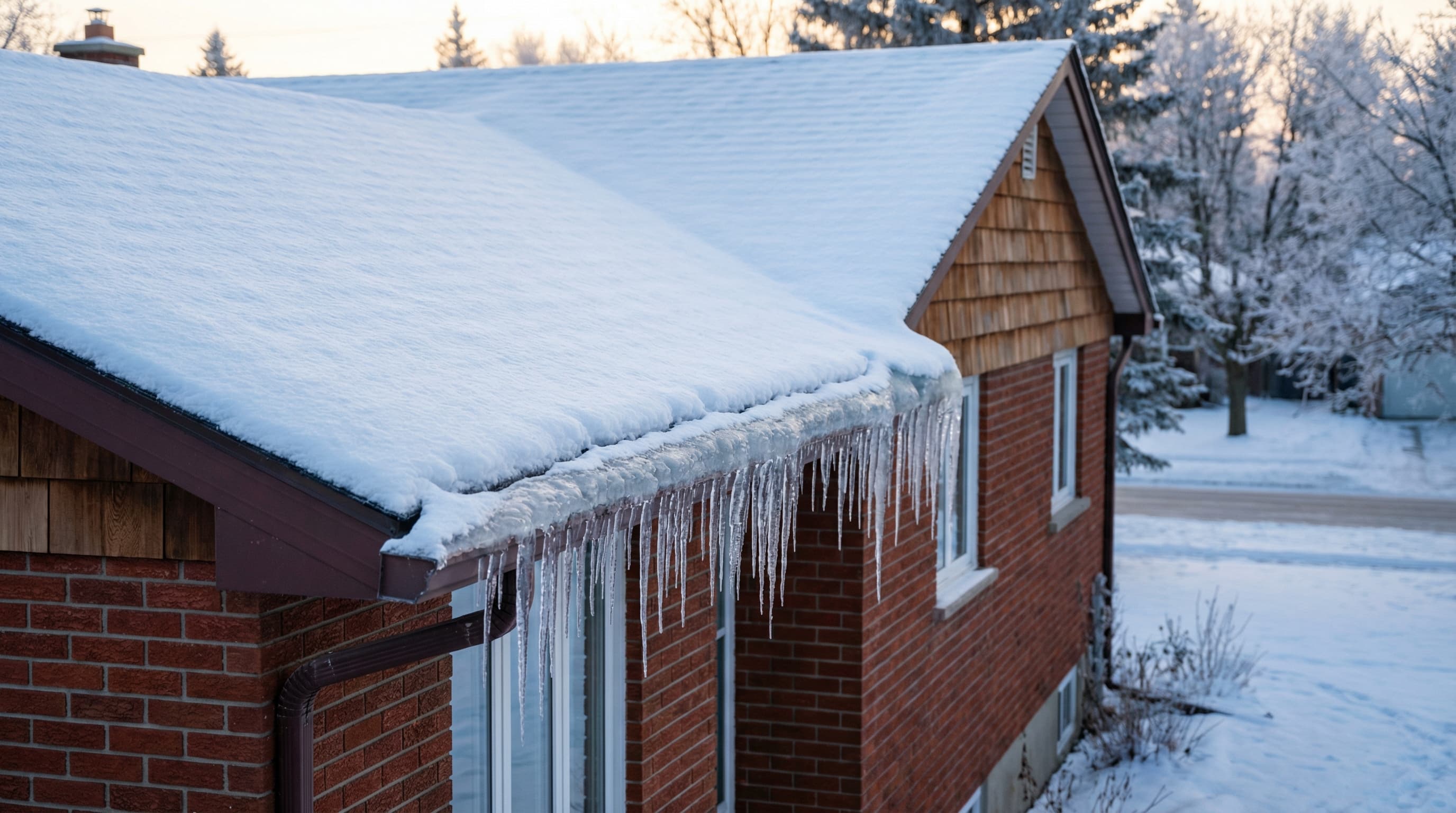
Ice dams form when heat escaping from your home warms the roof surface, causing snow to melt and run down toward the colder eaves where it refreezes and forms a ridge of ice that blocks drainage, as described by Natural Resources Canada guidance. Water backs up behind this ridge and can work under shingles or roofing membranes, leading to leaks, stained ceilings, and damaged insulation.
Key ingredients for ice dams:
- A warm upper roof (from house heat leaks or solar gain)
- Cold eaves and overhangs
- A decent snowpack to melt and refreeze
- Repeated freeze–thaw cycles
Because ice dams are driven by temperature differences across the roof, they tend to be worst on complex roofs with valleys, dormers, or knee walls and in spots above warm rooms like bathrooms or finished attics.
Snow Loads: When Weight Becomes A Structural Problem
Snow load problems are about weight, not just depth. The National Building Code of Canada requires roofs to be designed for minimum specified snow loads of about 1 kilopascal (roughly 21 pounds per square foot), with local values adjusted based on regional snow and rain data according to the National Research Council’s Codes Canada FAQ resource. That means most modern Canadian roofs are engineered for significant snow, but not infinite snow—especially when snow gets dense, saturated with rain, or drifts unevenly.
Provincial codes apply the same logic. For example, the British Columbia Building Code ties roof snow design loads to 1‑in‑50‑year ground snow loads and still insists on a minimum specified roof snow load of 1 kPa, even in lower‑snow regions, as summarized in the BCBC snow load provisions overview.
Falling Snow, Sliding Ice, And Localized Damage
The third risk category involves where snow and ice end up once they move. On steep metal roofs or slick shingles, snow can suddenly release in a sheet, sliding onto decks, walkways, or driveways. The Régie du bâtiment du Québec warns that snow accumulation near roof edges can cause both structural sagging and dangerous slides onto people or property beneath, a concern highlighted in its snow and ice removal safety advice. Ice falling from eaves or valleys can also damage gutters, railings, or vehicles.
Taken together, these three risk categories—ice dams, snow loads, and sliding snow/ice—form the backbone of a winter roof survival plan. The rest of this guide unpacks each one and shows how to respond.