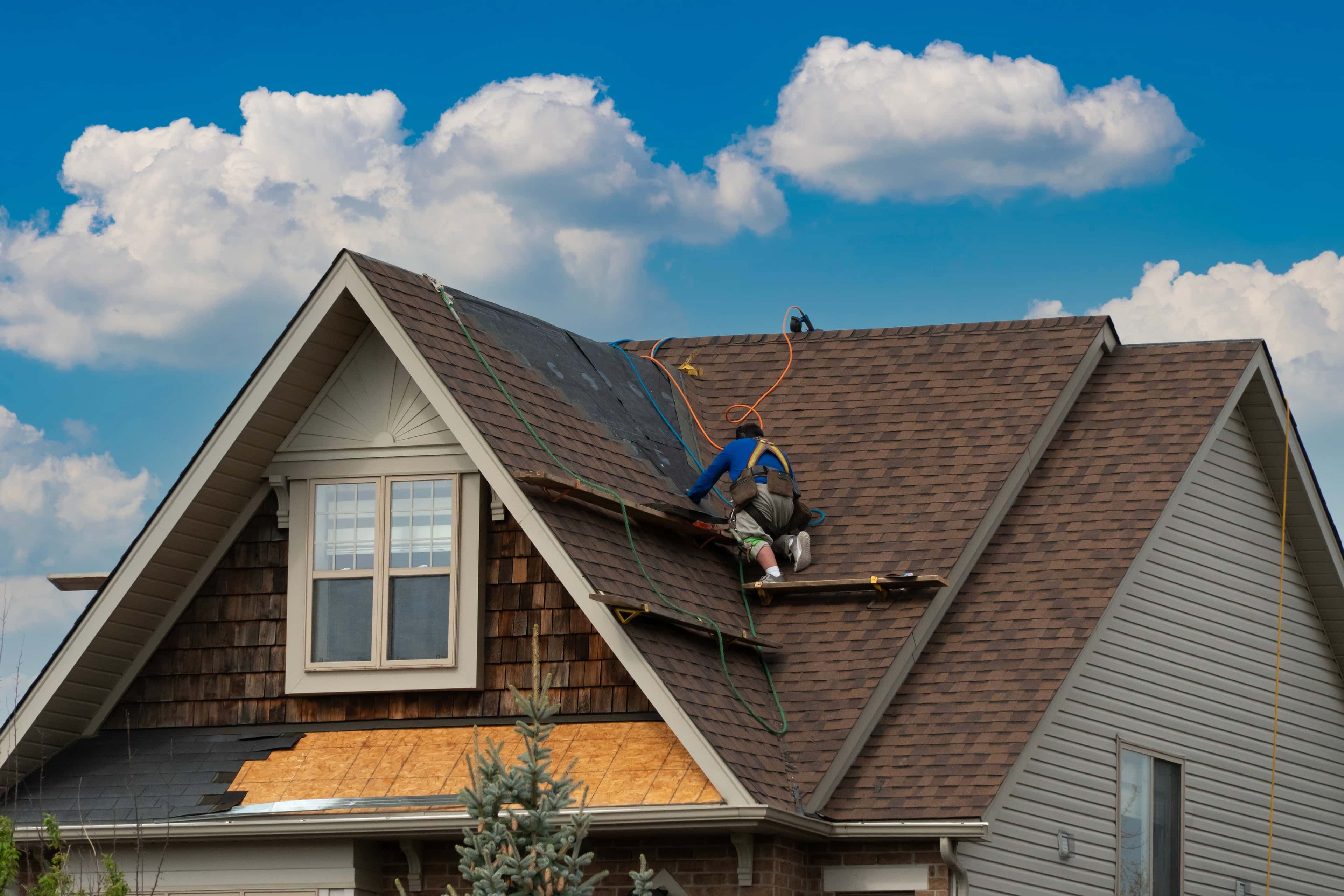


No. Even so‑called flat roofs should be built with a slight slope—often 1–4%—toward drains or scuppers. A truly level roof would allow water to sit indefinitely, which accelerates wear and can overload the structure under heavy rain or snowmelt.


How To Choose The Right Flat Roof For Your Climate, Budget, And Home
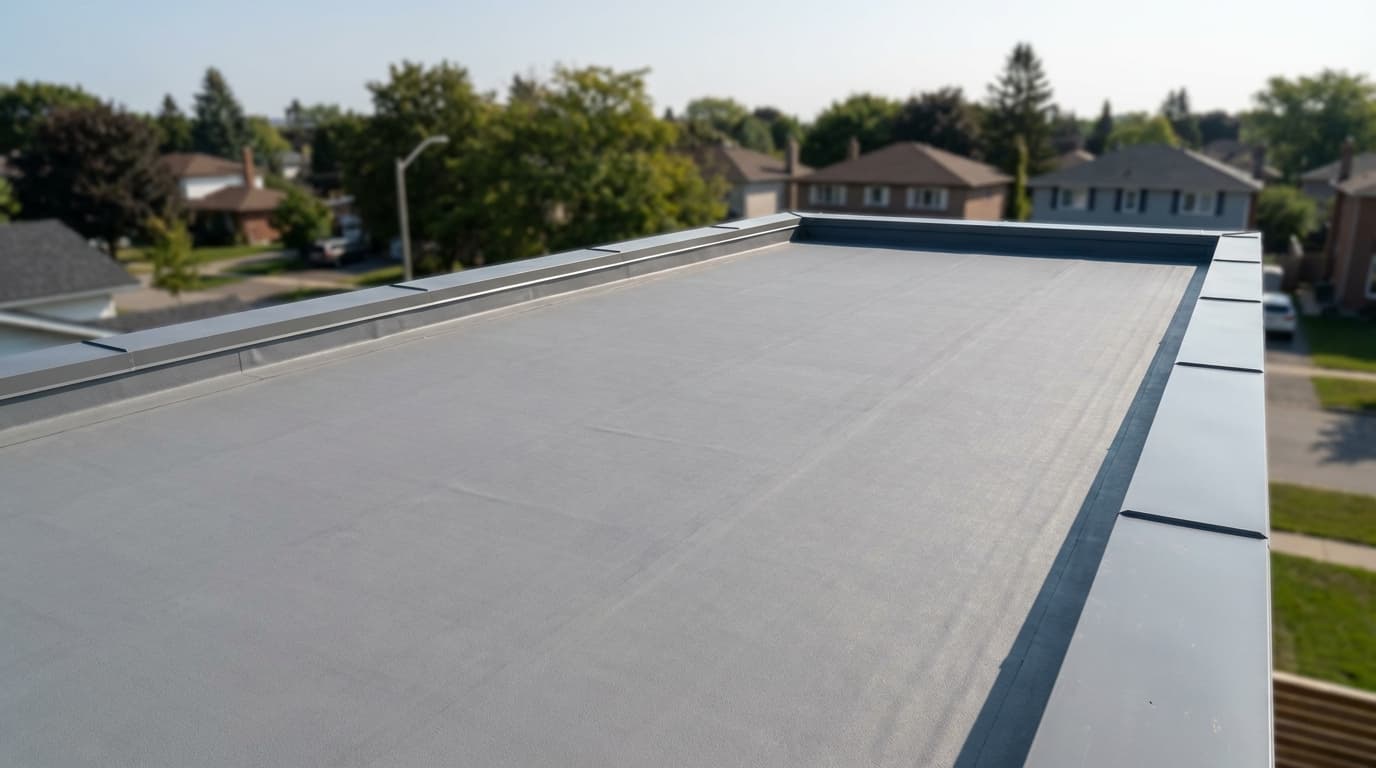
Sleek flat roof edging meets Canadian freeze-thaw reality where drainage and membrane choice decide lifespan. (Credit: Homeowner.ca)
If you picture a Canadian roof, you probably see shingles on a steep slope shedding snow into the yard. But in cities from Vancouver to Toronto to Halifax, millions of homes actually rely on flat or low‑slope roofs—over additions, carports, modern infill houses, and older urban row homes. When those roofs need replacement, homeowners quickly discover a very different vocabulary: torch‑on, modified bitumen, EPDM, PVC, SBS, single‑ply.
“Flat” in residential construction usually means a low‑slope roof—often under about 2:12—where water drains slowly and snow can sit for weeks. Once a roof is that shallow, shingles or standard metal panels no longer work. You need a continuous membrane that can stay watertight under standing water, heavy snow, and big temperature swings.
For Canadian homes, four membrane families tend to dominate the conversation:
Each system responds differently to Canada’s core challenges: deep cold, rapid freeze–thaw cycles, heavy snow loads, summer heat waves, and long installation seasons that often include shoulder‑season or winter work.
This guide is designed to give Canadian homeowners a clear, practical framework for comparing these systems. We’ll look at when a home needs a flat roof, how torch‑on/SBS, EPDM, and PVC behave in Canadian climates, what to expect for drainage, repairs, costs, and maintenance, and how to have a confident, informed conversation with your roofer before you sign a contract.
Most Canadian homes with flat roofs didn’t get them by accident. You’re most likely to see low‑slope or flat roofs in a few situations:
In these cases, using a steeply pitched shingle roof would either look awkward, be structurally challenging, or violate height/ setback rules. A low‑slope membrane roof becomes the simplest way to protect the building while fitting the architectural and zoning constraints.
Even “flat” roofs must slope slightly to drains, scuppers, or gutters—typically 1–4% (about 1/8–1/2 inch per foot). Below roughly a 2:12 pitch, water and snow melt don’t slide off quickly, and any surface irregularities will allow ponding—standing water that remains for more than a day or two after rainfall or thaw.
Because of that, flat roof assemblies typically include:
Whatever membrane you choose has to handle:
If a roof drains poorly or details are weak at parapets and penetrations, even the best membrane will struggle.
Here’s how flat roofs commonly show up on Canadian homes and what that means for your choice of system:
On a flat roof, drainage and detailing are just as important as membrane choice. A poorly sloped roof with undersized or clogged drains will fail early whether it’s torch‑on, EPDM, or PVC.
Torch‑on roofs are usually multi‑layer modified bitumen systems. Installers roll out base sheets and cap sheets made of asphalt that has been “rubberized” with SBS (styrene‑butadiene‑styrene). Using a propane torch, they heat the underside of the sheet until it melts and then bond it to the substrate or previous ply.
Product literature for SBS cap sheets, including the widely used Flintlastic GTS‑FR line from CertainTeed, emphasises how adding SBS rubber to asphalt makes the membrane more pliable and resilient in cold temperatures than traditional built‑up asphalt, while maintaining the toughness that contractors expect from multi‑ply systems.
A typical residential torch‑on assembly might include:
Because the system is multi‑layer, it can be forgiving of small defects in individual plies and is quite resistant to mechanical damage—useful where people may walk on the roof or where tree branches or ice chunks are a concern.
Canada-focused flat roofing guides such as the national overview published by Flat Roofing Insights routinely describe SBS‑modified bitumen as one of the most cold‑tolerant flat roof systems, especially on roofs that see heavy snow loads and frequent freeze–thaw cycles. The rubberised asphalt stays flexible at low temperatures, so surface crazing and cracks are less likely than with older, unmodified asphalt roofs.
In Alberta, local contractors note that SBS membranes stand up particularly well to Calgary’s wild daily temperature swings and chinook‑driven freeze–thaw cycles, with one comparison by CPR Group recommending SBS as the top choice for that climate and positioning EPDM as a good‑value but slightly less durable alternative. Similar reasoning applies in other cold‑interior regions where temperatures can swing 20–30 °C in a day.
For Canadian homeowners, that typically translates to:
Torch‑on work uses open flames near wood framing, siding, and eaves. Always confirm your contractor’s fire‑safety procedures, insurance coverage, and local permit requirements before approving a torch‑applied system.
EPDM (ethylene‑propylene‑diene monomer) is a synthetic rubber used widely on commercial roofs and increasingly on residential flat roofs in Canada. It is usually supplied as large black or white sheets, sometimes big enough to cover a small garage roof in a single piece.
On homes, EPDM assemblies typically involve:
Because EPDM sheets can be very large, there are fewer seams than with multi‑ply systems, which reduces leak points. At the same time, those seams rely on adhesives or tapes rather than heat welding, which makes long‑term seam performance a key maintenance consideration.
Technical testing and field experience summarised by Construction Canada show EPDM membranes performing in Canadian winters down to roughly −45 °C with elongation capabilities above 300%, which explains why EPDM is trusted on many roofs exposed to severe cold and structural movement. The material can stretch significantly without cracking as the building moves or as snow loads cycle on and off.
Material temperature‑range analysis from Flat Roofing Insights notes that EPDM’s glass‑transition point sits around −60 °F, far below typical Canadian winter lows, while some thermoplastic membranes such as PVC and TPO can become noticeably stiffer and more brittle in the sub‑zero range. That deep cold‑flexibility margin is one of EPDM’s biggest selling points for inland and northern climates.
In practical service‑life comparisons, RBS North America’s roof division cites realistic lifespans of about 20–25 years for fully adhered EPDM roofs that are properly installed and maintained, framing EPDM as a long‑life but not permanent solution that still requires periodic seam and flashing upkeep. Many Canadian contractors use that same 20–25 year window for planning purposes, even though some roofs last longer under ideal conditions.
EPDM’s strengths come with a few important trade‑offs:
If you choose EPDM, ask your roofer about seam layout, walkway pads, and colour options (black vs white). Those decisions can dramatically affect long‑term performance and comfort, especially on rooftop decks and over finished living spaces.
PVC (polyvinyl chloride) roofing is a thermoplastic single‑ply system. Like EPDM, it is installed as large sheets over insulation and a deck, but the seams are heat‑welded rather than glued. The result is a continuous plastic skin with seams that, when properly welded, can be as strong as the field membrane.
Typical residential PVC roof assemblies include:
PVC is highly resistant to many chemicals and is naturally reflective, which can significantly reduce summer heat gain—useful on sunny roofs over top‑floor living spaces or conditioned attics.
Thermoplastic membranes such as PVC and TPO naturally stiffen as temperatures drop, so seam welding and detailing become more sensitive in cold weather, and manufacturers like GAF recommend keeping rolls and solvent‑based adhesives warm and performing regular test welds as temperatures change on site to maintain seam quality. Cold, windy rooftop conditions can make this more challenging on residential projects than on large, open commercial roofs.
Canadian comparison resources for flat‑roof membranes, including guidance produced by Compare Roofers Quotes, caution that poorly formulated thermoplastic systems can become brittle and crack in extreme sub‑zero conditions, particularly in interior climates, which is why product selection and detailing matter so much for PVC in colder regions. High‑quality PVC products designed for cold climates, installed by crews familiar with winter procedures, can still perform well across much of Canada.
In practice, PVC tends to be:
If a contractor proposes PVC for a very cold region, ask which specific product line they are using and whether it is rated and warrantied for your climate. Not all PVC formulations behave the same way in −30 °C winters.
On a flat roof, gravity is slow. Any low spot, uneven deck, or poorly positioned drain can create a shallow pond after rain or snowmelt. While all major membrane manufacturers allow some temporary ponding, long‑term standing water accelerates wear:
Torch‑on/SBS roofs often tolerate ponding somewhat better thanks to their multiple layers of bitumen, but even they will age faster if water routinely sits on the roof. EPDM and PVC single‑ply membranes also dislike chronic ponding, particularly if it occurs near seams or around penetrations where adhesives or welds are already under stress.
A resilient flat roof in Canada almost always includes:
Even if your membrane is robust, a single clogged drain can temporarily leave hundreds or thousands of litres of water on the roof after a sudden thaw. Over time, that can exceed the structural design load or exploit tiny defects in seams and penetrations.
When problems do occur, membrane type influences how disruptive repairs will be:
In all cases, chronic ponding or structural movement should be addressed along with the membrane repair. Otherwise, you are treating symptoms rather than root causes.
Build an annual routine: inspect your flat roof every spring and every fall, and after major storms or thaws. Clear debris from drains and scuppers, look for new ponding areas, and check seams, flashings, and parapets for early signs of trouble.
Flat roof pricing in Canada varies by region, access, insulation requirements, and contractor workload, but some patterns are consistent across the country.
A Canada‑wide pricing and performance snapshot from Flat Roofing Insights places fully installed EPDM roofs, including enough insulation to reach roughly R‑20, in the range of about CAD $9–$16 per square foot and notes that the black surface of standard EPDM can increase peak‑season cooling energy use by roughly 15–20% compared with more reflective membranes in sunnier regions such as southern Ontario and British Columbia. Those numbers give a useful benchmark for both budget and operating‑cost comparisons when you are choosing between black EPDM and lighter‑coloured membranes.
Broader Canadian cost comparisons assembled by Compare Roofers Quotes suggest elastomeric and SBS‑modified bitumen systems commonly fall around CAD $10–$15 per square foot installed, while thermoplastic systems like TPO—which are often priced similarly to PVC in many markets—tend to land closer to CAD $8–$12 per square foot. Local labour rates, roof complexity, and fire‑watch or safety requirements can push those numbers higher, especially in dense urban cores.
For a typical Canadian homeowner, that means:
Service life is heavily influenced by workmanship, drainage, and maintenance, but approximate ranges are still useful for planning:
What you do between installation and replacement matters at least as much as the underlying material. Annual inspections, prompt repairs, and keeping drains clear can easily shift a roof from the low end to the high end of its expected lifespan.
* Approximate ranges for typical residential projects; urban cores, remote locations, and complex roofs may cost more.
** Assuming proper design, installation, and routine maintenance in Canadian climates.
When comparing quotes, make sure you are comparing apples to apples: membrane thickness, insulation R‑value, number of plies, type of underlayment, and warranty terms all affect both cost and long‑term performance.
Across most of Canada, late spring through early fall is the most straightforward time to install or replace a flat roof. Temperatures are warm enough for adhesives, sealants, and welds to perform well, and crews are less likely to fight snow, ice, or freezing rain.
Winter‑installation guidance from Ontario‑based Industrial Roofing advises that modified bitumen and PVC (as well as TPO) can often be installed successfully at sub‑zero temperatures when crews follow manufacturer procedures, whereas EPDM’s adhesive‑based seams generally require above‑freezing temperatures to bond properly and are therefore a riskier choice for mid‑winter projects. In practice, many contractors will:
If your roof is actively leaking in January, you may face a choice between a temporary repair and a full winter replacement with a membrane better suited to cold‑weather installation.
For small to medium defects:
In all cases, a reputable contractor should explain why damage occurred (ponding, puncture, ageing detail, structural movement) and what can be done to prevent recurrence.
A simple, repeatable maintenance routine goes a long way:
Keep a “roof folder” (digital or paper) with your warranty documents, product data sheets, photos, and inspection notes. It will make future repairs, resale negotiations, and insurance claims much easier.
A good way to narrow your options is to work climate‑first, then layer on roof use and installation timing:
Very cold interior / Prairie climates
Think Winnipeg, Regina, interior Alberta, northern Ontario or Quebec. Deep cold, large temperature swings, and freeze–thaw cycles dominate. Torch‑on/SBS and EPDM are usually the safest starting points here, with SBS slightly ahead on toughness and EPDM slightly ahead on flexibility.
Coastal or milder climates
Think coastal British Columbia or some Atlantic locations. Winters are less brutal but roofs see lots of rain and wind. PVC or high‑quality SBS systems can both work well, with PVC gaining appeal where summer cooling loads and rooftop heat are a concern.
Southern urban centres
Think Toronto, Montreal, Ottawa, Vancouver, Halifax. These roofs see a bit of everything—snow, rain, heat waves. EPDM, SBS, and PVC can all be candidates, and your decision may lean more on energy, aesthetics, or access (e.g., whether the roof will host a deck).
Installation timing constraints
If you already know the roof will be replaced in winter, material choice may lean toward systems that tolerate cold‑weather installation better.
Regardless of which system you lean toward, ask your roofer:
If two quotes use different systems (e.g., one EPDM and one torch‑on), ask each contractor to explain why they prefer that system for your specific roof, not just in general. Their reasoning—especially about drainage, movement, and access—often reveals more than the material label itself.
No. Even so‑called flat roofs should be built with a slight slope—often 1–4%—toward drains or scuppers. A truly level roof would allow water to sit indefinitely, which accelerates wear and can overload the structure under heavy rain or snowmelt.
With good design, installation, and maintenance, most modern flat roofs fall in the 20–30‑year range. EPDM commonly lands in the 20–25‑year bracket, while well‑installed SBS or higher‑end PVC systems can reach or exceed 30 years. Poor drainage, neglected maintenance, or repeated minor damage can cut those numbers in half.
For deep‑cold climates with large temperature swings, EPDM and SBS‑modified bitumen are usually the safest bets. EPDM’s rubber remains flexible at very low temperatures, while SBS combines asphalt toughness with improved cold pliability. PVC can work in cold regions if the product is designed for it and installation is meticulous, but it is generally more sensitive to formulation and detailing.
Not necessarily. Torch‑on/SBS is excellent for complex roofs, high foot traffic, and harsh freeze–thaw, but EPDM can be a great fit on simple roofs in very cold regions with minimal penetrations. Your roof’s shape, drainage, and future uses (like decks) often matter as much as climate in choosing between them.
It’s possible, but trickier and often more expensive. Torch‑on/SBS and some PVC/TPO systems can be installed in sub‑zero temperatures when crews follow cold‑weather procedures. EPDM is generally more limited because its adhesives and seam tapes need warmer conditions. If you have the choice, shoulder‑season or summer work is almost always simpler.
On sunny, southern‑exposed roofs in warmer parts of Canada, black EPDM can noticeably increase rooftop temperatures and cooling loads. On unconditioned spaces (like garages) or in very cold, cloudy regions, that may not matter. For top‑floor living spaces in sunnier cities, consider white membranes, reflective coatings, or additional insulation to control heat gain.
PVC can handle foot traffic, but only if it’s protected properly. Rooftop decks typically require a protection layer (such as a heavy‑duty protection board or paver system) to prevent furniture or deck supports from puncturing the membrane. The same is true for EPDM and SBS—no membrane likes point loads from chair legs or posts.
Twice a year is a good baseline—once in spring after snow has melted and once in fall after leaves have dropped. You should also inspect after major storms, unusual thaws, or wind events. Frequent, quick inspections are far cheaper than discovering a slow leak after it has damaged insulation and interior finishes.
Ponding water is standing water that remains on the roof more than about 24–48 hours after rainfall or snowmelt. Occasional shallow puddles that clear quickly are normal, but areas that stay wet longer signal poor drainage and can shorten the roof’s life. It’s especially concerning around seams, parapets, and penetrations.
Sometimes. Many codes allow one overlay (a new roof installed over an existing membrane) if the old system is stable, dry, and well adhered. However, adding layers increases weight and can hide problems. A professional assessment is essential, and in some cases a full tear‑off is the safer long‑term choice.
Flat roofs are less forgiving of mistakes. Because water drains slowly, flaws in seams, flashings, or drainage show up more quickly as leaks. That doesn’t mean they have to leak—well‑designed and well‑maintained flat roofs can be very reliable—but the bar for detailing and maintenance is higher than for a simple shingle roof.
Very important. Insulation affects energy performance, comfort, and condensation risk. Flat roofs often use rigid insulation above the deck to keep the membrane warmer in winter and reduce ice and condensation. Upgrading insulation during a re‑roof is usually much more cost‑effective than trying to add insulation later from the interior.
It depends on your climate and how the space below is used. In sunnier southern regions, a white roof (PVC or coated SBS/EPDM) can reduce cooling loads and improve comfort in top‑floor rooms. In very cold, cloudy regions or over unconditioned spaces, a darker roof may be acceptable and can help with snowmelt. Insulation and air‑sealing should be addressed first, regardless of colour.
For most Canadian homes, no. Flat roofing systems are very detail‑sensitive, and small mistakes around drains, parapets, and penetrations can lead to expensive damage. DIY can make sense for small, low‑risk structures like sheds if you have experience and follow manufacturer instructions, but primary house roofs are best left to qualified contractors.
Both matter, but the installer usually matters more. A mid‑range membrane installed by a meticulous roofer who understands flat‑roof detailing will almost always outperform a premium product installed poorly. Look for contractors with strong references, photos of similar projects, and a clear explanation of how they handle drainage, flashing, and maintenance.
A long warranty is helpful, but only if you understand what it covers. Many warranties are prorated, exclude ponding water, or require documented maintenance. It’s usually better to choose a trustworthy contractor and a system that suits your climate and roof geometry, then use the warranty as a secondary tie‑breaker rather than the primary decision factor.