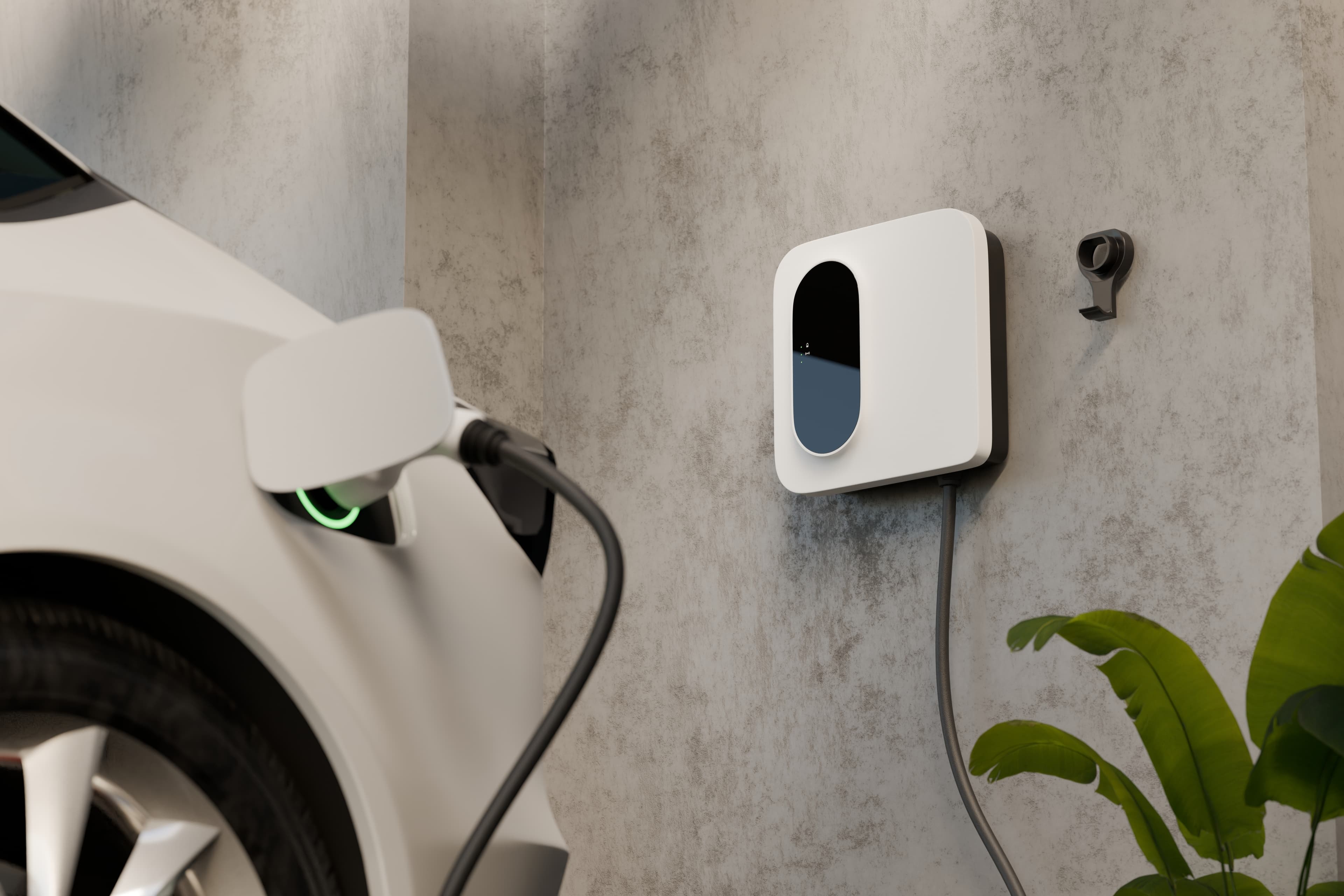
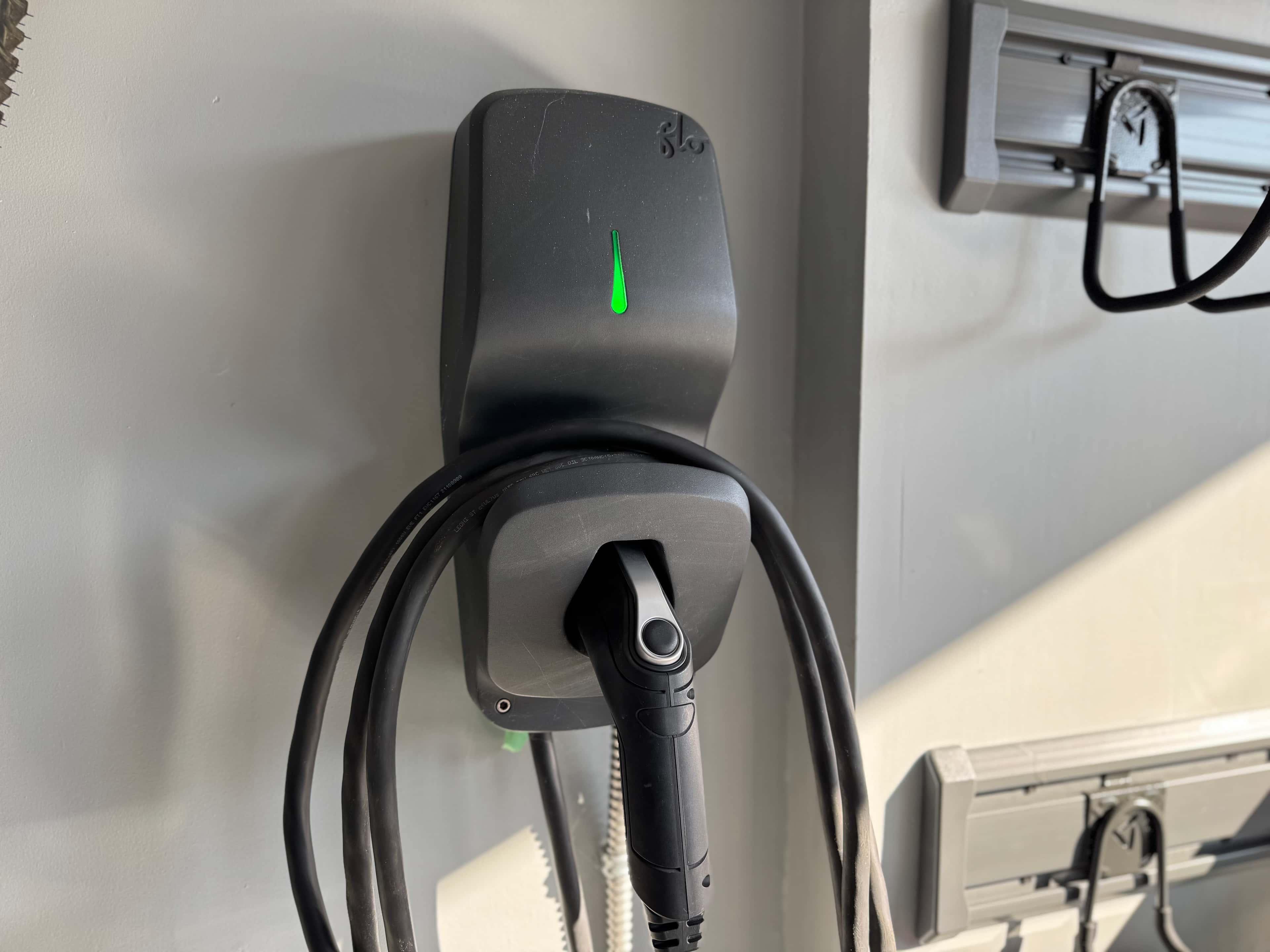
Cord Length, Mounting, Connector Choice, and Condo Constraints
The best EVSE on paper can still be the wrong EVSE in your driveway.
Fit is where Canadian living shows up: winter handling, snowbanks, tight garages, and the reality that your next car might not have the same charge port location as your current one.
Cord Length: Measure First, Then Shop
Cord length is the difference between “easy” and “every charge is a hassle.”
The Government of Québec guidance on choosing a home charging station notes that home station cables are often in the 6–8 metre range and flags a very practical point: longer and thicker cables can be harder to handle in winter, which is exactly what driveway parkers discover the first time a cord stiffens at −20°C.
A quick measurement approach that works in most homes:
- Stand where the EVSE would mount.
- Measure to the charge port with the vehicle parked in your most common position.
- Add slack for cable routing (you don’t want a taut cable) and for the fact that you won’t always park perfectly.
Then decide: Do you want the cord to reach both “forward-in” and “reverse-in” parking positions? If yes, treat that as a requirement, not a nice-to-have.
A longer cable isn’t automatically better—especially outdoors—because winter stiffness and cable management become part of the daily routine.
Mounting Position: Think About the Cable Path, Not the Wall
When people regret an EVSE install, it’s often because of cable handling:
- The holster is too low, so the connector drags in slush.
- The unit is mounted where the cable crosses a walkway.
- The cable has to bend sharply right at the connector, stressing it over time.
When comparing EVSE physical dimensions, focus on:
- Whether the cable can hang in a clean loop without touching the ground
- Whether the holster position matches your vehicle’s port location
- Whether the unit can be mounted at a height that works with snow accumulation and hose-down cleaning
Connector Choice: Default to Compatibility Unless You’re Certain
For most Canadian households, the “safe” default logic is:
- Choose a connector that matches your vehicle today and won’t paint you into a corner if your next EV is different.
- If you’re a multi-vehicle household (or you host guests), lean toward broad compatibility.
Many Canadian home charging stations use J1772 for broad compatibility, while Tesla-focused setups may use NACS. Adapters exist, but the practical decision is about friction: will you be using an adapter every day, in gloves, in winter?
Condo and Strata Reality: Approval and Capacity Come Before Shopping Carts
In multi-unit buildings, your personal panel capacity is only part of the story. Buildings often have shared electrical constraints and governance rules that dictate how (and whether) EV charging can be added.
British Columbia provides a clear example of the “planning-first” approach: the BC government strata EV charging guidance outlines structured processes and planning requirements that can include formal electrical capacity assessments and timelines, which is a useful reminder that condo and strata installs are frequently a building project—not just a unit upgrade.
If you live in a condo/strata anywhere in Canada, treat these as early steps:
- Ask what approvals are required (and what drawings or quotes you must submit).
- Ask whether the building has an EV plan or capacity study.
- Ask whether the building requires load management or a specific approach to metering and billing.
Doing this before you buy can save you from owning a charger that’s technically great—and administratively impossible.