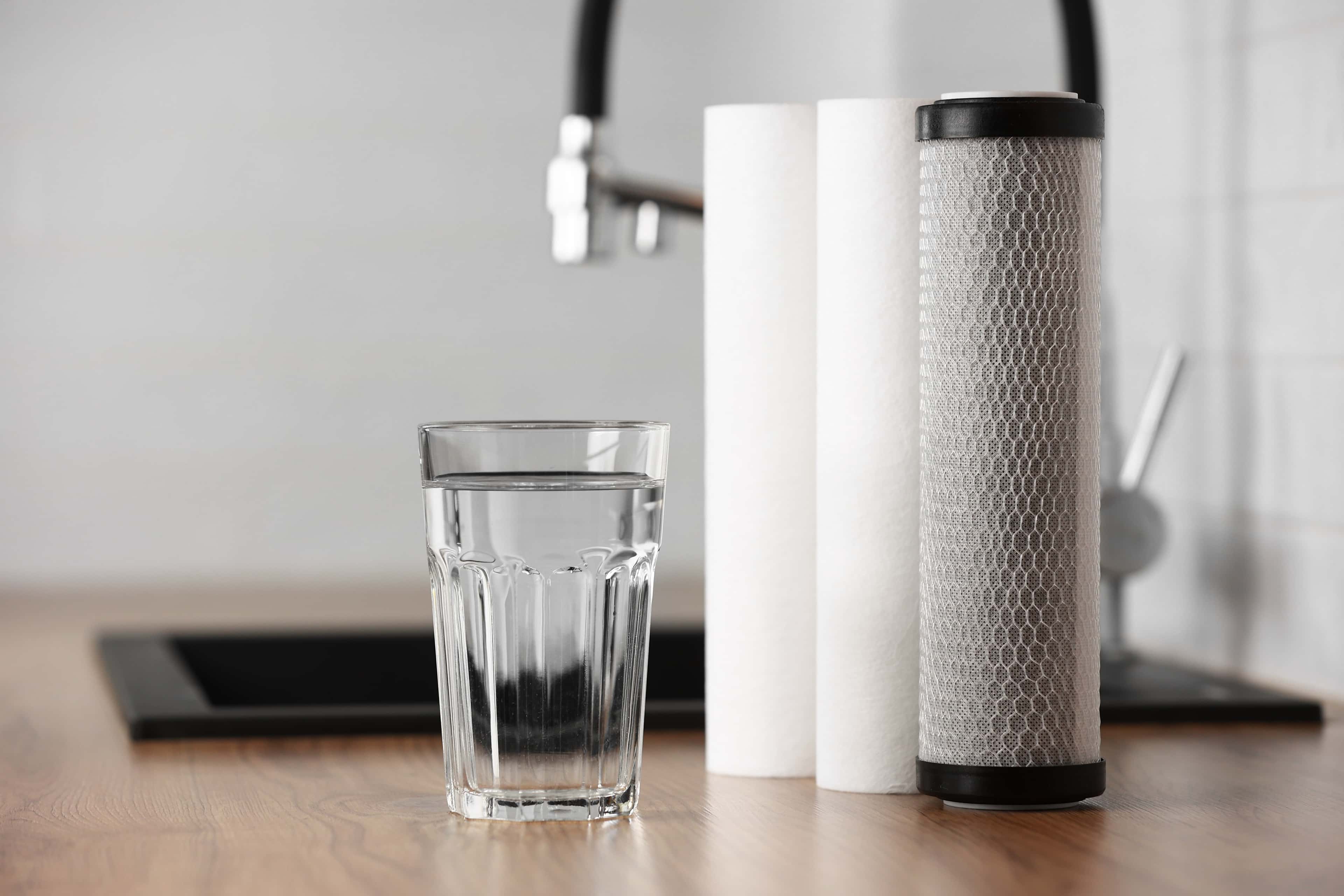


In most Canadian homes, RO is used as a point-of-use system—typically under the kitchen sink with a dedicated faucet. Whole-house RO exists, but it’s far less common and usually requires more complex pretreatment, storage, and drainage planning.


A Good, Better, Best Framework for Canadian Homes and the Total Cost to Own It
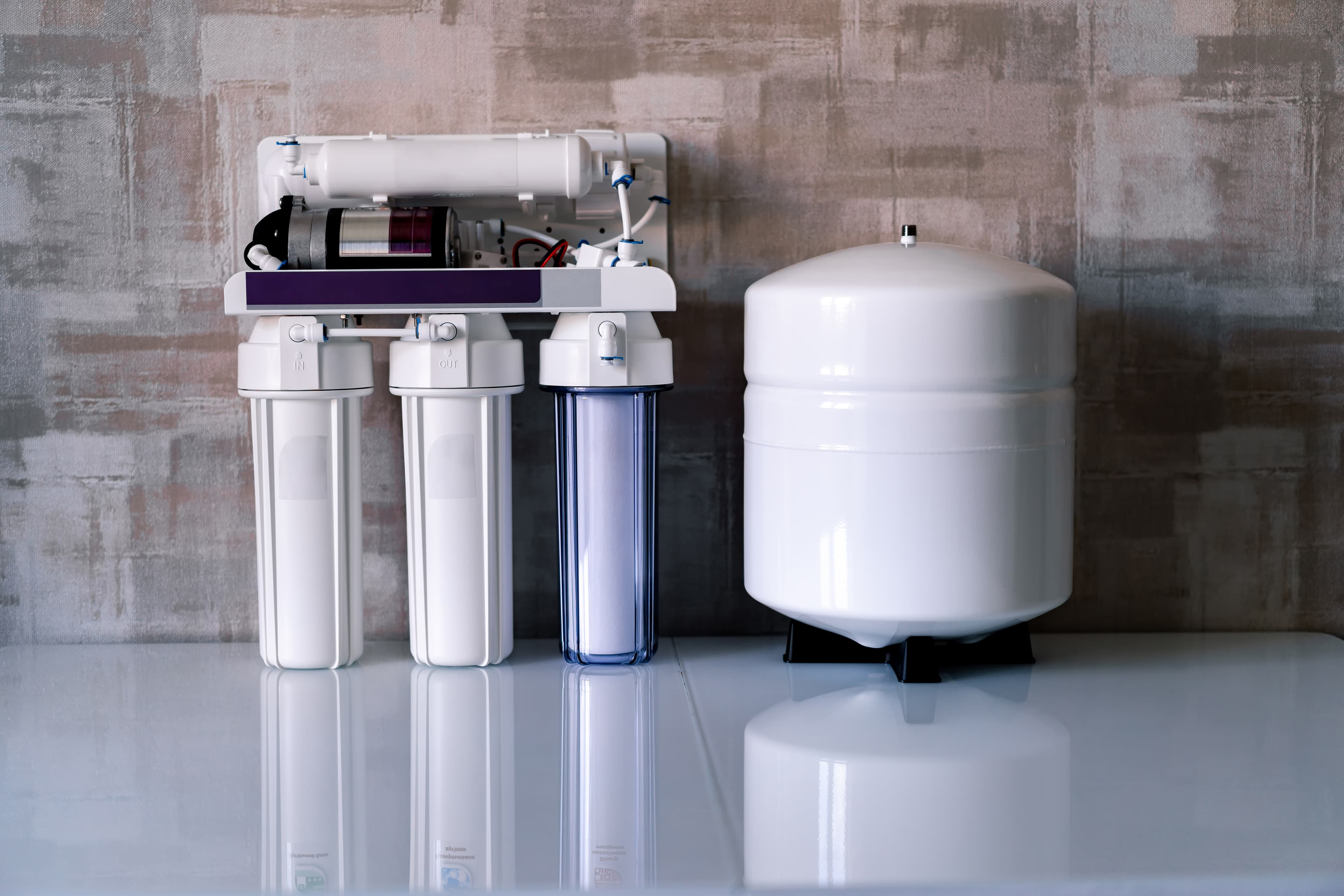
Reverse osmosis unit under the sink makes every glass a choice between tanks, space, and long-term filters. (Credit: Shutterstock.com)
Most homeowners start looking at reverse osmosis (RO) for one of three reasons: they don’t like the taste or smell of their tap water, they want an extra layer of contaminant reduction for peace of mind, or they’re tired of hauling bottles and jugs. In Canada, that last point can get especially old in winter, when “quick errands” feel like missions.
The challenge is that the category is packed with systems that look nearly identical at a glance—especially online. You’ll see “5-stage,” “7-stage,” “10-stage,” “alkaline,” “UV,” “tankless,” “high-flow,” and a dozen different gallons-per-day ratings. Without a structure, it’s easy to overspend on features you won’t notice, or underspend and end up frustrated with slow production, cramped cabinets, and filters that are hard to source.
This guide is built to make the decision practical. We’ll compare “good,” “better,” and “best” RO options the way a homeowner actually experiences them: how much space they take, how fast they deliver water at the faucet, what they cost to maintain, and how likely you are to need a pro to install or troubleshoot.
To keep comparisons grounded, it helps to know that NSF (National Sanitation Foundation) lays out the main NSF/ANSI standards for residential water treatment in plain language, which makes it easier to separate meaningful certifications from pure marketing.
Before you compare brands, start by deciding what kind of homeowner problem you’re solving. RO can be a great fit, but it isn’t a magic device that makes any water safe—especially if the source water has microbiological risk.
A key expectation-setter is that in the ANSI Webstore’s NSF/ANSI 58-2022 scope description the standard assumes the water being treated is microbiologically safe and of known quality, which is why under-sink RO is best thought of as “polishing” your drinking water rather than rescuing unsafe water.
With that in mind, here’s the framework I use for Canadian homes:
Good (tank + standard cartridges) is the simplest, most common under-sink setup. It’s best when you have reasonable cabinet space, you want predictable maintenance, and you’re okay with a moderate fill rate (water is stored in a small tank for quick dispensing).
Better (tank system with higher flow and smarter prefiltration or add-ons) is for households that actually use a lot of drinking water—coffee, tea, cooking, refilling bottles—and want fewer “waiting” moments. It’s also a common tier for people who want taste tweaks (like remineralization) without committing to the complexity of tankless.
Best (tankless + premium extras) is for space-constrained kitchens and homeowners who care about on-demand flow, cleaner under-sink layouts, and feature bundles (like built-in pumps, higher output, and optional UV). It can be excellent—but it can also lock you into proprietary filters and power requirements.
To pick your tier quickly, ask yourself five constraint questions:
If you’re on a private well (or a cottage water source), treat this as two separate decisions: making your water microbiologically safe first, then polishing taste and reducing specific contaminants at the kitchen sink.
The “good” tier is the classic under-sink package most people picture: a set of prefilters, an RO membrane, a small storage tank, and a dedicated drinking-water faucet. It’s common because it’s understandable, serviceable, and usually forgiving.
A concrete example of what this tier looks like in Canada is Rainfresh’s RO4100 under-sink system listing which advertises a complete kit in the mid-$300 CAD range with a 100 GPD membrane, storage tank, faucet, and installation fittings.
You’re buying a buffer. The storage tank is the hidden hero: RO filtration is inherently slower than turning on a normal tap, so the tank stores treated water so the faucet feels “instant” for a glass or two.
You’re buying straightforward maintenance. Traditional systems often use standard-style housings and cartridges, so the replacement process is usually: shut off feed, relieve pressure, swap filters, sanitize if needed, and go. If you’re a DIY homeowner who’s comfortable under a sink, this tier is approachable.
You’re buying compatibility with common plumbing. Many kits include fittings meant to work with typical under-sink supply lines and drain connections, which matters in Canadian homes where you’ll see everything from older copper to newer PEX and braided supply lines.
Under-sink space gets eaten quickly. A tank plus multiple housings is not tiny. In smaller condos, or kitchens with pullout garbage systems, the physical footprint is often the deciding factor.
Output is “good enough,” not luxurious. A tank system can feel great for a couple glasses, then sluggish if you’re filling large bottles back-to-back. If your household is constantly refilling water bottles, you’ll feel the limits.
Water pressure matters more than most people expect. Many systems specify minimum and maximum feed pressure, and if you’re below the minimum you can end up with slow production and poor tank fill. In practical terms: a basic tank system is best when your home’s pressure is stable and healthy.
Plan your cabinet like you’d plan a small appliance: measure the open floor area, note where the garbage/recycling bins slide, and confirm you can still reach shutoffs and cleanouts once the tank is in place.
The “better” tier is where RO systems start feeling less like a project and more like an appliance. This tier isn’t defined by one feature—it’s defined by a combination of better experience and more predictable ownership.
Looking at Canadian retail shelf reality helps: Home Depot Canada’s reverse osmosis category shows a broad spread of under-sink RO options, including higher-flow models, alkaline/remineralization variants, and UV-equipped packages that typically land in the mid-hundreds to around the thousand-dollar range depending on the configuration.
Faster delivery or faster recovery. Some systems improve “how fast you can get water now” (flow at the faucet), while others improve “how fast the system refills what you used” (recovery rate and tank refill). For homeowners, both feel like “less waiting.”
Smarter prefiltration. A better-designed prefilter setup can reduce the things that shorten membrane life (like sediment and chlorine/chloramine), which is one of the few upgrades that can pay you back over time.
Taste tuning (remineralization/alkaline). Many Canadian-sold systems position remineralization as a premium feature. The practical homeowner version of this is: the water often tastes less “flat,” especially if you’re sensitive to RO water’s stripped-down flavour profile.
Optional pumps for marginal pressure. If your home has pressure that’s technically workable but not great (some condos, older neighbourhoods, certain well setups), systems with a booster pump can help the RO membrane do its job more efficiently.
“More stages” is not automatically “better.” A better system is one that improves your experience (space, flow, maintenance) and aligns with certifications that match your concerns.
Most homeowners over-focus on the sticker price because it’s visible and easy. The better way to think is: upfront cost + install cost + consumables + risk cost (service calls, proprietary filters, and “surprise parts”).
One helpful clue for planning is that some premium listings include replacement filter bundles, and when you scan Waterdrop’s “system” tagged collection pages you can see how certain high-end setups are marketed alongside filter combos, which is a subtle reminder that ownership cost is inseparable from the hardware choice.
Use this as a planning range, not a precise forecast:
Total Cost (5 years) =
Equipment + Installation + (Annual filter spend × 5) + Membrane replacements + Optional service calls
Where Canadian homeowners usually get surprised:
How to read this table: the ranges overlap because the same homeowner outcome can be achieved with different configurations. A modest tank system with easy filters can beat a fancy tankless unit on total cost, while still producing water you’re happy to drink.
DIY vs pro install. Many homeowners can install a tank system themselves if they’re comfortable with plumbing fittings and careful leak testing. But if you’re paying a plumber (or using big-box installation services), that can shift the total cost enough that the “better” tier becomes harder to justify unless you’ll feel the performance difference daily.
Filter design and availability. Standard-style cartridges are usually easier to shop, easier to stock, and easier to substitute if one supplier is out. Proprietary cartridges are often faster to change, but they can tighten your options and raise your annual spend.
Household behaviour. If your household uses RO water like it’s a normal tap—cooking pasta water, filling pet bowls, making ice, filling multiple bottles—you’ll stress an entry-level system faster, and you’ll notice the convenience upgrades in better/best tiers more.
If you only do one “math step,” do this: estimate your annual filter cost and multiply it by five, because that single number often rivals the upfront system price.
Most RO regret isn’t about water quality—it’s about installation friction. This is where you win by checking a few basics up front.
A simple homeowner test: open your cabinet and mock the footprint with a shoebox (tank) and a cereal box (filter assembly). If that already feels crowded, you’re a tankless candidate.
Most under-sink RO systems use a dedicated faucet, which means:
Every under-sink RO needs a drain connection for rejected water. That means:
Any under-sink water device can cause cabinet damage if it leaks—if you’re not confident in your installation skills, paying for a proper install can be cheaper than repairing swollen MDF cabinet floors.
If you’re considering tankless, UV, or a pump-assisted system, do a simple check:
A buyer checklist should make bad options obvious. The goal isn’t to find a “perfect” system—it’s to find one that is verifiable, maintainable, and compatible with your home.
One of the strongest signals is independent certification: when you see an RO system certified to NSF/ANSI 58, the ANSI Webstore’s NSF/ANSI 58-2024 description makes clear the standard covers minimum requirements for design and performance along with minimum product literature and service-related obligations, which is exactly what you want when you’re trying to estimate long-term costs and maintenance effort.
Certification and verification
Consumables and cost clarity
Warranty and support in Canada
Performance reality
Installation fit
If two systems cost the same today, choose the one with clearer documentation and easier-to-source replacements—those are the two factors that most often determine whether you still like the system after year two.
Most pitfalls come from assuming the marketing headline is the same as the ownership experience. Here are the traps I see most often—and how to sidestep them.
A “10-stage” system isn’t automatically better than a “5-stage” system. Often, stages are split to make the number bigger, not to meaningfully change performance. Focus on:
Gallons per day is a lab-style rating. Your home has:
If you care about the experience at the faucet, pay attention to whether the system is tank-based (buffered) or tankless (on-demand), and whether it includes pumping support.
Proprietary cartridges can be convenient, but they can also:
If you run into older standard references while researching, the ANSI Webstore’s NSF/ANSI 58-2020 listing is a reminder that the standard exists in multiple editions over time, so you want current, verifiable certification and good product literature rather than assuming any “58” mention is identical across models and years.
This is the classic under-sink mistake: ordering a system, then realizing you don’t have a sink hole, your garbage pullout blocks the tank, or your plumbing layout makes the drain saddle awkward.
A smarter flow is:
RO is a drinking-water point-of-use solution—if your source water isn’t microbiologically safe (common concern for private wells without proper disinfection), address that first, then use RO for polishing and contaminant reduction at the sink.
In most Canadian homes, RO is used as a point-of-use system—typically under the kitchen sink with a dedicated faucet. Whole-house RO exists, but it’s far less common and usually requires more complex pretreatment, storage, and drainage planning.
It’s a strong signal that the system has been evaluated against a recognized reverse osmosis standard, including performance expectations and documentation requirements. It’s also a practical shortcut for comparing systems that make similar claims.
It means RO is not intended to be your primary disinfection method if the source water may be microbiologically unsafe. Many well owners still use RO—but only after appropriate well-specific treatment (like disinfection) has addressed microbial risk.
Tank systems store treated water so the faucet feels instant until the tank is drawn down. Tankless systems generally deliver water on demand and save cabinet space, but they usually require power and can rely on proprietary filters.
RO water can taste “flat” to some people because minerals are reduced along with other dissolved solids. Remineralization stages add select minerals back to adjust taste and perceived mouthfeel.
UV can add an additional layer for microbial inactivation in the right conditions, but it doesn’t automatically make any unknown water source safe. UV performance depends on proper sizing, maintenance, and the quality of the water passing through it.
Not necessarily, but you should shop carefully. Low pressure can make production slow and frustrating on basic systems. A pump-assisted “better” tier system or a well-designed tankless unit may be a better fit.
Colder incoming water typically reduces the membrane’s production rate. That can show up as slower tank refill on tank systems or reduced on-demand flow on tankless systems.
No—many homeowners love the convenience of quick-change cartridges. The tradeoff is usually cost and sourcing flexibility, so it’s more about whether you’re comfortable being tied to a brand for replacements.
Treat filters as an annual budget line item and membranes as a multi-year replacement. If you want a simple planning rule, estimate your annual filter spend and multiply it by five before deciding between tiers.
The dedicated faucet—either you need a free sink hole or you need to drill, and stone counters can make that a pro job. The second surprise is cabinet layout conflicts with tanks, pullouts, or garbage systems.
Choose the system with clearer documentation, easier-to-source replacements, and a warranty that looks practical in Canada. Those factors usually matter more than one extra stage or a slightly higher lab-rated GPD.