

Best Smart Thermostats in Canada in 2026: Ratings, Rebates, and Picks
Our Canada-focused guide ranks 11 smart thermostats and explains what matters: wiring, offline reliability, and rebates. See top picks for value, premium features, and Matter-based local control.
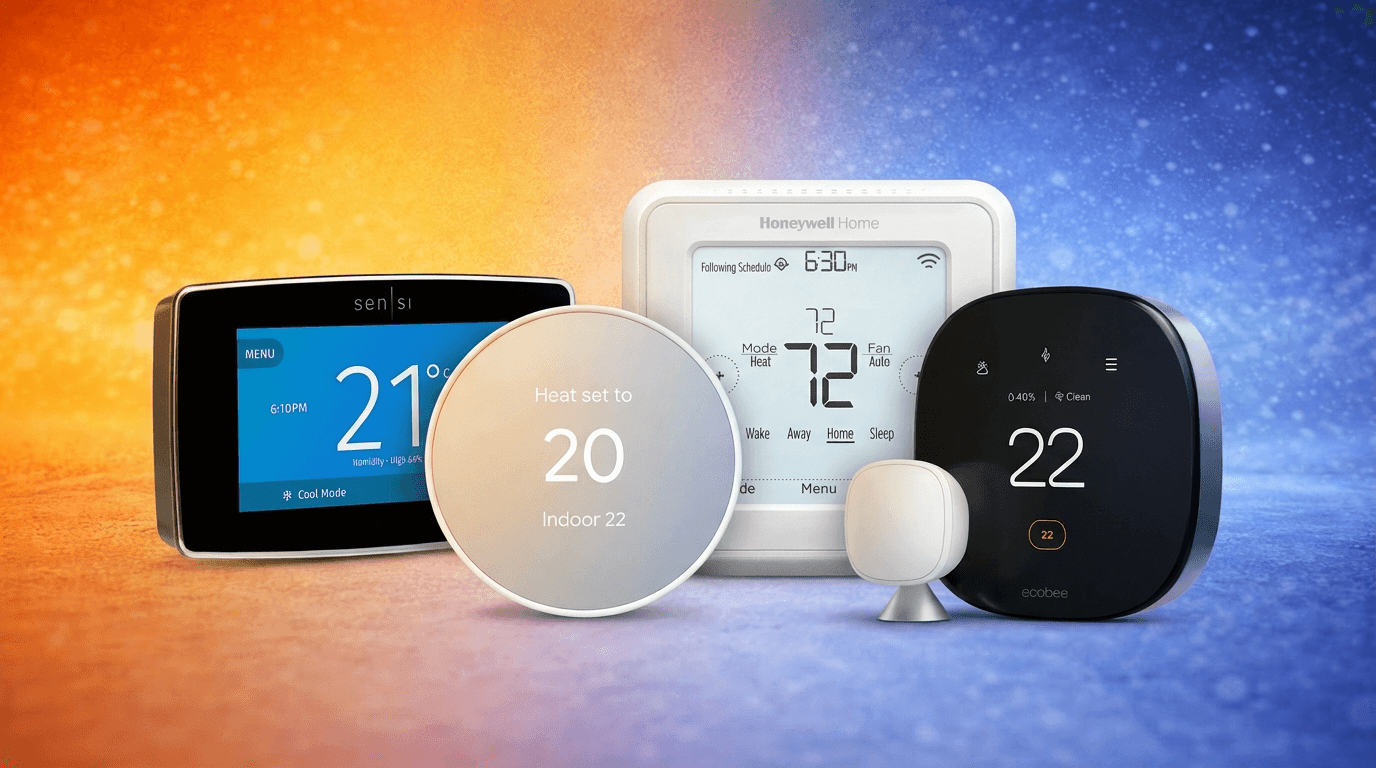
Credit: Homeowner.ca
A smart thermostat can be a genuinely worthwhile home upgrade in Canada, but only if it actually matches your heating and cooling system. That is where many buyers go wrong. A great app or a low sale price means very little if the thermostat struggles with your wiring, does not support your HVAC setup, or loses too much usefulness when the internet goes down.
We evaluated 11 smart thermostats available to Canadian shoppers, scoring each across performance, ease of use, durability, features, and value. We looked closely at the things that matter most in the real world: ENERGY STAR certification, HVAC compatibility, C-wire requirements, offline behaviour, smart-home support, learning features, rebate eligibility, warranty coverage, and total ownership cost.
The result is a guide built to help you narrow the field quickly. Whether you want the best overall option, the strongest value pick, a premium upgrade, or a specialty choice for a more advanced smart-home setup, the rankings and buying advice below will point you in the right direction.
Our Top Picks: Smart Thermostats
Best Overall Pick
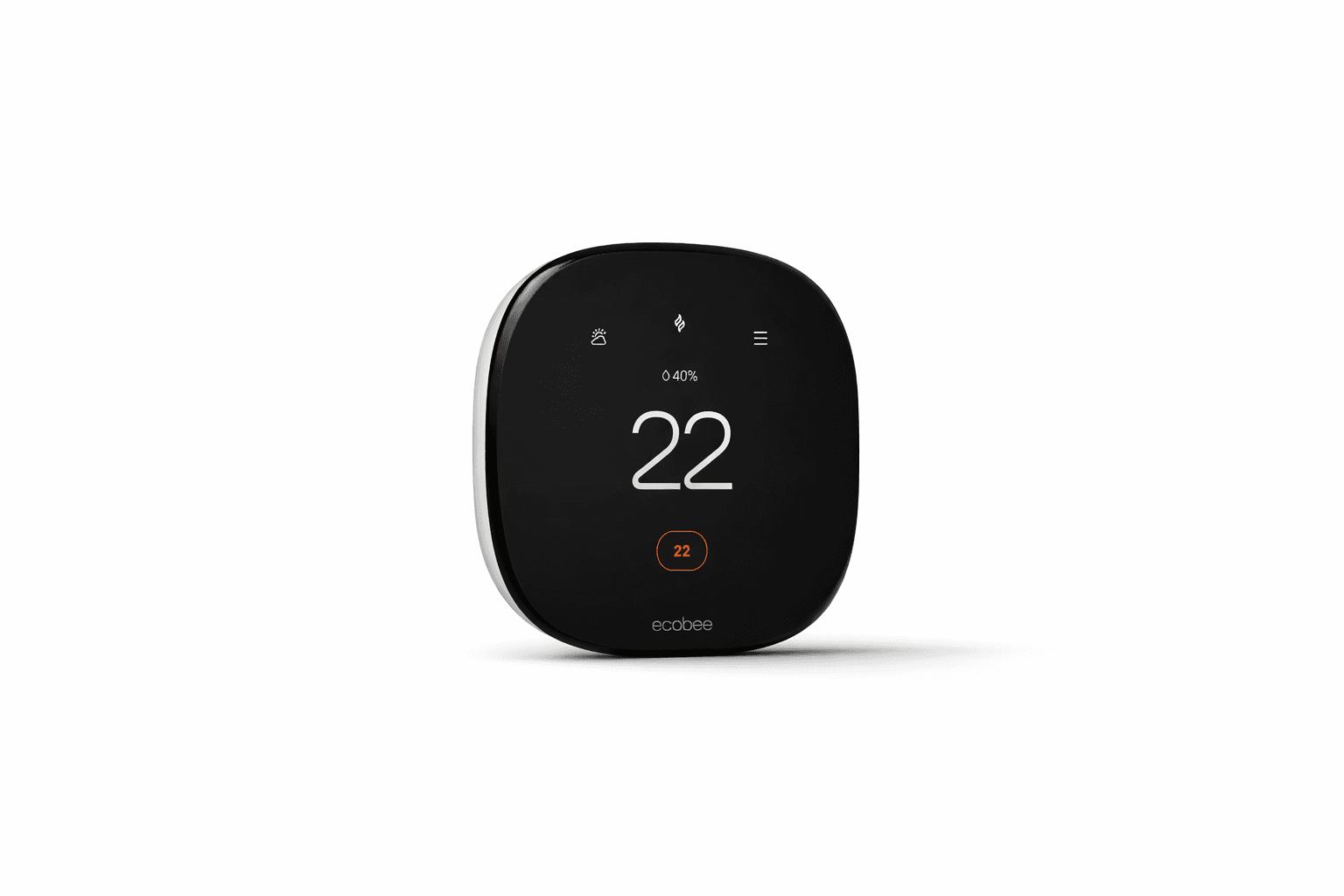
Ecobee Smart Thermostat Enhanced
The best-balanced smart thermostat in the group, blending strong compatibility, smart features, and long-term value with fewer trade-offs than most rivals.
See on Amazon.caBest Value Pick
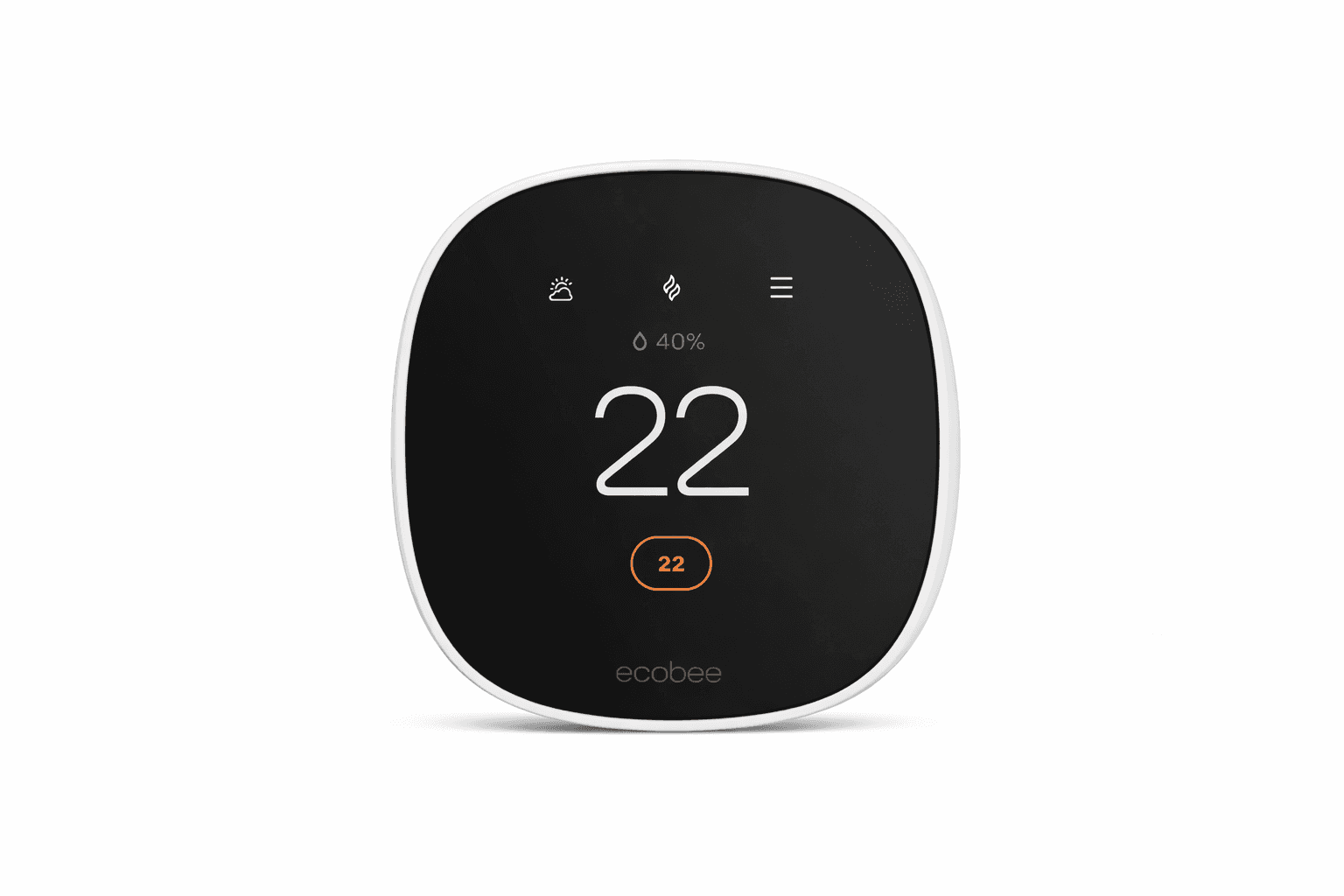
Ecobee Smart Thermostat Essential
A strong entry-level smart thermostat from a Canadian brand that gets the basics right and keeps long-term ownership costs low.
See on Amazon.caBest Premium Pick
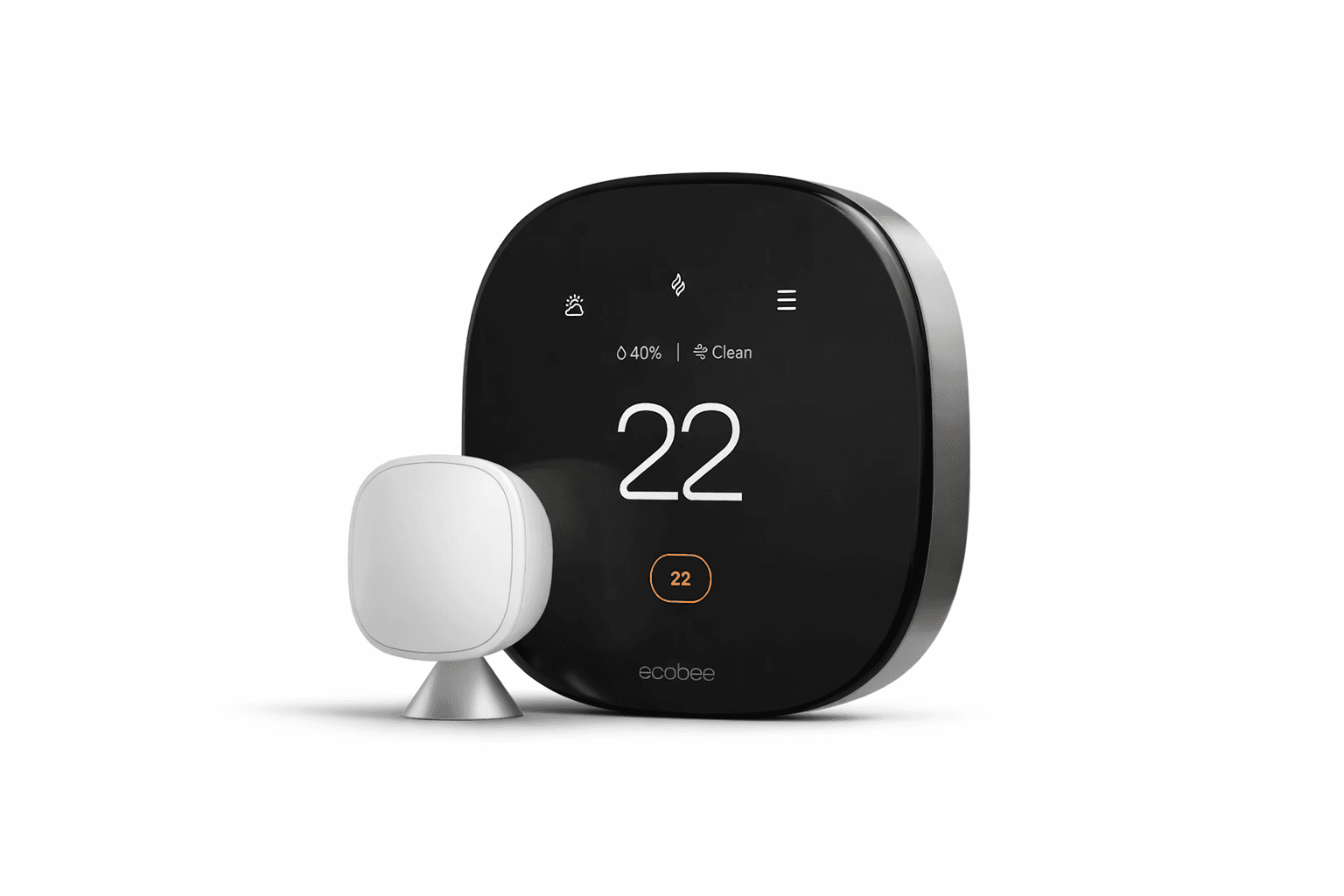
Ecobee Smart Thermostat Premium
A premium Canadian thermostat that packs unusually broad HVAC compatibility, air-quality features, and a long warranty into one polished package.
See on Amazon.caBest for Home Assistant Pick
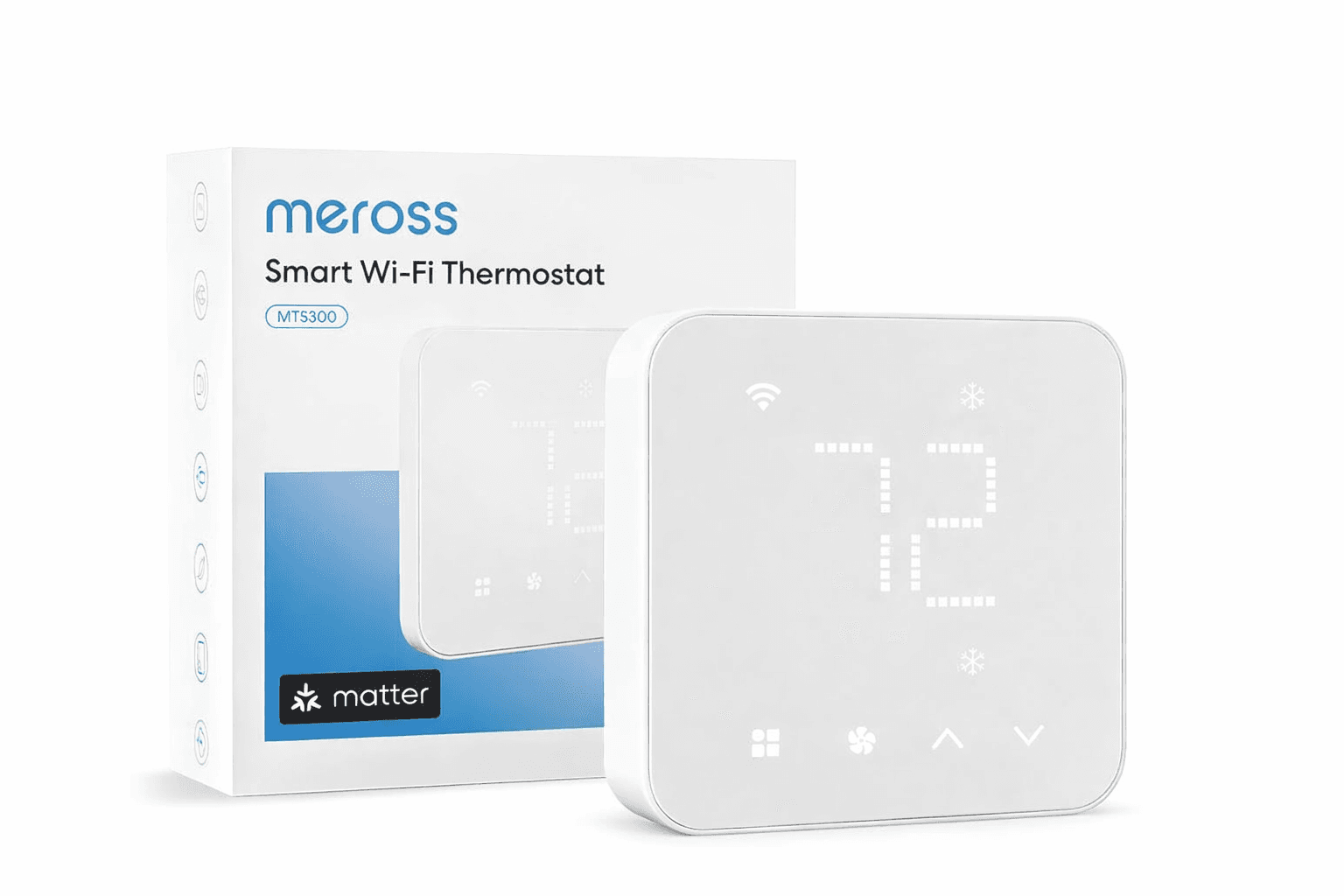
Meross MTS300 Smart Thermostat
The cheapest route to Matter and Home Assistant support, with genuine appeal for tinkerers who care about local control.
See on Amazon.caHow We Evaluated
We assessed each smart thermostat using published specifications, compatibility information, warranty terms, smart-home support, rebate eligibility, and calibrated consumer research signals about real ownership experience. The goal was to help Canadian buyers find models that not only promise energy savings, but also fit their HVAC system, install realistically, and remain useful over time.
Scoring Factors Explained
Compare Products
See how all 11 products stack up across 8 key specs — from Price to Supported HVAC Systems.
| Product | Ecobee Smart Thermostat Enhanced Best Overall | Ecobee Smart Thermostat Premium Best Premium | 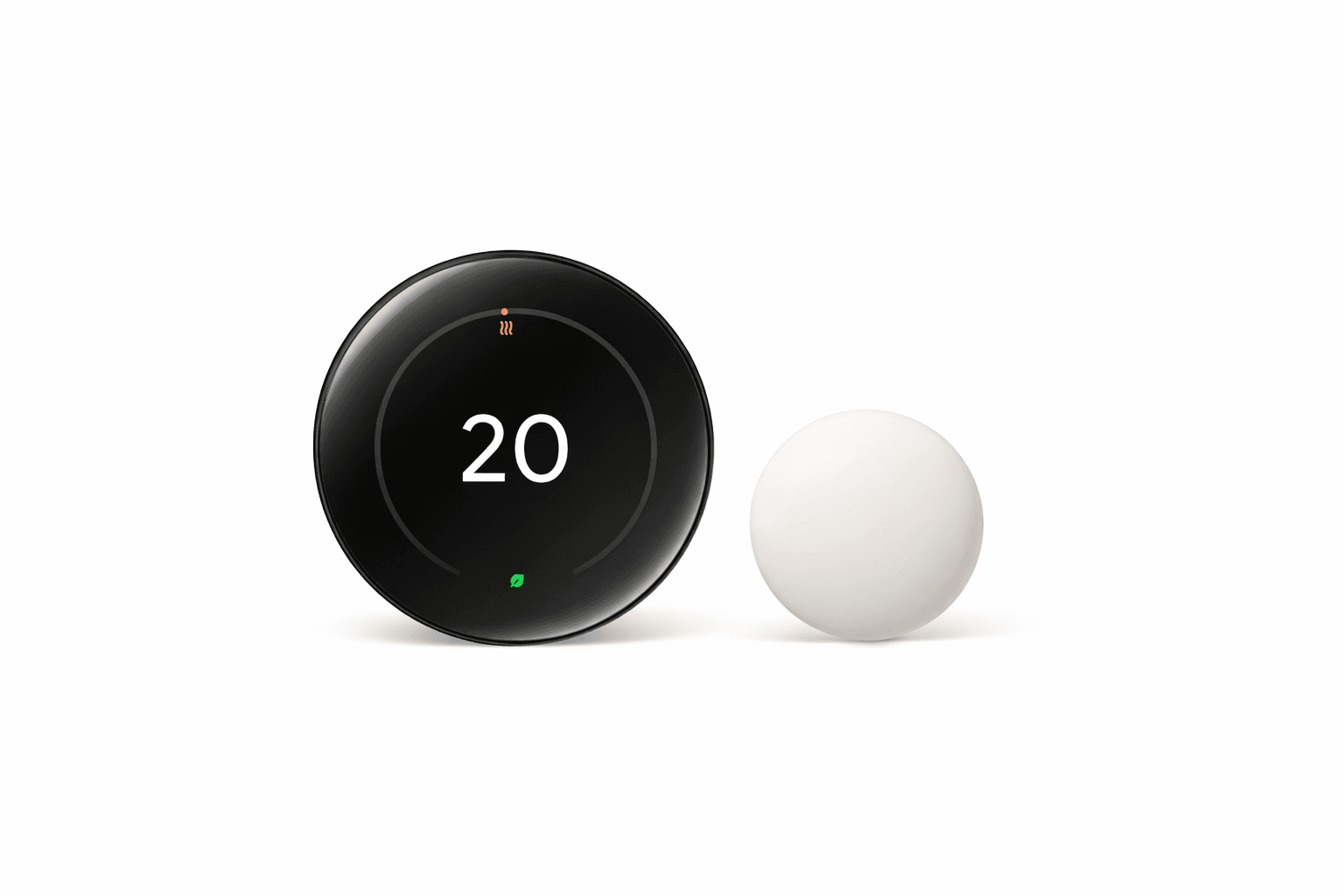 Google Nest Learning Thermostat | Ecobee Smart Thermostat Essential Best Value | 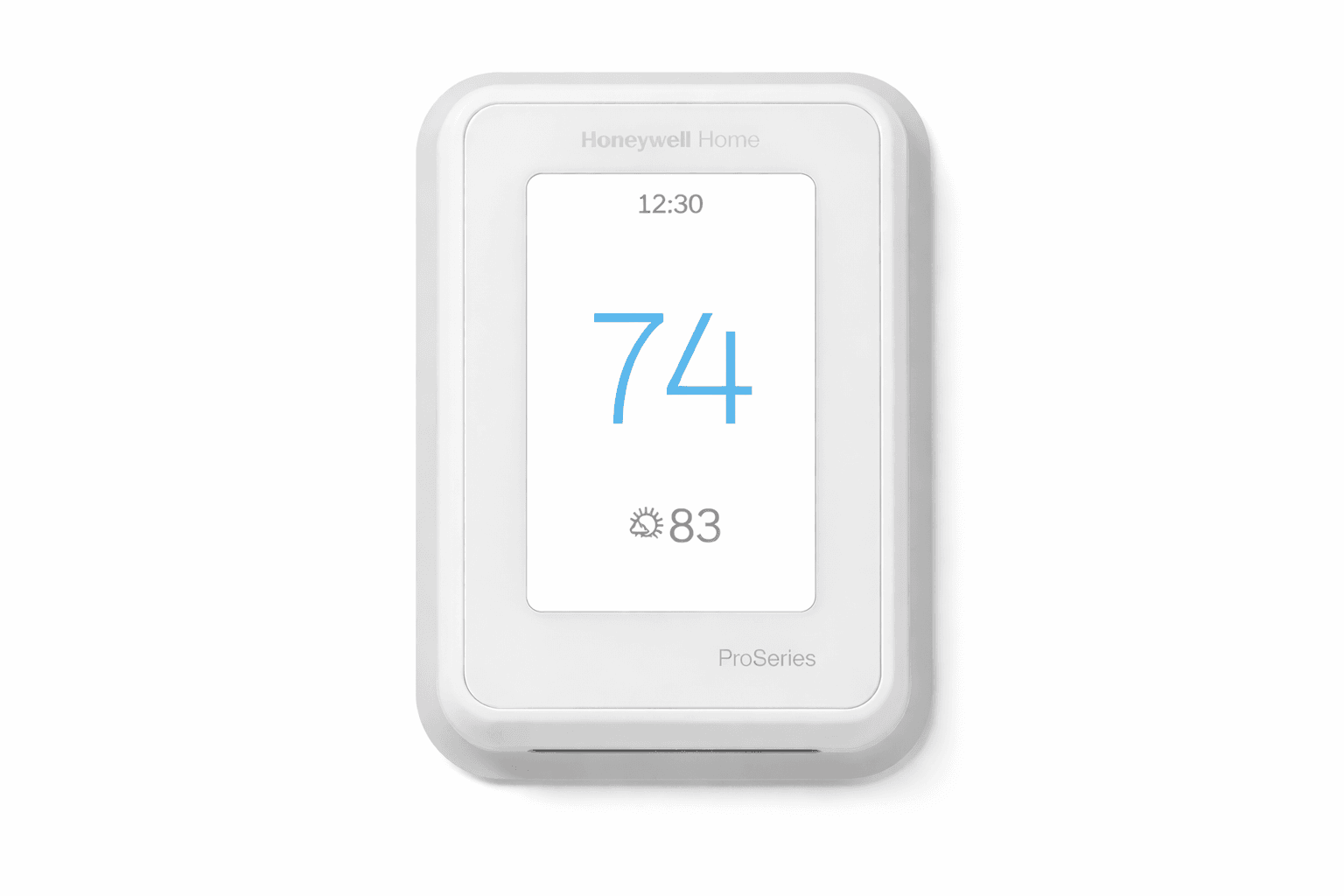 Honeywell Home T10 Pro Smart Thermostat | 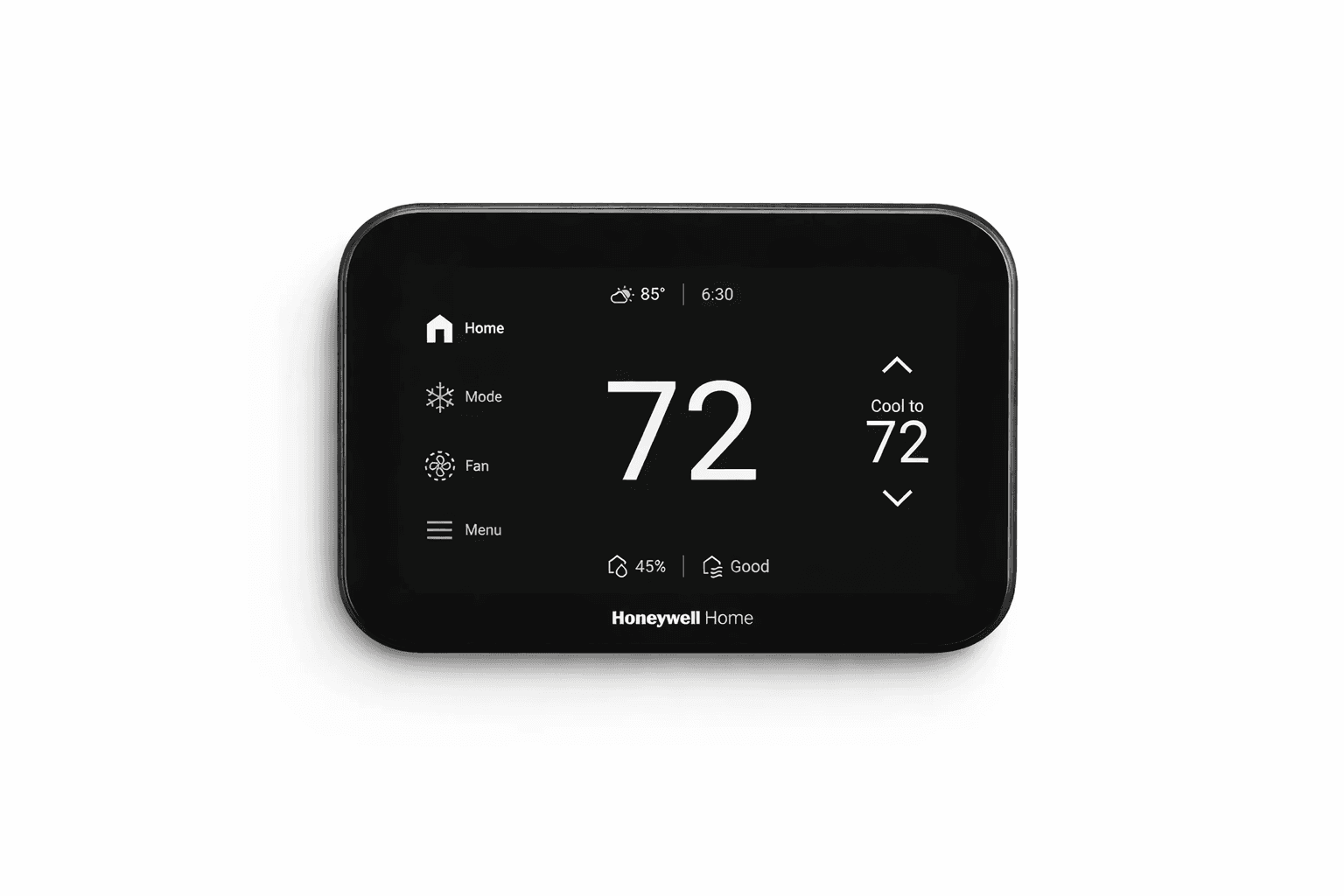 Honeywell Home X8S Smart Thermostat | 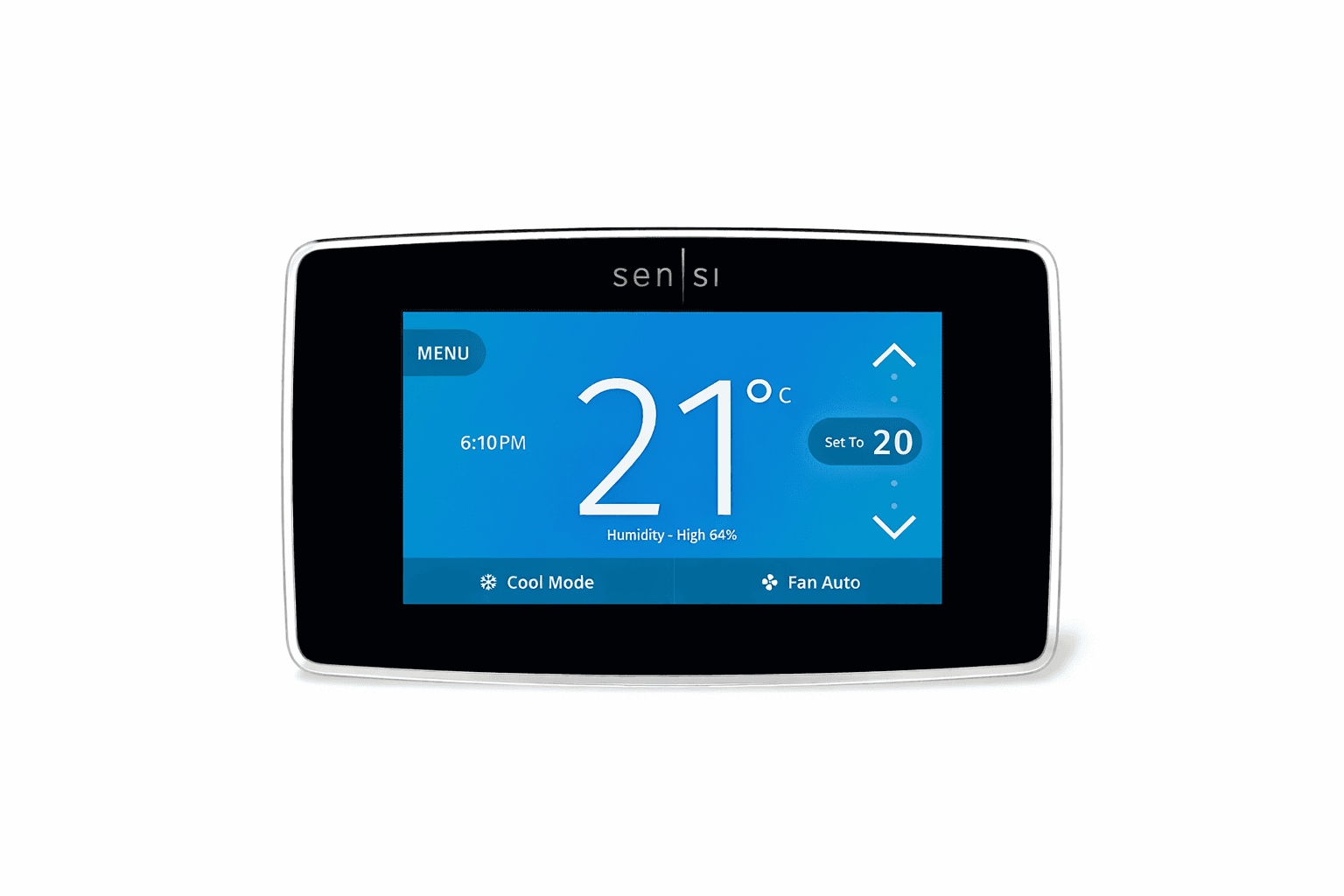 Sensi Touch Smart Thermostat | 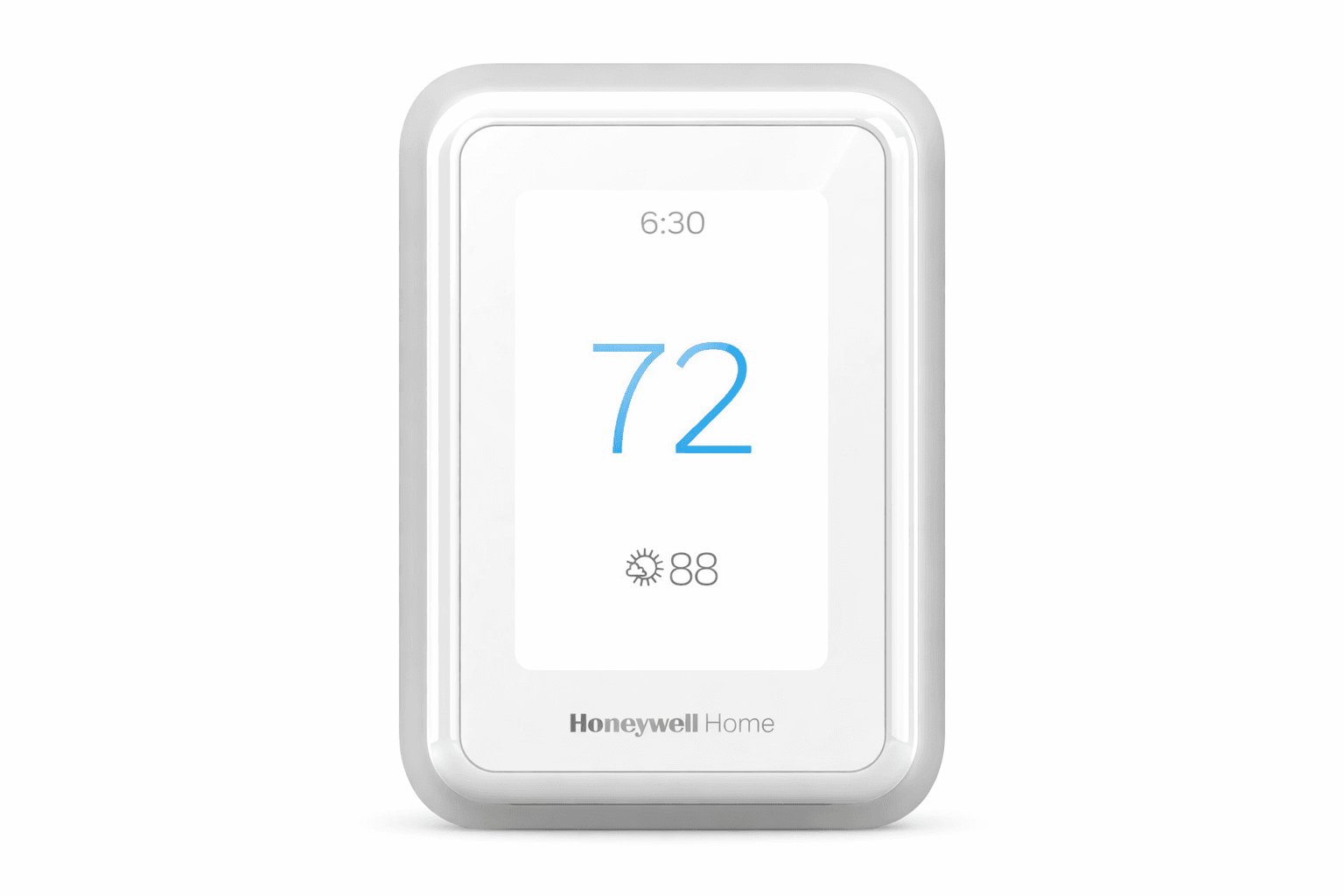 Honeywell Home T9 Smart Thermostat | 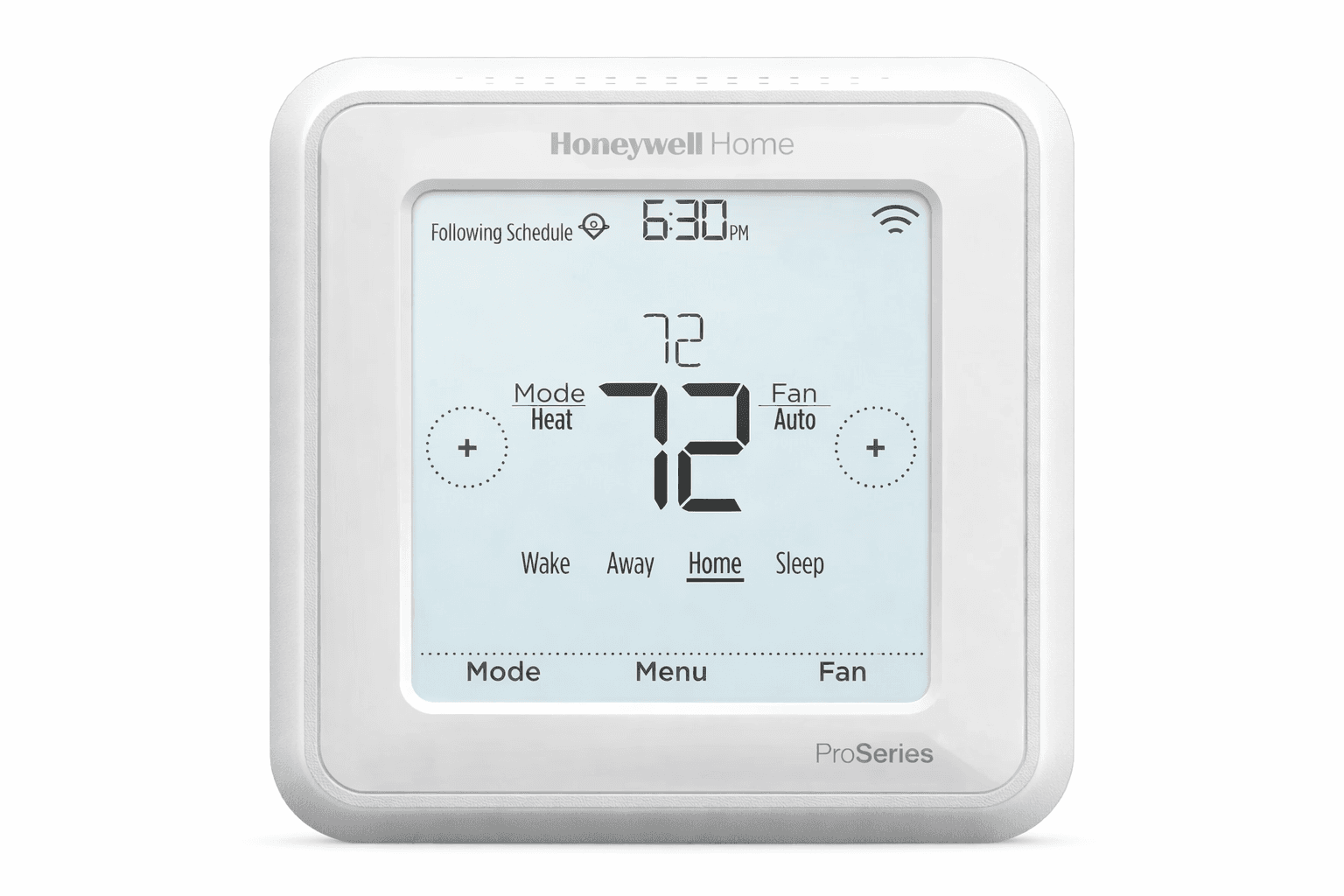 Honeywell Lyric T6 Pro Smart Thermostat | 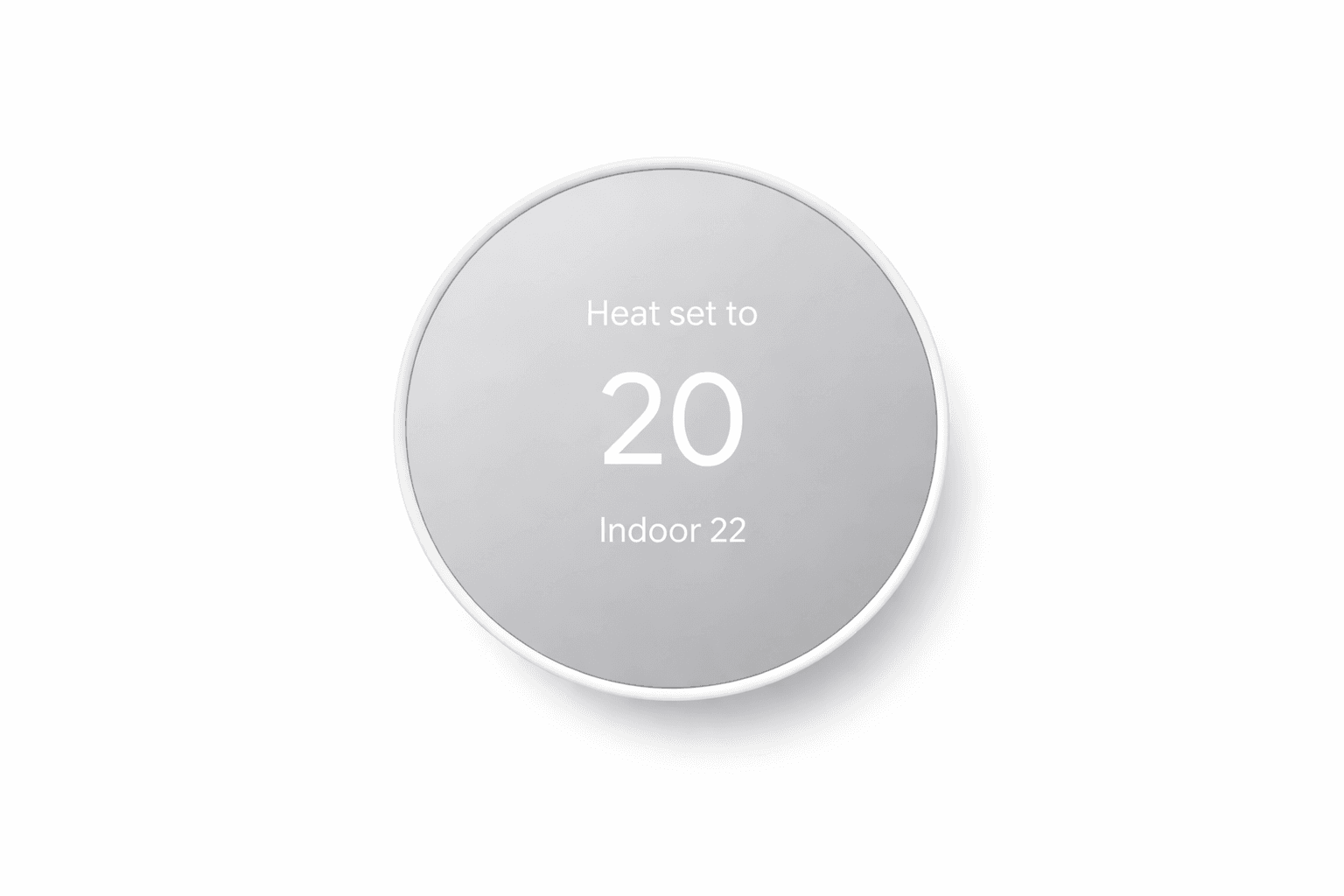 Google Nest Thermostat | Meross MTS300 Smart Thermostat Best for Home Assistant |
|---|---|---|---|---|---|---|---|---|---|---|---|
| Score | 8.4 | 8.3 | 8.2 | 7.8 | 7.5 | 7.5 | 7.5 | 7.4 | 7.2 | 7.1 | 6.3 |
| Price | $249.99 | $279.04 | $319.99 | $167.59 | $351.99 | $299.99 | $239.04 | $223.10 | $211.82 | $179.99 | $99.99 |
| ENERGY STAR Certified | |||||||||||
| Supported HVAC Systems | Central furnace, Air source heat pump, Boiler hydronic, Other low voltage | Central furnace, Air source heat pump, Boiler hydronic, Other low voltage | Central furnace, Air source heat pump, Radiant floor heating, Boiler hydronic | Central furnace, Air source heat pump | Central furnace, Air source heat pump, Boiler hydronic, Other low voltage | Central furnace, Air source heat pump, Boiler hydronic, Other low voltage | Central furnace, Air source heat pump, Boiler hydronic | Central furnace, Air source heat pump, Boiler hydronic | Central furnace, Air source heat pump, Boiler hydronic | Central furnace, Air source heat pump | Central furnace, Air source heat pump, Boiler hydronic |
| C Wire Requirement | Optional with adapter | Optional with adapter | Not required | Optional with adapter | Required | Required | Required | Required | Required | Optional with adapter | Required |
| Smart Home Platforms | Amazon Alexa, Google Assistant, Apple HomeKit, Samsung SmartThings | Amazon Alexa, Google Assistant, Apple HomeKit, Samsung SmartThings | Amazon Alexa, Google Assistant, Apple HomeKit, Matter | Amazon Alexa, Google Assistant, Apple HomeKit | Amazon Alexa, Google Assistant, Apple HomeKit, Samsung SmartThings, IFTTT | Amazon Alexa, Google Assistant, Apple Home | Amazon Alexa, Google Assistant, Apple HomeKit, Samsung SmartThings | Amazon Alexa, Google Assistant, Apple HomeKit, Samsung SmartThings | Amazon Alexa, Google Assistant, Apple HomeKit | Amazon Alexa, Google Assistant | Amazon Alexa, Google Assistant, Apple Home, Samsung SmartThings, Home Assistant |
| Learning Schedule Feature | |||||||||||
| Works Without WiFi | |||||||||||
| Manufacturer Warranty | 3 Year Limited Warranty | 3 Year Limited Warranty | 1 Year Limited Warranty | 3 Year Limited Warranty | 5 Year Limited Warranty | 2 Year Limited Warranty | 3 Year Limited Warranty | 2 Year Limited Warranty | 2 Year Limited Warranty | 1 Year Limited Warranty | 1 Year Limited Warranty |
Product Reviews
Ecobee Smart Thermostat Enhanced
"The best-balanced smart thermostat in the group, blending strong compatibility, smart features, and long-term value with fewer trade-offs than most rivals."
For many Canadian homes, this is the sweet spot in the ecobee lineup. It captures most of what buyers actually want from a smart thermostat, including broad platform support, learning features, rebate eligibility, and a long warranty, without pushing all the way into flagship pricing.
Best For
Homeowners who want a well-rounded smart thermostat with strong ecosystem support, broad compatibility, and premium-like capability at a more sensible price.
The Pros
- Broad support for HomeKit, Alexa, Google Assistant, and SmartThings
- Included Power Extender Kit makes installation easier in homes without a C-wire
- Strong HVAC compatibility goes beyond basic furnace-only setups
- Learning features and radar-based occupancy sensing are meaningful upgrades over entry models
- 3-year warranty is excellent for a mid-priced thermostat
The Cons
- Sensor-accuracy complaints still show up often enough to matter
- Customer support and app reliability are not standout strengths
- No air-quality monitor or premium hardware touches from the flagship model
Watchouts
- If your home is sensitive to even small temperature swings, sensor behaviour deserves closer attention
- Eco+ automation can be helpful, but some households will still want to tune settings manually
- If room-by-room balancing is your goal, budget for extra sensors rather than assuming one thermostat solves it all
Ecobee Smart Thermostat Premium
"A premium Canadian thermostat that packs unusually broad HVAC compatibility, air-quality features, and a long warranty into one polished package."
Ecobee's flagship is one of the most feature-complete smart thermostats available in Canada. It is especially compelling for homes with more complex systems or buyers who want more than just app control, though sensor-accuracy complaints and weaker support prevent it from feeling flawless.
Best For
Homeowners who want a premium whole-home comfort hub with strong compatibility, multi-room potential, and extra wellness features.
The Pros
- Very broad low-voltage HVAC compatibility, including boilers and other more demanding setups
- Useful extras such as air-quality monitoring and SmartSensor support go beyond basic thermostat duties
- Works with HomeKit, Alexa, Google Assistant, and SmartThings
- Strong 3-year warranty is better than many direct rivals
- No paid subscription is required for core smart control
The Cons
- Premium price only makes full sense if you will use the extra features
- A vocal minority report temperature and humidity readings that feel off
- Customer-support experience is a recurring weak point
- Built-in Alexa hardware will not appeal to privacy-sensitive buyers
Watchouts
- If accurate room readings are your top priority, pay close attention to placement and calibration behaviour
- The built-in microphone is a real consideration in bedrooms, nurseries, and privacy-conscious homes
- This model is easiest to justify when you want both comfort automation and its air-quality features
Google Nest Learning Thermostat
"A premium design-led thermostat that combines true learning automation with rare Matter support and no-C-wire installation."
Google's flagship still stands out for its looks, smart-home flexibility, and genuinely adaptive scheduling. It is one of the easiest premium thermostats to recommend for central HVAC homes, but reliability complaints and a short warranty keep it from the very top.
Best For
Tech-savvy homeowners with central HVAC who want a polished premium thermostat with real learning intelligence and broad smart-home compatibility.
The Pros
- No C-wire is required in many homes, which meaningfully lowers DIY installation friction
- Works with Alexa, Google Assistant, Apple HomeKit, and Matter for unusually broad ecosystem reach
- True learning schedule behaviour is more advanced than basic programmed scheduling
- Broad compatibility includes central systems, heat pumps, boilers, and radiant floor heating
- Eligible for Canadian rebates and does not require a paid app subscription
The Cons
- Premium price is hard to ignore
- Only a 1-year warranty at this price
- Recurring reports of Wi-Fi disconnections and occasional defective units
- Google Home app exclusivity will annoy owners who preferred the older Nest experience
Watchouts
- If your household is sensitive to connectivity hiccups, this model's reliability track record deserves extra caution
- Away mode can be slower to react than some buyers expect, especially if you want aggressive home-and-away automation
- The premium design does not come with equally premium warranty coverage
Ecobee Smart Thermostat Essential
"A strong entry-level smart thermostat from a Canadian brand that gets the basics right and keeps long-term ownership costs low."
Ecobee Essential is easy to like because it stays focused on what most buyers actually need: straightforward setup, reliable core smart features, major platform support, and a strong warranty. It is best viewed as a standard-system thermostat rather than a solution for complicated HVAC setups.
Best For
First-time smart thermostat buyers with standard furnaces or heat pumps who want a reputable Canadian option with strong value and low ownership friction.
The Pros
- Very competitive price for an ENERGY STAR and rebate-eligible model
- Fast, app-guided installation is especially friendly to first-time buyers
- Works with HomeKit, Alexa, and Google Assistant
- 3-year warranty is unusually good at this price
- No subscription is required for core app control
The Cons
- No true learning schedule
- Limited HVAC compatibility compared with broader mid-range and premium rivals
- Small, dim display feels budget-oriented
- No room sensors or occupancy-based whole-home balancing
Watchouts
- Check compatibility carefully if you have boilers, multi-stage equipment, or anything beyond a standard central system
- The simpler display is functional, but it does not feel premium in a hallway or living room
- This is better for buyers who want reliable smart basics than for those chasing advanced automation
Honeywell Home T10 Pro Smart Thermostat
"The specialist choice for complex low-voltage HVAC systems, backed by the longest warranty in the group."
The T10 Pro is not trying to be the prettiest or smartest thermostat for everyone. Its appeal is contractor-friendly compatibility, strong room-sensor capability, and five years of coverage, which makes it most compelling in homes where the HVAC system itself is the hard part.
Best For
Homeowners with complex HVAC systems who care more about contractor-backed compatibility and warranty coverage than flashy automation.
The Pros
- Excellent 5-year warranty is the strongest in this comparison
- Strong fit for complex multi-stage and other demanding low-voltage HVAC setups
- Broad platform support includes IFTTT in addition to the major voice ecosystems
- RedLINK room sensors add useful multi-room control potential
- No subscription is required for core smart features
The Cons
- The highest sticker price in the lineup
- Often makes the most sense with professional installation, which raises real-world cost
- No learning schedule at a premium price
- Connectivity and sensor-pairing complaints prevent it from feeling bulletproof
Watchouts
- This is easiest to justify when you truly need its HVAC compatibility, not when you simply want a premium thermostat
- Professional installation can materially change the value equation
- If app stability matters more than system compatibility, there are smoother day-to-day options
Honeywell Home X8S Smart Thermostat
"A futuristic wall-mounted comfort hub that pushes the category furthest beyond basic thermostat duties."
The X8S is ambitious in a way few thermostats are, with a huge display, learning features, proactive HVAC monitoring, and even doorbell video viewing. It is exciting hardware, but it is also an early-adopter product with more platform risk than the established leaders.
Best For
Early adopters who want a thermostat that doubles as a smart-home display and who are comfortable buying into a newer platform.
The Pros
- Huge 5-inch screen is the most visually impressive display in this comparison
- Strong on-paper HVAC compatibility for more demanding systems
- Learning features return to Honeywell's lineup here
- Distinctive extras such as proactive HVAC monitoring and doorbell streaming set it apart
- ENERGY STAR certification and rebate eligibility support the efficiency story
The Cons
- Requires a C-wire
- Launch-era setup friction is a real concern
- Premium price is hard to justify without a long ownership track record
- 2-year warranty is only average for an ambitious flagship
Watchouts
- Make sure you actually want dashboard-style extras like video doorbell viewing before paying for them
- This is a much better fit for early adopters than for cautious buyers who value proven reliability
- If warranty coverage is a top priority, better-established premium alternatives look safer
Sensi Touch Smart Thermostat
"A privacy-friendly smart thermostat with standout scheduling flexibility and one of the easiest DIY installs in the category."
Sensi Touch takes a refreshingly practical approach. Instead of chasing heavy-handed AI, it focuses on easy installation, flexible manual scheduling, broad platform support, and a stronger privacy stance than many competitors.
Best For
Homeowners who prefer hands-on scheduling, easy DIY setup, and a stronger privacy posture over AI-style automation.
The Pros
- Very easy installation for a compatible system
- Extremely flexible manual scheduling is great for buyers who want fine control
- Works with HomeKit, Alexa, Google Assistant, and SmartThings
- 3-year warranty is strong at this price
- Clear privacy positioning will appeal to data-conscious buyers
The Cons
- Requires a C-wire
- No learning schedule
- Intermittent display restarts are a recurring complaint
- Some advanced settings are still app-only
Watchouts
- If you want the thermostat to learn your routines automatically, this is not the right model
- Display restart issues are worth paying attention to if the thermostat is installed in a prominent or quiet room
- Its manual-scheduling strengths matter most for buyers who actually plan to use them
Honeywell Home T9 Smart Thermostat
"A room-sensor-ready thermostat from a trusted HVAC brand that offers solid capability without full flagship pricing."
The T9 makes sense for buyers who want multi-room awareness and familiar Honeywell HVAC credibility at a reasonable price. Its main problem is that the software and connectivity story is not as confidence-inspiring as the hardware promise.
Best For
Homeowners who want a mid-priced thermostat with room-sensor capability and solid HVAC compatibility from a familiar brand.
The Pros
- Includes a room sensor, which adds real comfort value at this price
- Broad support for HomeKit, Alexa, Google Assistant, and SmartThings
- Good compatibility for standard and moderately complex central systems
- Touchscreen interface is generally easy to use
- Rebate eligibility improves the overall value case
The Cons
- Requires a C-wire and is less DIY-friendly than the easiest rivals
- Recurring Wi-Fi disconnect complaints hurt trust
- No true learning schedule
- App experience and sensor pairing can be frustrating
Watchouts
- If you plan to add more room sensors, pairing behaviour and sensor-generation compatibility deserve a close look
- You cannot combine every automation style the way some buyers expect, especially scheduling and geofencing
- This is a better fit for buyers who value room sensing than for those who want the smoothest app experience
Honeywell Lyric T6 Pro Smart Thermostat
"A practical Honeywell workhorse for buyers who value familiar HVAC compatibility more than flashy smart-home extras."
The T6 Pro is a sensible thermostat for standard to moderately complex systems, especially when a contractor already trusts the Honeywell platform. It does the core job well enough, but the aging feature set and known reliability concerns make it feel more workhorse than standout.
Best For
Homeowners replacing an older Honeywell or working with an HVAC contractor who wants a familiar, straightforward thermostat platform.
The Pros
- Good compatibility for multi-stage and heat-pump systems
- Simple scheduled operation appeals to buyers who do not want overcomplicated automation
- Works with Alexa, Google Assistant, and HomeKit
- ENERGY STAR certification and Canadian rebate eligibility help the savings case
- Contractor familiarity can make replacement and setup easier
The Cons
- Requires a C-wire
- No learning schedule
- Known problem history on some heat-pump and dual-fuel applications
- Geofencing and schedules cannot be fully combined the way some buyers expect
Watchouts
- If you are buying for a heat-pump setup, verify behaviour carefully if anything seems off after installation
- 2.4 GHz-only Wi-Fi can be a nuisance on newer home networks
- This is better as a dependable replacement path than as a feature-rich smart-home upgrade
Google Nest Thermostat
"A cheaper way into the Google ecosystem that keeps the essentials without paying flagship money."
This is the simpler, more affordable Nest for buyers who want remote control, energy suggestions, and a modern look without paying for premium extras. It makes most sense in homes with straightforward wiring and standard central HVAC.
Best For
Budget-conscious buyers in the Google ecosystem who have a standard furnace or heat pump and want core smart control without premium pricing.
The Pros
- Much more affordable than the Nest Learning Thermostat
- ENERGY STAR certified and rebate eligible in Canada
- Attractive mirrored design still feels more premium than many budget rivals
- Works with Google Assistant and Alexa and does not need a subscription
- Keeps basic control even if Wi-Fi goes down
The Cons
- No Matter, no HomeKit, and no true learning schedule
- A Power Connector or extra wiring may be needed in older homes
- Side-touch controls are less intuitive than a traditional dial
- Reports of battery, power, and schedule quirks drag down confidence
Watchouts
- If your home does not already have a solid C-wire setup, the true cost can rise quickly
- This is not the right pick for cross-platform smart homes that rely on HomeKit or Matter
- It is better as a basic smart upgrade than as a long-term premium buy
Meross MTS300 Smart Thermostat
"The cheapest route to Matter and Home Assistant support, with genuine appeal for tinkerers who care about local control."
Meross is the disruptor in this comparison. It offers a lot of smart-home flexibility for very little money, but Canadian buyers give up ENERGY STAR certification, rebate access, and some long-term confidence compared with the established names.
Best For
Tech-savvy bargain hunters who prioritize Matter, local control, and Home Assistant compatibility over rebate access and brand track record.
The Pros
- By far the lowest price in the group
- Excellent platform reach, including Home Assistant
- Local-control and Matter appeal will resonate with privacy-minded smart-home users
- No paid subscription is required
- Keeps basic operation without Wi-Fi
The Cons
- Not ENERGY STAR certified
- Not rebate eligible in Canada
- Requires a C-wire and does not include an adapter
- Shorter warranty and weaker long-term platform confidence than the category leaders
Watchouts
- The loss of rebate eligibility matters more in Canada than the sticker price alone suggests
- This is a better fit for DIY smart-home enthusiasts than for buyers who want the safest set-it-and-forget-it choice
- Past cloud-service issues mean local-control fans will like it more than buyers who expect a fully mature ecosystem
How to Choose the Right Smart Thermostat
Start With HVAC Compatibility, Not Features
The first question is not which thermostat looks best or has the slickest app. It is whether the model supports your heating and cooling system. Some thermostats are best for standard furnaces and central air, while others can handle boilers, heat pumps, multi-stage systems, or other low-voltage equipment. If compatibility is wrong, nothing else matters.
Check Your Wiring Before You Buy
C-wire requirements are one of the biggest installation stumbling blocks. Some models can run without a C-wire, some work with an included or optional adapter, and others really do need proper wiring in place. If you are hoping for a simple DIY install, this one detail can make the difference between a quick upgrade and a much more expensive project.
Decide Whether You Want Learning or Just Good Scheduling
Not every smart thermostat needs AI-style learning to be useful. Some buyers love a thermostat that adapts automatically over time, while others prefer to set a schedule themselves and leave it alone. Learning models can be more convenient, but a well-designed manual scheduler can still work very well if your routine is predictable.
Think About Cloud Dependence and Smart-Home Fit
Most buyers focus on voice assistants, but long-term usability matters too. Check which platforms are supported, whether the thermostat still works sensibly without Wi-Fi, and whether you need broad compatibility with Apple, Google, Alexa, SmartThings, Matter, or more advanced local-control systems. A thermostat that keeps working during an outage is especially important in a Canadian winter.
Look at Real Ownership Cost, Not Just Sticker Price
A cheaper thermostat is not always the better deal. Rebates, warranty length, required adapters, possible professional installation, and whether app control stays free all affect value. In many Canadian homes, a slightly pricier model can end up being the smarter buy if it avoids wiring headaches, qualifies for a rebate, or comes with stronger long-term coverage.
Frequently Asked Questions
No. Compatibility varies a lot, and it is one of the most important things to check before buying. Some models are built mainly for standard furnaces and central air, while others can also support boilers, heat pumps, and more complex low-voltage systems.
Sometimes, yes. Some thermostats require a C-wire, some can use an adapter, and a few are more forgiving in homes without one. If you want a simple DIY install, this is one of the first specs to verify.
The better ones do. Most keep basic heating and cooling control and continue following saved schedules even when Wi-Fi is unavailable, but you may lose app access, voice control, or cloud-based automations until the connection returns.
Average savings are usually more modest than the biggest marketing claims. A good benchmark is roughly 8 percent on heating and cooling costs for ENERGY STAR certified models, though actual savings depend on your home, system type, and how you use scheduling or automation.
Often, yes. Many utility and provincial programs favour ENERGY STAR certified smart thermostats, and rebate eligibility can significantly improve payback. The exact offer depends on where you live and which model you choose.
Not necessarily. A learning model can be convenient if your routine changes often or you want more automation, but a well-designed programmable thermostat can work just as well for households with a steady schedule. The best choice depends on how much control you want to hand over.
It is worth paying attention to both. Most strong options do not require a paid subscription for core app control, but privacy policies, built-in microphones, cloud dependence, and support lifespan still differ from brand to brand. Buyers who care about long-term trust should treat those details as part of the purchase decision, not an afterthought.