

Health Canada’s Heating-Season Guidance Makes Late Winter The Real Cutoff For Actionable Home Radon Results
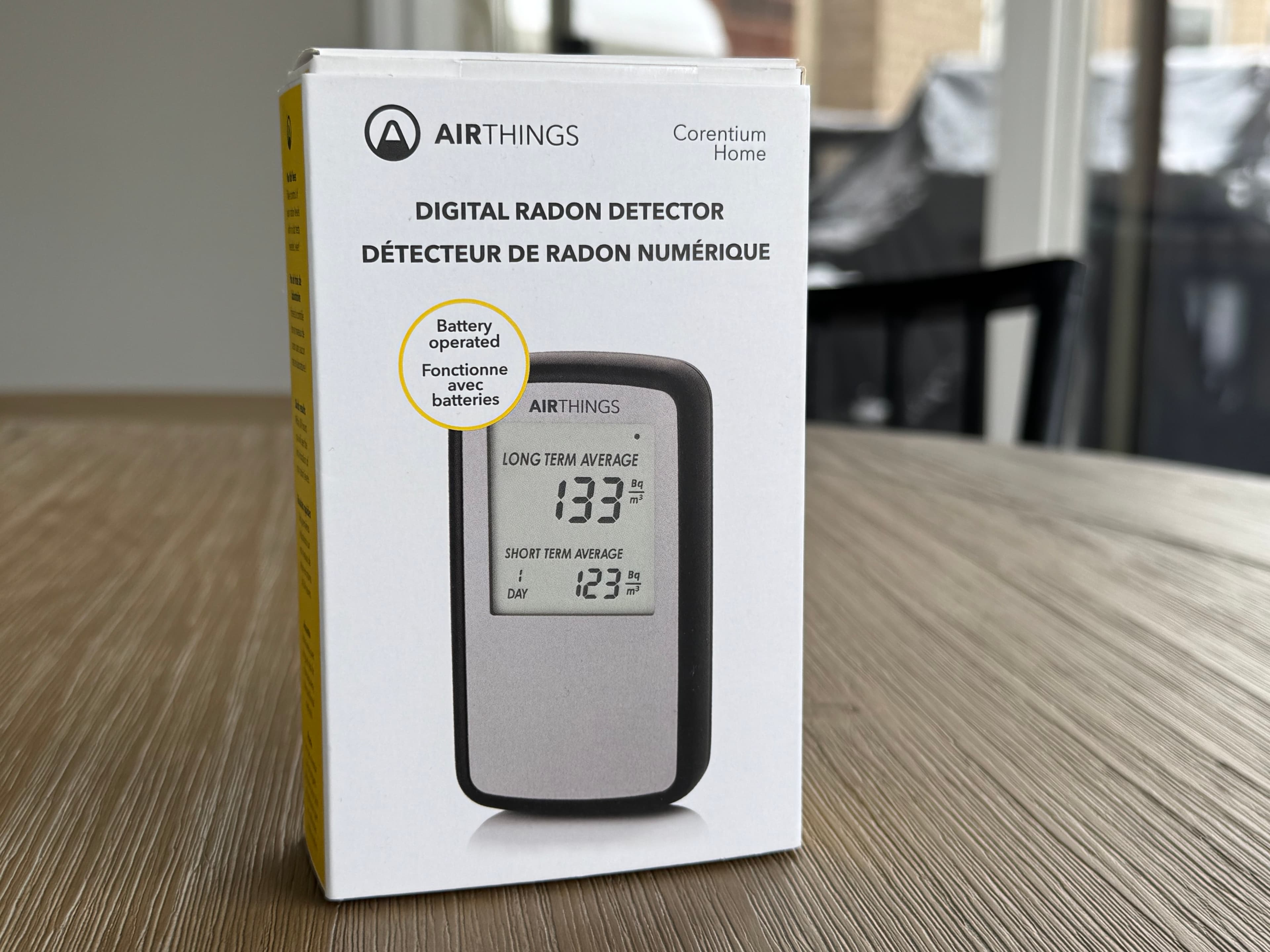
Battery-powered radon monitor sits ready as heating-season airflow makes March’s last reliable testing window. (Credit: Homeowner.ca)
Radon testing season is ending this month, not because radon disappears in spring, but because the best testing conditions do. As Health Canada’s Take Action on Radon guidance explains, the most accurate way to determine whether a home has a dangerous radon level is to use a long-term test kit for at least three months during heating season. During the 2025–2026 cycle, the Regional District of Central Okanagan’s radon program update turned that guidance into a hard calendar reality, with official detector return dates set for March 2 to 6, 2026.
That timing matters because a long-term test started in March is no longer really a winter test. Start one now and you are likely finishing in late spring or early summer, when homes are ventilated differently than they are in the colder months. Open windows, shifting airflow, and reduced closed-home conditions can all change the number you get back.
For Canadians who have not tested yet, March is therefore less a reminder than a decision point. Either you do a screening-style test while homes are still mostly closed, or you accept that the next ideal window for a full long-term test is probably autumn. In practical terms, that means you have weeks, not months, to get a useful baseline this season.
Radon guidance is seasonal for a reason. In Health Canada’s residential radon measurement guide the recommended test period lines up with the closed-building conditions that generally prevail from October to April, when doors and windows are shut more often and mechanical heating is in use.
That is not bureaucratic language. It is the basic logic of good measurement. Radon enters buildings from the ground and can accumulate indoors, especially when a house is sealed up against the cold. If the goal is to find out whether your home reaches levels high enough to require action, it makes sense to measure during the part of the year when indoor conditions are most likely to reveal the problem clearly.
This is also why spring can blur the picture. Once a household moves into shoulder-season living, the test is capturing more than the home’s underlying radon pattern. It is also capturing how often the windows are open, how much fresh air is moving through the building, and how different the pressure conditions are from mid-winter. That does not make a spring reading useless. It does mean it may be less representative of the conditions Health Canada is trying to capture with a long-term home test.
In plain terms, heating season is not just when people happen to remember radon. It is when the test itself is most likely to produce a result that is stable enough to use for a real decision.
March matters because “at least three months” is not a casual suggestion. It is the length that makes a long-term radon result meaningful. On the ground, the Regional District of Central Okanagan’s radon testing page operationalizes that standard as a minimum 91-day detector deployment, with a March 2 to 6, 2026 drop-off window for the current cycle.
The math is what creates the urgency. Even a detector started on March 1 finishes around June. A detector started in the second week of March runs later still. By that point, many Canadian households are already changing how they live in the home. Windows open more often. Ventilation patterns shift. The “closed-house” conditions the test is supposed to reflect are fading.
That is why March is best understood as the last practical window, not the official end of all possible testing. A lab can still analyze a detector later. A homeowner can still mail it in. But the easiest, most standardized, most seasonally appropriate path is closing now. Local program timelines make that visible. They tend to begin in autumn, deploy kits during the cold season, and wrap up in early March for a reason: the science and the calendar are aligned.
Missing the ideal long-term window does not make testing pointless. It changes what kind of answer you can expect. A late-season screening result can still flag a concern, but it is not the same as a three-month heating-season result.
Under Health Canada’s long-term test instructions, the benchmark home test is a detector placed in the lowest regularly occupied level of the home for at least three months. That is the version of testing meant to support a decision against the Canadian guideline. It smooths out daily fluctuations and gives you a more dependable picture of the home’s usual exposure level.
Short-term testing plays a different role. It becomes more relevant when there is no longer enough runway left in the season for a full long-term test. In that situation, a short-term test can work as a screening tool. It can tell you whether a result looks high enough that you should not ignore it. What it cannot do, especially late in the season, is fully replace the confidence of a properly timed long-term result.
This distinction matters because late-winter readers often want a simple yes-or-no answer: should I still do something now, or just wait? The honest answer is that both choices can be reasonable, depending on what you want from the test. If you want the most decision-ready number, waiting for the next heating season may make more sense. If you want useful signal before spring ventilation changes the picture further, a short-term screen can still be worthwhile.
For most Canadians, the ways to get tested are straightforward. Some people use do-it-yourself kits obtained through community campaigns or public programs. Others arrange testing through a Canadian-National Radon Proficiency Program-certified measurement professional. The more important question is not where the detector came from, but whether the method and timing match the kind of answer you need.
According to the Government of Canada Radon Guideline, 200 becquerels per cubic metre is the concentration above which corrective action is recommended. On a radon report, that number appears as Bq/m³, the standard unit used to express the concentration of radon in air.
What matters for homeowners is not memorizing the unit. It is understanding what the number means operationally. The 200 Bq/m³ line is not a marketing threshold and it is not a casual “watch this” number. It is Canada’s practical decision line. Below it, the guidance does not call for remedial work. At or above it, the expectation changes from monitoring to planning a reduction.
Health Canada also gives that threshold a timeline. Homes at or above 200 Bq/m³ should be corrected within two years, and homes well above the guideline should be addressed sooner. That is one reason late-winter testing still matters. A reliable result gathered at the end of this heating season gives a household time to understand the outcome, plan next steps, and move on a measured schedule instead of losing another full year waiting for the next ideal testing window.
This is also why a diluted spring result is not just an academic concern. If a number comes back lower because the house was being aired out more than usual, the result may be less useful for deciding where the home actually sits relative to the national action threshold.
For most readers, the practical takeaway is simple. If you have not tested yet, a new long-term detector started now is unlikely to stay fully inside the cold-season conditions Health Canada prefers. That leaves two sensible options: use a short-term screening test while the house is still mostly closed, or wait until autumn and run a proper long-term test from the start.
As Health Canada’s Take Action on Radon page notes, every home in Canada has some radon, and testing is the only way to know your home’s level. That is part of why March deserves attention even from households outside the regions most often discussed as higher-radon areas, such as parts of the Prairies, Ontario, and New Brunswick. Radon is not limited to one province, one type of foundation, or one age of home.
The bigger point is not to panic. It is to avoid drifting into another season without a plan. If you still want a reading before homes shift into open-window spring patterns, the remaining window is short. If you have already missed the best timing for a long-term test, the smart move is to put a real testing date on the calendar for October rather than assuming the issue can wait indefinitely.
That is why March is the last practical testing month. The season is not ending because the risk is gone. It is ending because the conditions that make radon testing most useful are about to change.