
It’s a basin set into the basement floor that collects groundwater from your drainage system so the pump can remove it in a controlled way. Think of it as a small indoor “storm drain box” that the pump empties when water rises.


A Homeowner’s Guide to Basement Drainage, Pump Types, and Canadian Flood Risks
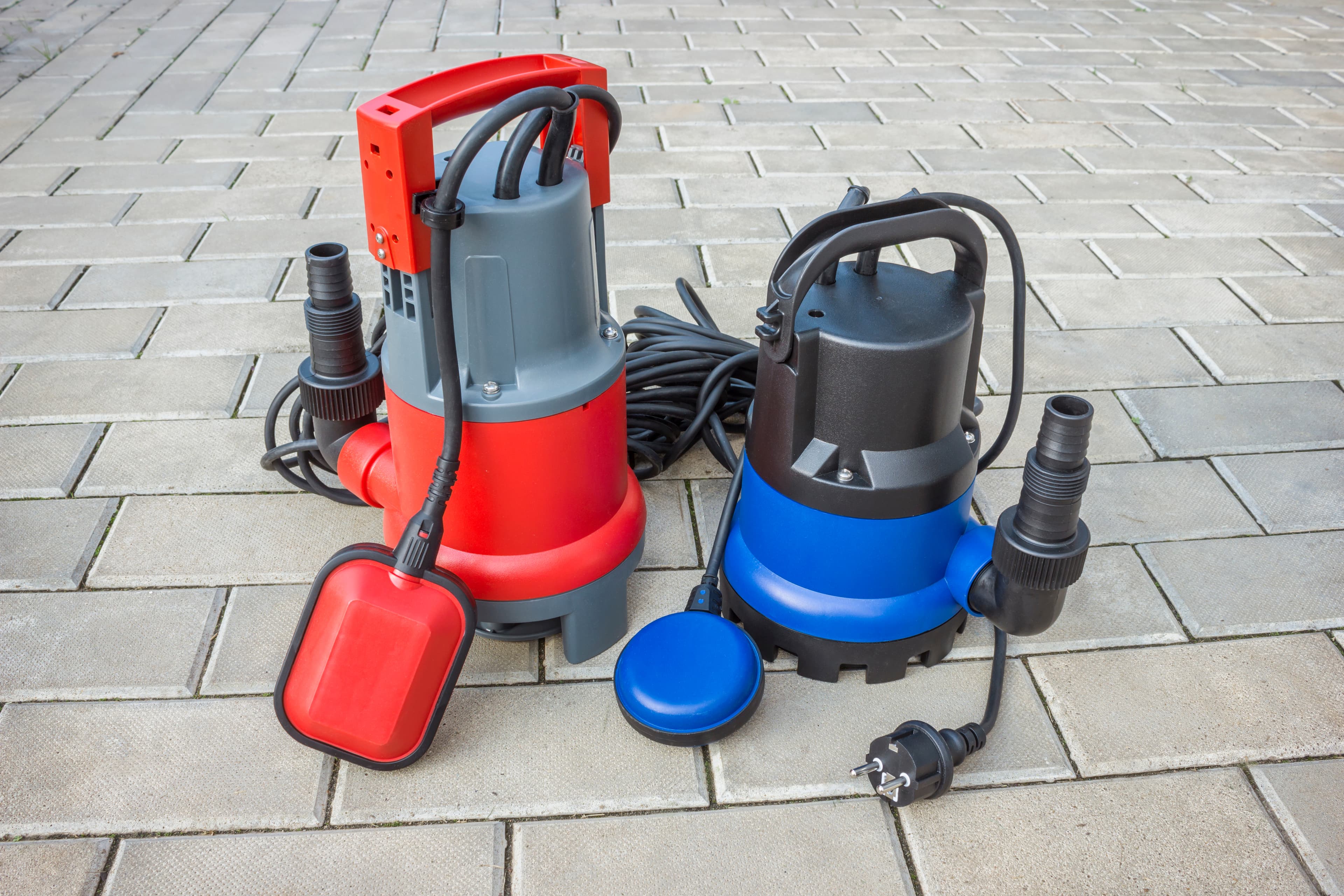
A red and blue sump pump are displayed on a paved surface, showcasing their utility and design for effective water management solutions. (Credit: Shutterstock)
Basement water problems rarely start in the basement. They usually start outside—snowmelt that can’t soak into frozen ground, rain that overwhelms soil absorption, or a high water table pushing groundwater upward. By the time you notice damp drywall, a musty smell, or a puddle near a floor drain, the real story has already unfolded under your lawn and around your foundation.
A sump pump is one of the most common “last steps” in that story. In Wikipedia’s sump pump article the device is described as a pump used to remove water that has collected in a sump basin, which is exactly how many Canadian basements manage groundwater when gravity drainage isn’t practical.
But the pump is only one piece of a system. Most homeowners interact with the system as a round lid in the floor, a humming sound after a storm, or a discharge pipe outside that runs for a minute and stops. Under that lid is a small basin (the sump pit), a pump, and a float or sensor that tells the pump when to turn on and off.
This guide breaks the whole setup into a clear, homeowner-friendly framework: where the water comes from, how it gets to your pit, how the pump moves it, where it should go, and what a sump pump can’t do. Along the way, you’ll get practical checklists, simple diagrams, and “what to look for” comparisons to help you assess your own home—especially in Canadian conditions where freeze–thaw cycles and spring melt add unique pressure to foundations.
The easiest way to understand a sump pump is to stop thinking of it as a standalone appliance and start thinking of it as a lift station for groundwater. Gravity moves water toward the lowest point; your sump pump takes over when gravity can’t get that water up and out to a safe location.
Most homes with sump systems follow the same basic sequence:
A perimeter drain is commonly called “weeping tile,” and in Ratehub’s guide to weeping tile and perimeter drains it’s described as a perforated pipe installed around the foundation at footing level to collect groundwater and direct it away from the home.
What homeowners often miss is that the sump pit is basically the system’s “collection bucket.” In Baseline Inspections’ basement flooding reference a typical sump pit drainage system is explained as having three key parts—the sump pit, the sump pump, and the discharge pipe—which is the cleanest mental model for understanding what you’re looking at in your own basement.
If you want a “real-world” reference for how this is typically drawn, the Paperzz-hosted copy of the CMHC “Avoiding Basement Flooding” guide includes common sump installation visuals that can help you match terms to what you see in your basement.
What this framework explains immediately: a sump pump is reactive by design. It turns on when water has already entered the drainage system and reached the pit. That’s not a flaw—it’s simply where the sump pump sits in the overall chain.
A sump pump is most common when the foundation drain can’t discharge by gravity to a ditch or storm outlet; the pump becomes the “lift” that makes the rest of the drainage system viable.
Canadian basement water risk isn’t just about “big storms.” It’s about timing and ground conditions, especially during shoulder seasons.
Spring thaw is the classic example. Snow and ice can melt quickly while the ground is still frozen, which means meltwater can’t soak in and instead runs across the surface toward the lowest points around your home. In Aviva Canada’s spring thaw basement protection article the spring thaw risk is explained through this exact behaviour—meltwater moving over frozen ground and increasing the chance of basement water problems.
A second driver is the high water table. Even in dry weather, groundwater can sit close to the basement slab and push against it. In Groundworks Canada’s high water table explainer the concept is framed around groundwater rising high enough to create persistent moisture pressure and seepage risk, which helps explain why some sump pumps run frequently even without rainfall.
Then there’s the slow, structural contributor: freeze–thaw cycles. Water can enter tiny cracks, freeze and expand, and gradually widen those pathways over time. In ALU Need’s overview of freeze–thaw impacts on Toronto foundations the mechanism is described in homeowner terms—repeated cycles that progressively worsen cracking and water entry potential.
Use this table as a “pattern matcher” when you’re trying to diagnose what’s causing your sump activity:
If your sump pump runs heavily during spring thaw, that can be normal—but it’s also when failures hurt most, because melt conditions can persist for days rather than hours.
Most homeowners will encounter two main pump configurations, plus a control method (float switch or sensor) that decides when the pump runs. If you can identify these three things—pump style, switch style, discharge path—you’ll understand 80% of what matters.
Submersible pumps sit down in the pit and operate underwater. In Lemon Lane Home’s guide to residential sump pump types the submersible configuration is described in plain terms as an in-pit, underwater design that tends to be quieter—often a better fit when the basement is finished or frequently used.
Pedestal pumps place the motor above the basin, with only the intake portion down in the pit. In JZ Plumbing’s comparison of sump pump differences the pedestal-style arrangement is contrasted with submersible setups, which helps clarify why pedestal pumps can be easier to access but may be noisier.
The third piece is control. In JMI Pumps’ breakdown of sump pump switches common switch types are outlined (including tethered and vertical float styles), which is useful because switch behaviour is one of the most common “why is my pump acting weird?” root causes.
A quick identification trick: if you can see a motor housing sitting above the pit opening, you’re likely looking at a pedestal design; if the pit lid hides everything and operation is quiet, it’s often submersible.
A sump pump doesn’t “solve” water; it relocates it. If you relocate it poorly, you can accidentally create a loop where discharged water returns to the foundation and re-enters the drainage system.
Discharge expectations vary by municipality, but the core principles are consistent: discharge onto a permeable area, keep it away from the foundation, and don’t send it onto sidewalks, streets, or neighbouring properties. In the City of Toronto’s basement flooding protection subsidy guidance the city’s homeowner-facing advice reflects these practical rules, including keeping discharge away from the house and avoiding improper connections.
A second “non-negotiable” theme is avoiding sanitary sewer connections. In Utilities Kingston’s basement flooding protection information the message is clear that foundation drains and sump discharge should not be routed into sanitary systems, because it can overload sewers during storms and contribute to flooding events.
If you suspect your sump discharge is tied into a sanitary sewer line (or routed into an interior drain), treat it as a high-priority correction—this isn’t just about performance, it’s also about flood risk and compliance.
A sump pump is a response to collected water. It does not prevent water from getting to your foundation in the first place, and it doesn’t address every path water can take into a basement.
Start with surface water management. If downspouts dump water beside the house, if grading slopes toward the foundation, or if window wells collect water, your basement can still leak even with a perfectly working pump. In the City of Calgary’s basement flooding and seepage guidance the city distinguishes seepage causes like grading and drainage issues from problems that a sump pump alone can solve.
Next is sewer backup, which is a different system entirely. A sump pump does not stop sewage from coming backward through drains during a sewer surcharge. In EPCOR’s explanation of backwater valves the device is described as a valve on the sanitary line that closes to prevent reverse flow, which is why it’s often discussed alongside sump pumps as a complementary protection.
Finally, there’s the limitation most people overlook until it’s too late: power. In the City of Calgary’s climate-ready drainage and water management measures the guidance highlights sump pumps as part of flood resilience while also pointing homeowners toward backup considerations, which matters because severe storms can coincide with outages.
Think in “systems,” not gadgets: a sump pump is best viewed as a groundwater control tool that complements—rather than replaces—good grading, downspout management, and foundation maintenance.
Some homes have sump systems because the neighbourhood’s soil and groundwater conditions demand it. Other homes have them because of building-era norms, local infrastructure, or past flooding history. And many homes do not need them at all.
A practical starting point is this: if you don’t have a sump pit, you don’t see moisture issues, and your basement stays dry through extreme weather, installing a sump pump may not be the first lever to pull. In the City of Calgary’s climate-ready sump pump guidance the city notes that if a home has no sump pump and no moisture problems, it’s unlikely one is needed—while homes with frequent cycling or flood-prone conditions should think in terms of backups, alarms, and layered protection.
If you already have a sump pump, the more important question becomes: is it reliable when you need it most? In the City of Hamilton’s basement flooding preparedness guidance the city recommends periodic testing and also frames pump lifespan expectations (often around a decade), which is a helpful reality check for homeowners relying on aging equipment.
How to interpret it: if you have multiple “High” marks, treat sump reliability as a core resilience issue. If most answers are “Low,” focus first on surface water management and monitoring rather than assuming a pump is the missing piece.
“Need” isn’t only about having a pump—it’s also about having a system that still works during the worst days (heavy rain + saturated soil + potential outages).
Most sump pump failures aren’t mysterious. They’re usually one of these:
A straightforward yearly test is one of the highest-return actions a homeowner can take. In the City of Hamilton’s sump pump preparedness guidance the city describes testing by adding water to the pit to confirm the pump starts automatically and that discharge is visible outside, which is exactly the proof you need before storm season.
If anything seems unsafe—standing water near electrical outlets, damaged cords, or unusual smells—stop and contact a qualified professional.
If your pump is older and you don’t know its history, treat that uncertainty as risk: document what you have now (photos, notes, approximate age) so decisions become simpler later.
It’s a basin set into the basement floor that collects groundwater from your drainage system so the pump can remove it in a controlled way. Think of it as a small indoor “storm drain box” that the pump empties when water rises.
No. Many homes manage water through gravity drainage and never need one. If you have no sump pit and no moisture issues through extreme weather, it’s often a sign your home’s drainage setup is already adequate.
The most common reasons are high groundwater levels, delayed drainage after a wet period, or seasonal meltwater moving through the soil. In some neighbourhoods, a “dry day” at the surface still means groundwater is flowing below grade.
It can be normal, especially when melting happens faster than the ground can absorb water. The key is whether the pump cycles predictably and whether discharged water is staying away from the foundation.
A sump pump problem shows up as poor pumping behaviour (won’t start, runs constantly, no discharge). A grading problem shows up outside first—water pooling near the foundation, downspouts dumping too close, or runoff flowing toward the house.
Short-cycling can signal a switch issue, poor pit volume, water returning to the pit, or an unusually high inflow rate. The goal is stable cycles: run, discharge, stop, then a reasonable interval before the next run.
It’s the control that senses water level and turns the pump on and off automatically. Many “pump failures” are actually switch failures (stuck, tangled, jammed) rather than motor failures.
“Better” depends on context. Submersibles tend to be quieter and more contained in the pit; pedestal pumps can be easier to access for service. Your basement layout, noise sensitivity, and maintenance comfort matter more than a universal preference.
Ideally onto your property where it can soak in or flow away safely without returning to the foundation. A good discharge point avoids sidewalks (icing risk) and avoids sending water onto a neighbour’s lot.
In many municipalities this is discouraged or prohibited because it can overload systems during storms. If you think your discharge is tied into indoor plumbing, it’s worth treating as a serious red flag and getting qualified advice.
No. Sewer backup comes through the sanitary line and drains, which is why backwater valves are used for that specific risk. A sump pump is primarily about groundwater and foundation drainage.
It’s a valve installed on the sanitary sewer line that can close to prevent sewage from flowing back into the home during a surcharge. Whether you need one depends on local risk and your home’s plumbing configuration.
At least annually, and ideally before storm season. Testing matters most before the periods you historically see water pressure—spring thaw and heavy rain months.
Lifespan is often discussed in “around a decade” terms, but it depends heavily on how often the pump runs and how harsh the water conditions are. Age plus frequent cycling is a strong cue to plan proactively.
A standard sump pump won’t run without power. That’s why homeowners in high-risk areas consider alarms and backup options—so the worst weather doesn’t coincide with a silent pump.
Watch the discharge outside during a run, then look for water flowing back toward the house or pooling near the foundation. If the pump runs again soon after discharge with no new rainfall, recirculation is a prime suspect.
It may suggest the moisture is coming from humidity, condensation, surface water entry, or cracks rather than drainage inflow to the pit. In those cases, improving exterior drainage and managing indoor humidity can matter as much as the pump itself.