


The expanded requirements take effect on January 1, 2026. If you’re renovating, finishing a basement, or replacing older alarms, it’s smart to plan your final layout with that date in mind so you’re not redoing work later.


A Practical, Floor-By-Floor Guide to Compliance, Installation, and Maintenance
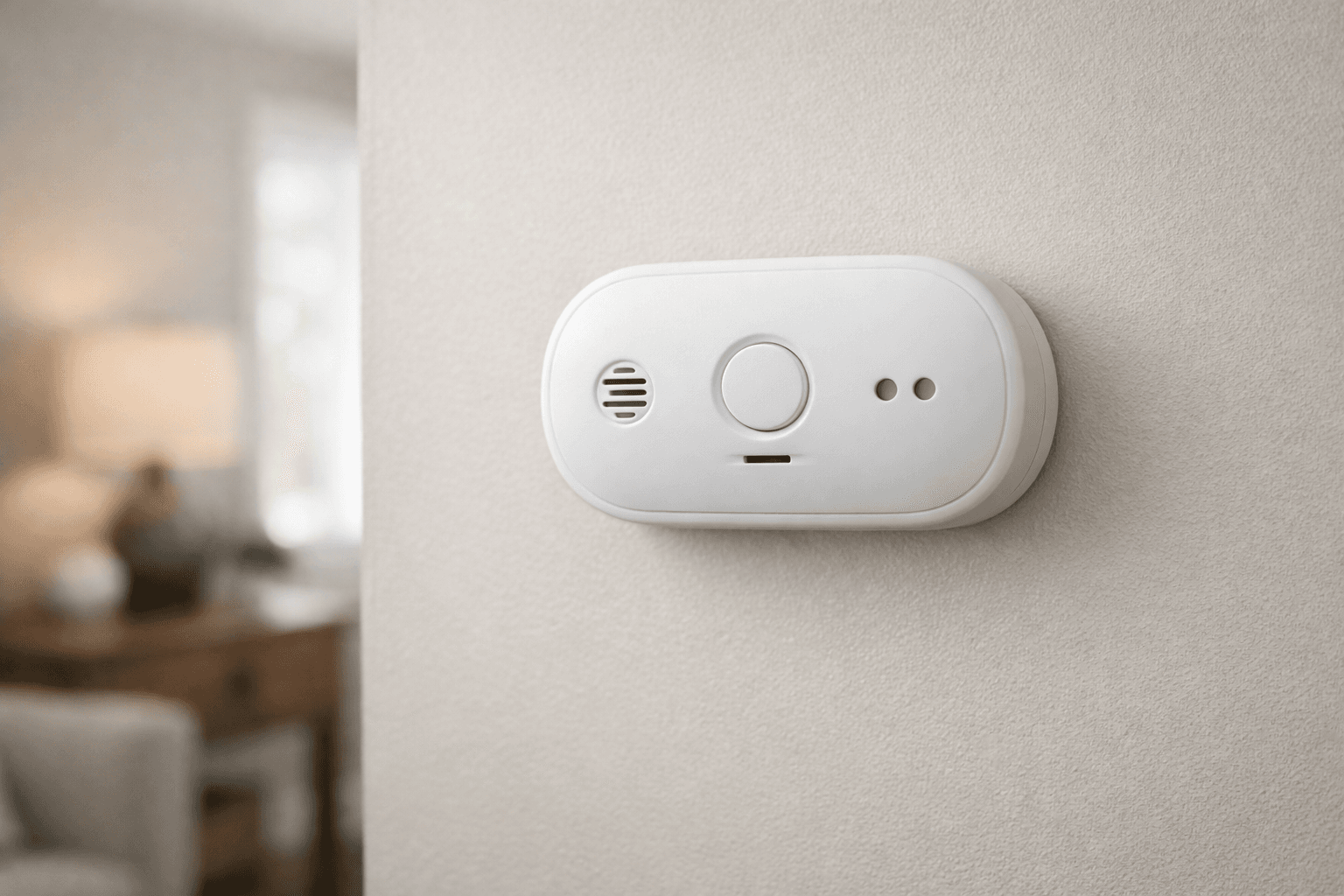
Modern CO alarms disappear into décor while meeting Ontario’s 2026 mandate for protection on every storey. (Credit: Homeowner.ca)
Ontario’s CO alarm rules are changing in a way that will catch a lot of homeowners off guard—because the biggest shift isn’t about buying a “better” device, it’s about covering more of your home. Ontario’s own carbon monoxide safety guidance explains that updated Fire Code requirements take effect on January 1, 2026, so the right time to plan is before that date (especially if you’re renovating, finishing a basement, or replacing older alarms).
The practical implication is simple: if you’re in scope (and many Ontario homes are), CO protection expands beyond “near the bedrooms” into a whole-home, storey-by-storey approach. That matters because CO doesn’t politely appear only at night in hallway air—it can build in a basement utility area, drift upward, and affect people on a different level than where the source started.
This guide is written for homeowners who want clarity and a plan. We’ll cover who the rule applies to, what “every storey” means in real homes, how to do a quick audit without overthinking it, what to look for when buying alarms, and how to install and maintain them so you’re protected for the long haul.
If you live in a condo or rental, you’re not off the hook—but your responsibilities and trigger conditions can look different. We’ll address multi-unit scenarios, common corridors, and the practical “who does what” questions that show up in real life.
The first step is confirming whether you’re in scope, because the 2026 change is not framed as “every home in Ontario must install CO alarms no matter what.” The Technical Standards and Safety Authority’s overview of the Ontario Fire Code changes describes the common triggers that make a home a realistic CO-risk environment, including fuel-burning appliances, fireplaces, attached garages, and situations where your home is heated by air from a fuel-burning appliance located outside the dwelling.
In practice, that “trigger list” often includes homes with:
If you read that list and think “that’s basically most houses,” you’re not wrong—especially in Ontario communities with forced-air systems and attached garages.
If you’re unsure whether your home is heated by air supplied from a fuel-burning appliance outside the dwelling (for example, a shared service room arrangement), treat it like a compliance question—not a guess. Ask the building operator, builder, or a qualified HVAC professional so you’re not planning off assumptions.
Most homeowners already understand the “near bedrooms” concept, and many homes already have one CO alarm in a hallway outside sleeping areas. What changes in 2026 is the added requirement for coverage on every storey when the home is in scope. The Town of Ajax’s summary of the new Ontario carbon monoxide alarm requirements explains that CO alarms must be installed adjacent to each sleeping area and, starting January 1, 2026, on every storey of the home, including storeys that don’t contain sleeping areas.
Here’s how that typically plays out in real Ontario houses:
This is also where homeowners accidentally undercount. People naturally count floors where they spend time, but Fire Code language focuses on storeys—so a “mostly storage” basement or a “just laundry” level can still matter if your home is in scope.
A CO alarm in the basement does not replace the need for one adjacent to sleeping areas. Think of the system as layered: bedroom-area coverage protects you when you’re asleep, and storey-by-storey coverage catches buildup earlier elsewhere.
There is an important edge case worth knowing, because it changes how you plan—especially if you’ve electrified your home or bought a newer build that’s all-electric. The Ontario Association of Fire Chiefs’ explanation of Ontario’s expanded CO alarm rules notes that fully electric homes with no fuel-burning appliances and no attached garage are not required by the Ontario Fire Code to have CO alarms under the expanded rules.
Two practical cautions for homeowners:
If you’re truly out of scope, you can treat CO alarms as a voluntary safety upgrade rather than a code-driven requirement. But if you’re “mostly electric” with one gas water heater or an attached garage, plan as if you’re fully in scope—because you are.
It helps to understand the “why,” because it changes how seriously people take placement. CO incidents don’t always announce themselves where you expect—and the goal of expanded coverage is earlier warning and more time to act. The Ontario Association of Fire Chiefs’ update on new Ontario Fire Code rules requiring additional carbon monoxide alarms highlights the life-safety intent behind adding alarms on every storey: getting people alerted sooner, not later.
That intent lines up with how homes behave in winter:
So the “every storey” requirement isn’t paperwork. It’s a design choice aimed at preventing the scenario where the first alarm to trigger is far from the source and far too late to provide meaningful warning.
Ontario’s rules don’t just care that you bought a CO alarm—they care that it’s an alarm that meets recognized safety standards. The legal text in Ontario Regulation 194/14 references recognized standards for residential CO alarms such as CAN/CSA-6.19 and UL 2034, which is why the box and device markings are not just marketing—they’re your first compliance filter.
A practical buying checklist for homeowners:
This is also a good moment to think about who is responsible for ongoing maintenance. If you’re an owner-landlord, your job doesn’t end at installation—routine testing, battery replacement where applicable, and timely replacement are part of keeping the system functional in real use, not just “present for inspection.”
Once you have enough alarms to cover every required storey and bedroom-adjacent locations, installation becomes a quality-of-protection question. The Ontario Association of Fire Chiefs’ guidance on expanded CO alarm requirements describes practical placement considerations like mounting alarms on ceilings or high on walls, avoiding corners and vents, and keeping them within roughly 10 metres of sleeping areas while still following the manufacturer’s installation instructions.
A homeowner-friendly installation approach:
If you’re using different power styles:
Don’t solve nuisance chirps or an inconvenient outlet by relocating an alarm into a hidden corner. If a location is awkward to access, it’s less likely to get tested and more likely to be ignored when it signals trouble.
CO alarm compliance isn’t a one-time purchase. Sensors age, batteries weaken, and people tune out chirps—so a routine matters.
Municipal guidance from the Town of Ajax in its 2026 CO alarm requirements update recommends a practical rhythm: test monthly using the test button, replace batteries in line with manufacturer instructions (often at least annually for many models), and replace the entire alarm at the end of its service life—commonly in the 5–10 year range depending on the unit.
A realistic homeowner routine looks like this:
Put a small label on the side of each alarm with the install month/year. It turns a vague “How old is this?” into a 5-second answer.
CO alarms are your “last line of defence,” but you can reduce the chance of an incident by lowering the odds of CO production or preventing it from entering living spaces.
Ontario’s carbon monoxide safety guidance emphasizes practical prevention behaviours like keeping fuel-burning appliances in good working order and ensuring vents, chimneys, and air intakes aren’t blocked—especially during winter conditions when snow and ice can interfere with proper venting.
A prevention-focused checklist that stays in homeowner territory:
If a CO alarm sounds, treat it as an emergency signal—not a maintenance reminder. Get everyone to fresh air first, then make calls and troubleshoot once people are safe.
A common homeowner mistake is assuming one alarm covers everything. It doesn’t—unless you’ve specifically installed a listed combination unit designed to alarm for both hazards.
The City of Toronto’s carbon monoxide alarm guidance distinguishes the roles clearly: smoke alarms alert you to smoke from fire, while CO alarms alert you to carbon monoxide gas, and it also notes that more than 80% of reported injuries and deaths from CO exposure occur in the home—exactly why residential rules focus on whole-home protection.
The practical takeaway:
Multi-unit buildings introduce two extra wrinkles: CO sources can be shared, and responsibilities can be split between unit owners, landlords, and building owners.
The City of Kingston’s overview on the Fire Code expansion in its post about Ontario expanding carbon monoxide alarm requirements describes how units can require CO alarms not only when they contain fuel-burning appliances or fireplaces, but also when they’re located next to common risk zones like garages or service rooms with fuel-burning equipment.
If you live in a condo or apartment, use this framing:
Some 2026 changes apply to common areas as well, which means residents may start seeing new devices in hallways. The Ontario Association of Fire Chiefs’ guidance for apartment stakeholders in its update on Ontario Fire Code requirements for apartment owners describes CO alarms being required in certain public corridors when those corridors are heated by air from a fuel-burning appliance, with guidance that devices may be spaced along the corridor (for example, no more than 25 metres apart in that apartment-owner context).
For residents, the key point is simple: corridor alarms are part of a broader protection strategy. For building owners and property managers, this is a planning item with real installation scope—not a minor retrofit.
If you want the “why is this legally real?” reference point, a municipal summary is often the most readable place to start. The Township of Clearview’s news release on changes to CO alarm requirements coming January 1, 2026 links the change to Ontario Regulation 87/25 amending the Ontario Fire Code, which is why the 2026 update is not merely best practice—it’s a compliance requirement for affected homes.
And compliance includes behaviour. Disabling alarms undermines the entire intent of the rules, and it can carry serious consequences. The City of Oshawa’s notice on carbon monoxide alarm requirement changes warns that tampering with smoke or CO alarms can lead to major penalties, including fines up to $50,000 for individuals and/or up to one year of imprisonment, which is a strong signal that Ontario treats these devices as life-safety equipment—not optional gadgets.
If an alarm is chirping or causing nuisance issues, fix the cause (battery, end-of-life replacement, placement per instructions) instead of disabling the device. “Temporary” tampering has a habit of becoming permanent.
The expanded requirements take effect on January 1, 2026. If you’re renovating, finishing a basement, or replacing older alarms, it’s smart to plan your final layout with that date in mind so you’re not redoing work later.
No. It applies to existing homes that have meaningful CO risk factors such as fuel-burning appliances, fireplaces, attached garages, or heating air supplied from a fuel-burning appliance located outside the dwelling. If your home is fully electric and has no attached garage, it may be exempt.
The biggest change is the “every storey” concept. Homes that already have an alarm near bedrooms may still need additional alarms on levels like basements or main floors that don’t contain sleeping areas.
Possibly, yes. Bedroom-adjacent coverage is still important, but if you’re in scope under the rules, you should plan for CO alarms on every storey, not only near sleeping areas.
In practical planning, yes—especially because basements often contain fuel-burning equipment or shared mechanical spaces. If your home is in scope, treat the basement as a storey that needs coverage.
Your compliance needs can change with your home. Adding a fuel-burning appliance (or creating other CO sources) can move you into scope, which is why electrification and renovation planning should include a quick CO risk check.
No. Smoke alarms detect smoke from fires, while CO alarms detect carbon monoxide gas. Many homes need both because they address different hazards, and a combination unit only helps if it’s listed for both functions and installed appropriately.
Focus first on certification to recognized standards and clear approval markings, then consider practical features like end-of-life indication, interconnect options, and service life. Avoid devices that look like monitors but aren’t certified as alarms.
A practical routine is to test monthly using the test button, maintain batteries per manufacturer instructions, and replace the entire unit at the end of its stated service life (commonly in the 5–10 year range, depending on the alarm).
You still might. Units can be in scope based on what is beside, above, or below them—especially if adjacent to garages or service rooms with fuel-burning equipment, or if heated by air from fuel-burning appliances outside the unit.
Some corridor requirements apply when corridors are heated by air from fuel-burning appliances, which is part of a building-wide strategy to detect CO where it could accumulate beyond individual units.
Disabling alarms is unsafe and can be illegal. If a device is chirping or nuisance-triggering, it’s better to address the root cause—battery, end-of-life replacement, or placement—rather than tampering with the alarm.