It’s an Ontario program that provides rebates for eligible home energy-efficiency upgrades, with different streams depending on whether you do an assessment-based bundle or a single upgrade.


A Clear, Practical Playbook for Picking the Right Stream and Getting Your Rebate Without Surprises
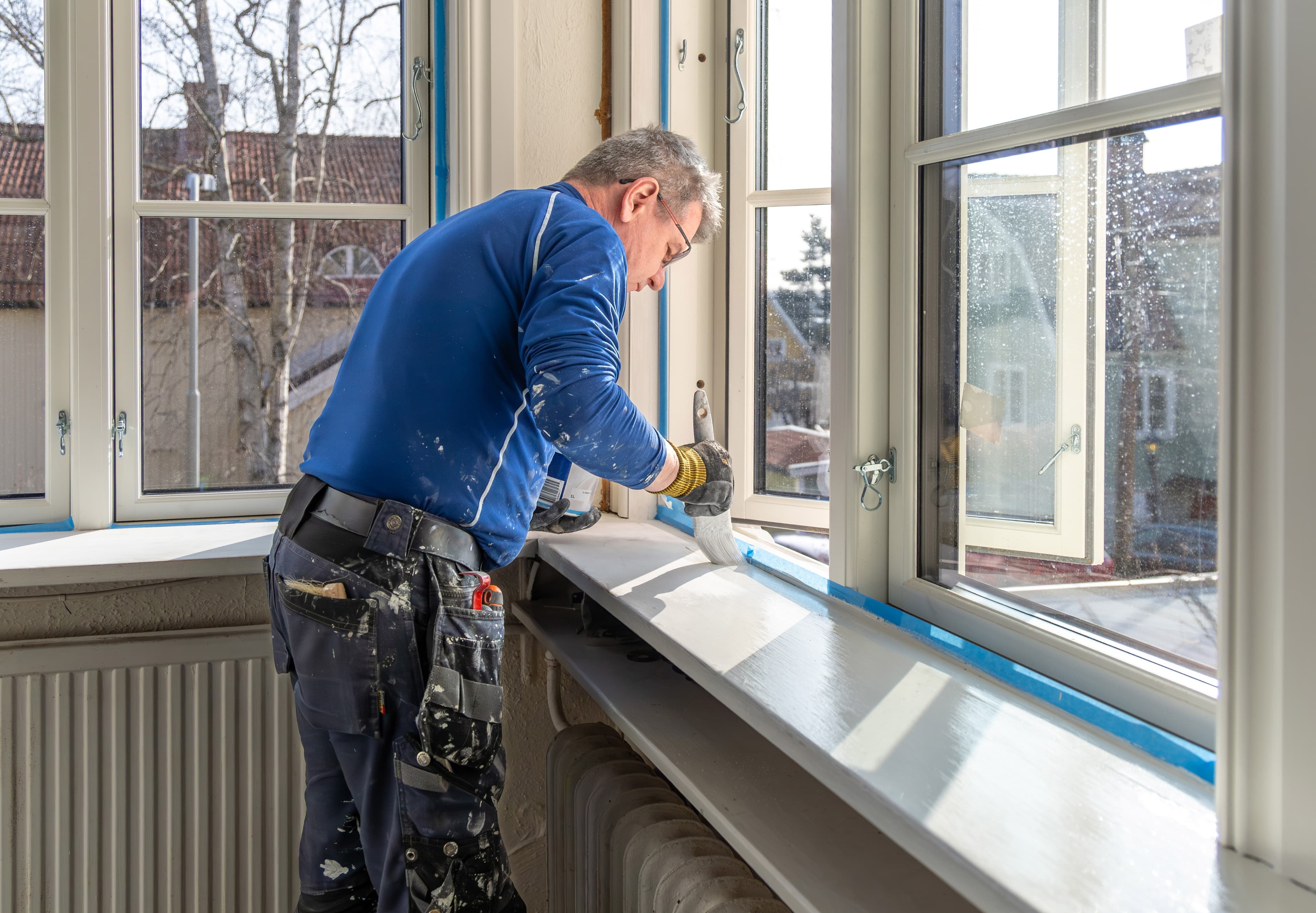
Half-finished walls and careful measuring mark the paperwork-heavy path from eligibility checks to real rebates. (Credit: Shutterstock.com)
Ontario’s Home Renovation Savings Program (HRSP) is designed to make energy-efficiency renovations easier to plan and easier to fund, especially when you’re trying to balance comfort, long-term utility costs, and a renovation budget. The key is that HRSP isn’t a single rebate with one set of rules—it’s a set of upgrade “streams” with different requirements depending on what you’re installing.
In practical terms, HRSP helps cover part of the cost of common efficiency upgrades—like insulation, windows and doors, heat pumps, rooftop solar, battery storage, smart thermostats, and select high-efficiency appliances—by paying a rebate after you follow the program steps and submit the right proof.
It also matters who’s behind the program, because that tells you where to apply, how the process works, and why utility service details show up in the eligibility rules. As described on the Save on Energy Home Renovation Savings Program page, HRSP is delivered through Enbridge Gas and the Independent Electricity System Operator’s Save on Energy brand to help Ontarians improve home efficiency and comfort.
This guide is built to help you do three things confidently:
HRSP is relatively new, and that’s good news for homeowners because it means the program is intended to be active, scaled, and supported as part of a larger efficiency push. As stated in the province’s announcement on the Ontario government news release, the Home Renovation Savings Program launched on January 28, 2025 as part of Ontario’s 12-year, $10.9 billion investment in new and expanded energy-efficiency programs.
You’ll also see the same “new programs are rolling out now” message echoed in local Ontario updates such as Brian Saunderson’s post on new energy-efficiency programs coming to Simcoe–Grey, which helps reinforce that HRSP is meant to be broadly available across the province rather than a limited pilot.
What this means for you as a homeowner: HRSP is positioned as a streamlined, coordinated program. You should plan around one central set of program steps per stream (instead of trying to stitch together multiple overlapping provincial/utility rebates for the same measure).
HRSP’s value proposition is straightforward: it can cover a meaningful portion of eligible project costs for core energy upgrades. A third-party industry commentary from TRREB notes that HRSP offers rebates that can cover up to roughly 30% of eligible costs for upgrades like windows, insulation, heat pumps, solar panels, and battery storage, as summarized in TRREB’s GlobeNewswire release while describing the program’s scope.
That “up to” matters. Your actual rebate depends on:
“Up to” is not a loophole—it’s a warning label. Treat maximum rebate figures as planning numbers, then validate your exact eligibility and amounts before you sign a contract or buy equipment.
HRSP is built around two high-level approaches. One is designed for “whole-home” style upgrades (where an assessment guides the work), and the other is designed for single measures (where you can do one upgrade without booking an assessment first). The program’s main portal lays out this “your upgrades, your way” structure on the Home Renovation Savings Program website while distinguishing between bundled and single-upgrade participation paths.
Here’s the simplest decision rule:
If you’re already planning multiple envelope upgrades (like attic insulation + air sealing, or windows + insulation), the bundled path can be easier to manage than trying to “piece together” separate incentives.
The bundled stream has a clear order of operations: you start with a pre-retrofit home energy assessment, then complete at least two eligible upgrades, then finish with a follow-up assessment so the paperwork can be submitted and rebates processed. HRSP’s official guidance spells out this requirement on the Help and Support page while listing the measures that require an assessment and explaining that at least two upgrades must be completed to qualify for bundled rebates.
This is not a paperwork preference—it’s an eligibility gate.
While program details can evolve, the bundled stream commonly applies to envelope and efficiency measures that are easiest to validate through an audit process, including:
Homeowners often hesitate because they assume the assessment is an unrecoverable cost. In HRSP, that’s not how it’s framed: the program includes a rebate that can offset the audit cost once you complete the required upgrades. Jess Dixon’s program overview notes the assessment cost support in the Ontario launch summary post while describing rebate features and expected processing timelines.
The operational takeaway:
If you book an assessment but only do one upgrade, you’re not just reducing your rebate—you may lose access to the bundled rebate structure entirely for those measures.
The program’s public summaries commonly highlight maximums for popular measures. The Save on Energy program page describes maximum rebates such as up to $7,700 for insulation, $100 per rough opening for eligible windows and doors, up to $250 for air sealing, and $500 for qualifying ENERGY STAR heat pump water heaters in the bundled stream.
Use these as planning ceilings, then confirm exact eligibility and what documentation is required for your specific project.
Not every homeowner wants (or needs) a full assessment-based bundle. The program’s main portal presents single-upgrade options—like heat pumps, solar/battery, thermostats, and appliances—on the Home Renovation Savings Program homepage while listing current “no assessment required” rebate categories.
These are your “one project at a time” entry points, but they come with their own technical rules and deadlines.
Heat pump rebates are among the largest incentives in HRSP, and they also have the most “if/then” rules because the program distinguishes between different baselines (fuel type, grid connection, and in some cases gas utility service). The program details define these conditions on the HRSP Help and Support page while specifying eligible home types, occupancy requirements for new homes, first-time heat pump installation rules, and the way incentives are calculated by tonnage and baseline fuel.
A practical eligibility checklist you can use before you get quotes:
Home and ownership basics
Utility and fuel baseline basics
Equipment basics
To make the incentive math easier to visualize, here are simplified planning examples based on the program’s common tonnage-based structure.
If you’re comparing contractor quotes, ask them to state the proposed system tonnage explicitly and confirm the model’s listing status before you assume a rebate number.
Solar and battery rebates are often attractive because they can be a single, high-impact project. The practical difference is that your “proof package” typically needs to be clean: invoices, installation confirmation, and any program-specific forms.
Smart thermostat rebates can look simple on the surface, but homeowners commonly miss the structure: there may be a “before you buy” discount-code path and an “after you buy” receipt submission path, and the program may limit the number of thermostat rebates per household over the program’s lifetime.
Appliance rebates are best treated as a “high-efficiency model” incentive rather than a general discount, and timing matters because the submission window can be tight. John Jordan’s announcement describes HRSP as a streamlined “one-window” offering and confirms appliances as part of the program in the news release post while summarizing eligible upgrade categories and the program’s intent.
Attic insulation is one of the most common upgrades homeowners plan, and HRSP includes a no-assessment option in many cases. The key constraints are that rebates are often calculated as a percentage of total cost up to a cap, the cap can vary by attic type (typical vs. flat/cathedral), and the work must be completed by participating contractors—DIY installations don’t qualify.
Think of HRSP as a compliance-driven workflow with four phases:
The program’s guidance outlines key timing expectations (including “within ~60 days” style processing targets after document submission for several measures) on the Help and Support page while describing when rebates are paid and what events trigger payment in each stream.
The single biggest “avoidable denial” pattern is doing bundled-eligible work before the pre-retrofit assessment, because the program rules treat timing as an eligibility condition rather than a preference.
Use this list to reduce back-and-forth:
Program expectations are often framed as “within a certain number of days” after submission or approval, and that can vary by stream. Jess Dixon’s release mentions a roughly 30–60 day timeline after approved application in the Ontario program summary while describing what homeowners can expect once the application is accepted.
Operationally, plan your cash flow as if the rebate is reimbursement—not instant discount—unless a specific stream uses an upfront code or point-of-sale discount.
Most HRSP issues are process issues, not “you did the wrong renovation.” They usually fall into these categories:
Here’s a practical “problem → prevention” table you can use to self-audit before you apply.
If something feels “unclear,” treat that as a signal to pause and confirm eligibility before you proceed, because the program’s rules often hinge on small technical details.
Many homeowners want to stack multiple incentives, but HRSP generally restricts combining HRSP rebates with other incentives from Enbridge Gas, Save on Energy, or the Government of Ontario for the same measure, and some measures also have caps tied to total project cost. The program explains these stacking limits and cost-percentage constraints on the Help and Support page while describing restrictions by stream and measure.
HRSP materials have also pointed homeowners toward combining rebates with the federal Canada Greener Homes Loan, while noting that the loan has separate rules and deadlines. If you’re considering financing, treat HRSP as the rebate program and the loan as a separate application process that needs its own timeline tracking.
If any federal or provincial deadline date is referenced in program materials, assume it can change and verify current status before you commit to a financing plan.
Rebate programs attract scammers because the promise of “free money” lowers people’s guard. HRSP explicitly warns that approved service organizations and participating contractors will not cold-call or show up door-to-door to start the process, and it advises homeowners to initiate contact and verify contractors through official lists on the Home Renovation Savings scam warning page while outlining what legitimate participation should look like.
Use this checklist as your default posture:
If someone claims they can “start the rebate for you today” without checking your eligibility stream or assessment requirements, treat that as a red flag—not a convenience.
It’s an Ontario program that provides rebates for eligible home energy-efficiency upgrades, with different streams depending on whether you do an assessment-based bundle or a single upgrade.
Not always—many single-upgrade streams don’t require one, but bundled rebates generally do.
Starting insulation/windows/air sealing (or other assessment-required work) before completing the pre-retrofit assessment.
Typically at least two eligible upgrades are required to qualify for bundled rebates.
You may pay up front, and the program can rebate a portion of the assessment cost once you complete the required assessment-based upgrades.
For many major measures, the applicant generally needs to be the property owner and responsible for paying for the installation.
In many cases, yes—owners can participate per eligible property as long as each application meets that stream’s rules.
Commonly eligible types include single-detached, semi-detached, row/townhouse, and mobile homes on a permanent foundation, with special rules for new builds.
The incentive structure can change based on your baseline (natural gas vs. electric/oil/propane/wood), and the program often calculates incentives differently depending on that baseline.
It generally means the heat pump must be the first space-heating heat pump installed in that home (not a replacement of an existing one).
Many rebate structures require using participating contractors for attic insulation, and DIY installations typically don’t qualify.
Processing is often described in “within” timelines after submission/approval (commonly on the order of weeks), so plan for reimbursement rather than an instant discount unless a stream offers point-of-sale support.
Often not—HRSP generally restricts stacking with other Enbridge Gas, Save on Energy, or Ontario government incentives for the same measure.
In many cases, program materials indicate you can pair rebates with separate financing programs, but you must apply separately and follow the loan’s own deadlines.
Use official program lists and be cautious of cold-calls or door-to-door claims that they can start your rebate without verifying stream rules and eligibility.