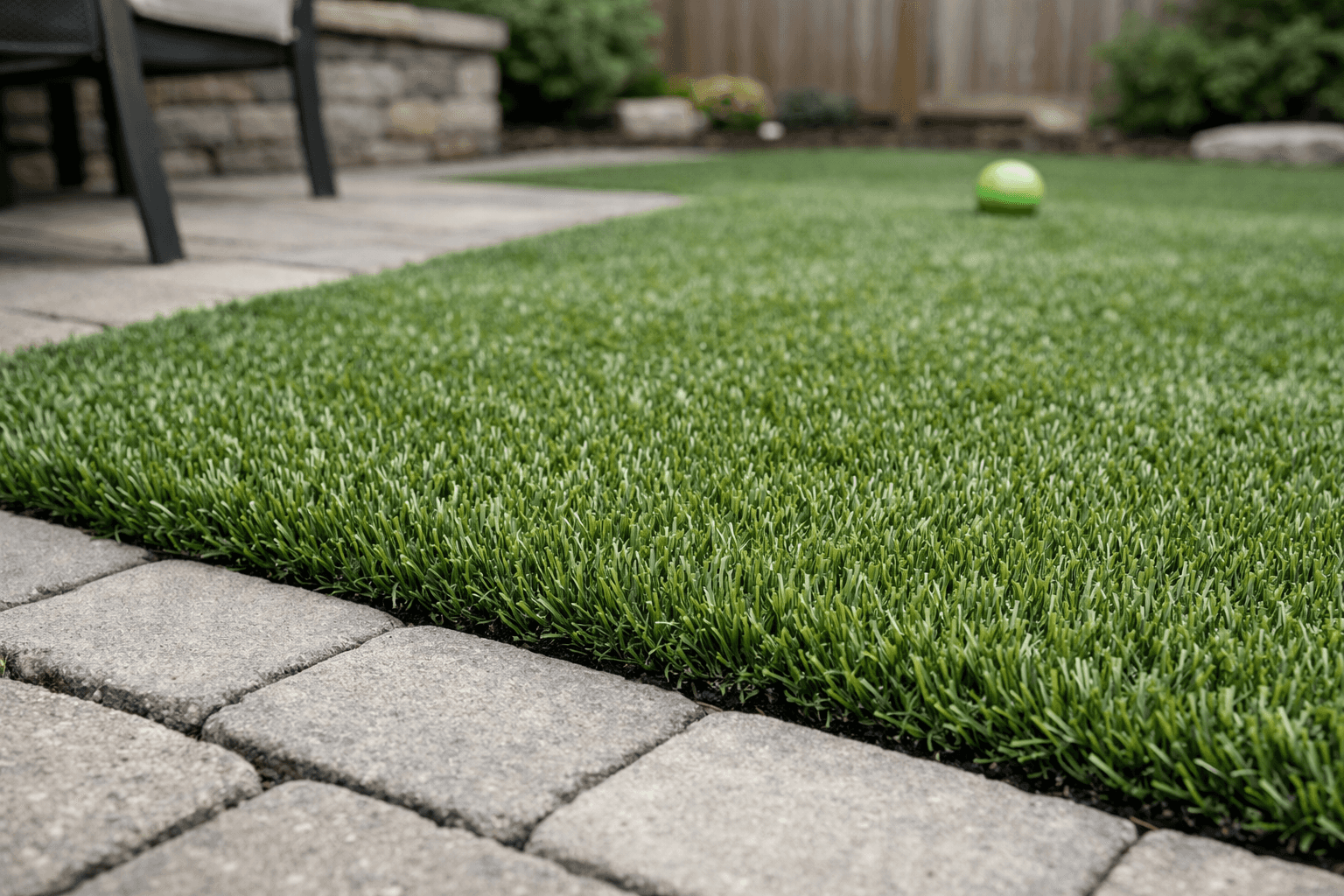
Artificial grass is a fantastic upgrade for dog owners—until the first warm day in spring, when the yard suddenly smells like a kennel. If you’ve ever wondered why your turf looks clean but still stinks, the answer is almost always the same: pet waste doesn’t “disappear” the way it can in living soil. It sits on (and seeps into) a synthetic system designed to drain, not biologically break things down.
The good news is that most turf odour problems are maintenance problems, not “bad turf” problems. A consistent routine prevents urine salts and organic residue from building up in the infill and base layer, where bacteria can thrive. When you keep that system dry, aerated, and periodically rinsed through, you’ll usually keep odours under control—even in multi-dog homes.
The other reality, especially in Canada, is seasonality. Your schedule in July shouldn’t look like your schedule in January. Heat accelerates odours. Freeze-thaw can lock everything in place for weeks. And shoulder seasons bring debris (leaves, mud, pollen) that can trap moisture and make smells worse. A routine that adapts to the calendar is the difference between “pretty much fine” and “why does it smell again?”
This guide gives you a clear, Canadian-friendly checklist you can actually follow: a baseline rhythm (daily/weekly/monthly), targeted tactics for hotspots and accidents, what to use (and what not to), winter-safe snow management, and how to tell when you’re dealing with a deeper infill or drainage issue rather than a surface-cleaning issue.