
It tells you how resistant a wood species is to denting and impact. It is useful for comparing species, but it does not fully predict scratch visibility, finish wear, or seasonal movement.


A Practical Canadian Guide To Dent Resistance, Seasonal Movement, And Everyday Wear
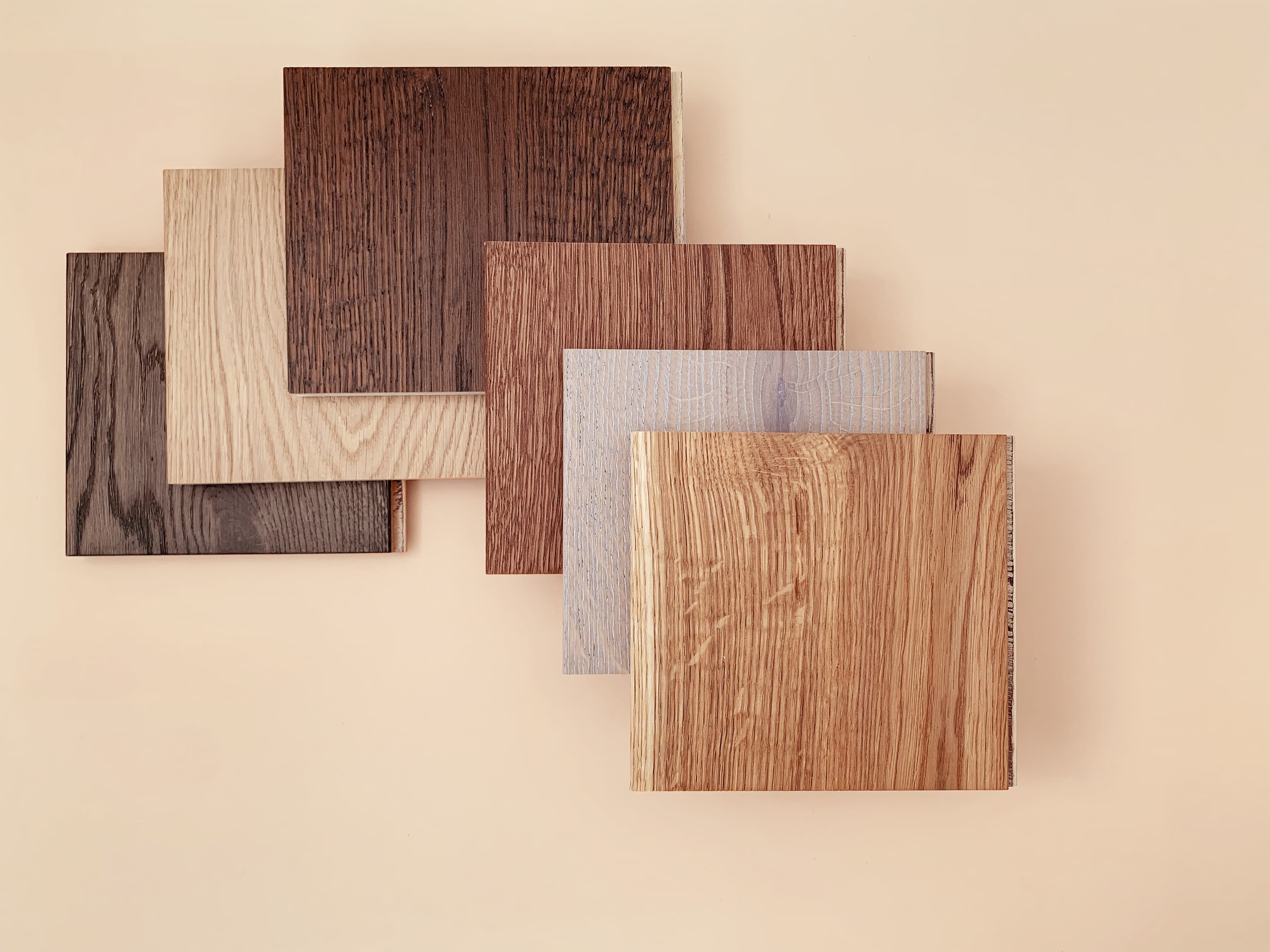
Wood planks fan across the table in quiet competition—oak, maple, hickory—each promising beauty, until busy feet and spills decide. (Credit: Shutterstock)
When homeowners ask which hardwood “holds up” best, they are usually bundling together several different concerns. They want fewer dents from toys, chairs, and dropped items. They want fewer visible scratches from claws and grit. They want the floor to keep looking good through muddy entries, busy hallways, and the dry-wet rhythm of Canadian seasons. Those are related issues, but they are not the same issue.
That is why species selection should start with a clearer framework. A good busy-home floor is not simply the hardest wood on the chart. It is the species, cut, board format, and finish combination that best fits your household. In practice, that means comparing each species by four things: how it looks, how well it resists dents, how much it tends to move with humidity changes, and where it usually sits on the price ladder.
The Janka rating is useful here, but only if you use it properly. As CIERO’s Canadian Janka guide explains, the test measures how much force it takes to press a steel ball partway into the wood, so it is mainly a dent-and-impact benchmark rather than a complete durability score. That makes it a good first filter for kitchens, hallways, and family-room traffic, but not a full answer on its own.
A second Canadian reality matters just as much: hardwood is hygroscopic, so it expands and contracts as indoor humidity changes. According to the BC Floor Covering Association, maintaining roughly 35 to 55 per cent relative humidity helps limit excessive movement, gaps, and related problems. In other words, the species matters, but so does the environment you ask it to live in.
What follows is a shortlist built for real homes, not showroom perfection. Think of oak as the benchmark, maple as the clean-lined hard option, hickory as the high-impact workhorse, and the other species as smart alternatives depending on your tolerance for movement, maintenance, and visible wear.
*Hardness figures are drawn from Canadian flooring reference charts such as Canadian Made Flooring’s species guide and comparable Canadian hardness summaries.
“More durable” on paper can still look worse in daily life if the sheen is high, the colour shows dust, or the grain is too quiet to hide scratches. Appearance forgiveness is part of performance.
If you want one species family to anchor the whole discussion, it is oak. In Canadian flooring, red oak and white oak are longstanding standards because they sit in the useful middle: hard enough for active homes, widely available, relatively flexible in style, and usually more affordable than premium domestic or exotic options.
White oak is the slightly tougher of the two, at about 1,360 on the Janka scale versus about 1,290 for red oak, as shown in Canadian Made Flooring’s comparison data. That is not a night-and-day difference, but it is enough to make white oak the more common recommendation when buyers want a “safe choice” for hard-working main floors.
Visually, the difference is often more important than the hardness gap. Superior Flooring’s red-oak-versus-white-oak guide describes red oak as bolder and warmer, with more obvious reddish-pink undertones, while white oak reads tighter-grained, calmer, and a bit more modern. In practical terms, red oak’s stronger grain can help disguise some day-to-day activity, while white oak often fits today’s lighter, lower-contrast interiors more easily.
Oak also works well because its movement profile is manageable. It is not static, because no wood floor is, but white oak in particular is generally a steadier bet than more movement-prone species when you start talking about wider planks or homes with larger seasonal humidity swings. That matters in Canada, where winter dryness can make even a correctly installed floor show small gaps.
The best way to think about oak is this: it is the benchmark species because it rarely forces a dramatic tradeoff. You are not maximizing hardness the way you would with hickory. You are not chasing the cleanest, most uniform look the way you might with maple. You are choosing a balanced floor that tends to stay sensible across durability, appearance, and budget.
Pros: Balanced performance, broad style range, widely available, easier to compare across suppliers.
Cons: Not the hardest option, and a high-gloss oak floor will still show wear faster than many people expect.
Hard maple, often sold as sugar maple, is one of the first species homeowners consider when they want a tougher floor without going fully rustic. At roughly 1,450 on the Janka scale, it is meaningfully harder than red oak and modestly harder than white oak, which is why it frequently lands on shortlists for busy family homes.
The appeal is straightforward: maple is pale, clean, and fine-grained. It has a closed, uniform surface that suits contemporary interiors especially well. But the same visual smoothness that makes maple look refined can make it less forgiving in day-to-day life. As noted in Canadian Made Flooring’s overview, maple’s hardness is a strength, yet its finer grain and smoother look can make scratches and surface marks more obvious than they are on more open-grained woods.
That distinction matters. A maple floor may resist a dent from a dropped object better than red oak, yet still look busier over time if the finish is glossy and the household tracks in grit. Maple is a good example of why homeowners should not confuse “harder” with “always looks better longer.” The wood can be physically resilient while remaining visually revealing.
Maple also deserves extra caution around movement-sensitive applications. It is often treated as less suitable over radiant heat than more stable options, especially in wider solid planks. That does not make it off-limits in every case, but it means the exact product format, cut, and manufacturer approval matter more than the species name alone.
The best case for maple is a busy home that wants a lighter, cleaner aesthetic and values dent resistance, while accepting that surface scuffs may still show unless the finish and sheen are chosen carefully.
Pros: Strong dent resistance, clean modern look, lighter colour palette.
Cons: Can show scratches and uneven stain more readily, less forgiving in movement-sensitive installations.
If the question is purely, “Which commonly available domestic species best resists dents?” hickory is near the top of the list. At about 1,820 on the Janka scale, it is one of the hardest mainstream North American flooring woods available in Canada, making it a natural candidate for homes with kids, active entertaining, and large dogs.
This is also the species most likely to be marketed as the answer for “busy homes,” and that is not wrong. CIERO’s practical threshold guidance notes that high-traffic hubs often benefit from species around 1,400 lbf or higher, and homes with large heavy dogs may benefit from something around 1,800 lbf to better minimize claw-related denting. Hickory fits that brief cleanly.
The catch is that hickory is not subtle. Its grain is active, its colour variation can be dramatic, and its visual energy is part of the package. For some homeowners, that is a major plus because the busier pattern helps conceal minor wear, dust, and the visual noise of daily life. For others, it can feel too rustic or too high-contrast for an open-concept main floor.
The other catch is movement. Compared with white oak, hickory generally shows more width change with humidity swings, especially in solid flooring and especially in wider boards. That does not mean hickory is a poor choice. It means you should be more cautious about pairing very hard use, very wide planks, and poor humidity control in the same project. In a dry Canadian winter, that stack of variables can create more noticeable gapping than many buyers expect.
Hickory is best treated as a targeted solution. It is excellent when dent resistance is the dominant priority and the homeowner is comfortable with a busier look and a narrower operating window for humidity management.
Pros: Exceptional dent resistance, forgiving grain pattern, strong fit for pets and kids.
Cons: More movement-prone than oak, visually bold, not the easiest species for radiant or wide solid-plank applications.
For heavy-use homes, harder species help, but humidity discipline still matters. A harder wood does not cancel out seasonal movement.
Ash and yellow birch do not get as much attention as oak, maple, or hickory, but they deserve a place on a serious shortlist. Both offer workable hardness for active homes without pushing as hard into the tradeoffs that come with hickory.
Ash sits at about 1,320 on the Janka scale, placing it close to white oak in practical terms. It tends to have an open, expressive grain, which can be visually helpful in busy homes because grain variation makes small marks less obvious. The downside is that ash can move more in width than oak, so it is not necessarily the best species for buyers who want extra-wide solid planks and minimal seasonal change.
Yellow birch, at about 1,260, is a little softer than oak but still squarely in the usable range for many family homes. It often appeals to buyers who want a warmer, lighter appearance without the very closed grain of maple. Birch is not the toughness leader in the category, but it can be a reasonable compromise when the goal is a quieter look and a mid-range performance profile.
These species are often most attractive when availability, local style, or a specific visual texture matters. They are not automatic first choices for the busiest mudroom or the household with two large dogs, but they can be smart, practical options in general living spaces if the finish is chosen well.
Pros: Sensible alternatives to the headline species, often attractive grain and colour options, workable performance for many homes.
Cons: Less of a default market standard, and not usually the best answer when maximum dent resistance or maximum stability is the top priority.
Walnut and cherry sit on the other side of the shortlist. They are usually chosen because people love how they look, not because they top durability charts. That does not make them bad choices. It means they need the right room and the right expectations.
Walnut is around 1,010 on the Janka scale, which puts it well below oak, maple, and hickory. But the story is not just softness. As CIERO’s hardwood guidance and Canadian species charts make clear, walnut’s rich dark tone and active grain can visually soften the appearance of dents and scratches even though the wood itself is less resistant to them. In plain language, walnut is physically softer but often visually forgiving.
Cherry is softer still, around 950, and is generally better treated as a lower-impact choice. It is warm, refined, and attractive, but it is not the best species for a kitchen work zone, a front hall, or a rambunctious family room unless you are deliberately comfortable with visible wear becoming part of the floor’s character.
These species make sense when the room is gentler, the design goal matters more than maximum toughness, or the homeowner likes the idea of a floor developing patina rather than staying pristine. They can also work in selective areas of the home while a tougher species is used elsewhere.
Pros: Rich, distinctive appearance; often hide some wear visually through colour and grain; premium look.
Cons: Lower dent resistance, higher price tier, less suitable for high-impact family zones.
The easiest mistake in hardwood shopping is to ask for the “best” species in the abstract. There is no universal winner. There is only the species that best matches your traffic, your tolerance for visible wear, your interior conditions, and your budget.
For high-traffic main floors, white oak and hard maple are the safest starting points. They deliver strong dent resistance without pushing too far into the movement concerns that can show up with hickory. White oak is the more balanced choice if you want a species that handles varied layouts, wider design styles, and a broad range of finishes. Maple is the stronger choice if your priority is a cleaner, lighter look and extra dent resistance.
For homes with large dogs, hickory moves to the front of the line. The reason is simple: claw pressure and repeated impact make dent resistance more valuable. But this is also where buyers should think beyond species. A textured, low-sheen white oak may look better after two years than a glossy maple, even if the maple is harder.
For open-concept main floors, white oak often wins because it threads the needle well. It is hard enough, visually versatile, and typically less dramatic than hickory. It also adapts well to the lower-sheen, brushed finishes many busy households now prefer.
For cottages or homes with bigger humidity swings, stability should move up your list. Here, quarter- or rift-sawn oak, narrower boards, and carefully chosen engineered products become more attractive than simply selecting the hardest species. The key point from a domestic hardwood stability table used by the trade is that species and cut both affect width change, and white oak generally behaves more calmly than hickory or ash in that respect.
For radiant-heated floors, stability and product approval should outweigh raw hardness. As Canadian Made Flooring’s radiant-heat guidance explains, quarter- and rift-sawn boards are more stable than plain-sawn, narrower boards move less than wide ones, and engineered flooring is usually more dimensionally stable than solid, though only manufacturer-approved products should be considered.
Here is the simplest practical filter:
Homeowners often spend hours comparing species and almost no time comparing how the surface will read in ordinary life. That is backwards. Species sets the baseline, but finish sheen, colour, and texture often determine whether the floor looks clean and composed or visibly worn after a normal week.
Sheen is the biggest lever. Vintage Hardwood Flooring’s finish guide notes that lower-gloss finishes help hide everyday scratches and dents better than shinier surfaces. In practical use, matte and low-sheen floors scatter light instead of reflecting it sharply, so micro-scratches, dust, and everyday abrasion are simply less obvious.
Texture matters for the same reason. A smooth, flat, uniform floor telegraphs every disturbance. A lightly textured or wire-brushed floor breaks up the visual surface and makes small marks easier to live with. That is why a brushed white oak or hickory floor is often a smarter family-home choice than a polished smooth floor in the same species.
Colour is more complicated than people expect. Dark floors can hide some dents and grain disruption, but they may show dust, pet hair, and surface scuffs more readily. Very light floors can hide dust better in some homes, but can make dark debris stand out. Mid-tones often end up being the easiest to live with because they do not exaggerate either extreme.
The practical rule is simple: if your home is busy, favour low sheen first, texture second, and species third. A matte or low-gloss finish on white oak, red oak, or maple will usually outperform a shinier version of a harder species in day-to-day appearance.
For many family homes, the most forgiving formula is a mid-tone floor in a matte or low-sheen finish, preferably with some grain or light texture. It will not prevent wear, but it will make wear less visible.
The first mistake is over-indexing on Janka. It is a useful tool, but only for one part of the problem. Canadian flooring references on hardness consistently frame Janka as a general guide to dent resistance, not a complete predictor of finish wear, scratch visibility, or long-term floor performance. A harder species can still look rough quickly if the finish is too glossy or the grain is too quiet.
The second mistake is ignoring plank width and cut. Wider plain-sawn boards look beautiful, but they also have more potential to show seasonal change. If your house runs dry in winter, or if you are installing over radiant heat, that visual choice has consequences.
The third mistake is assuming all hardwood products behave the same way. Solid and engineered flooring are not interchangeable, especially when humidity swings, wide planks, or radiant systems are involved. Many homeowners shop the species name and ignore the construction details that may matter just as much.
The fourth mistake is expecting zero gapping. In a Canadian climate, some minor seasonal change can be normal. The point is not to eliminate every hairline gap forever. The point is to choose a species and format that fit your home, then support it with reasonable humidity control.
The fifth mistake is forgetting that indoor conditions are part of the flooring system. The BC Floor Covering Association recommends roughly 18 to 30°C and around 35 to 55 per cent relative humidity for hardwood floors. If your home regularly falls well outside that range, floor performance will reflect that no matter what species you buy.
Before you commit, ask these questions directly:
If the answers stay vague, keep asking. Hardwood flooring is a technical product wrapped in a design purchase. The best retailers and installers can explain the performance tradeoffs clearly, not just show colour samples.
It tells you how resistant a wood species is to denting and impact. It is useful for comparing species, but it does not fully predict scratch visibility, finish wear, or seasonal movement.
Not always. Hickory is excellent for dent resistance, but it can move more with humidity changes and has a much bolder look than oak or maple.
Better for some homes, yes. White oak is slightly harder and often more stable-looking in modern interiors, but red oak remains a solid, practical choice and is often more budget-friendly.
Because hardness and scratch visibility are different issues. A fine-grained, smooth, glossy floor may resist dents well but still show surface marks clearly.
It can be. Maple offers strong dent resistance, but it tends to show scratches more readily than more open-grained species, especially with shinier finishes.
They can hide some dents and grain disruption, but they often show dust, pet hair, and surface scuffs more readily. Mid-tones are often easier to live with.
Small seasonal gaps can be normal, especially with solid hardwood, wider planks, and drier winter air. The key issue is whether the movement stays within expected limits for the product.
A common target is roughly 35 to 55 per cent relative humidity for general hardwood performance, though some radiant-heat applications aim closer to about 30 to 50 per cent depending on the product.
Not automatically, but engineered products are often more dimensionally stable, which can be a major advantage over radiant heat or in homes with larger humidity swings.
Low-sheen or matte finishes are usually the easiest to live with because they hide micro-scratches and routine wear better than shinier finishes.
Yes, especially if you want a more forgiving surface. Texture can help mask minor scratches and everyday wear, though it changes the overall look.
White oak is often the most balanced choice because it combines good hardness, broad design flexibility, and a relatively manageable movement profile.