No. Unlike lice or scabies mites, bed bugs do not live on the human body. They feed for a few minutes and then retreat to a nearby hiding spot. You may find them on clothing, but they do not burrow into skin or attach to hair.


A Canadian Homeowner's Complete Guide to Identification, Containment, and Treatment
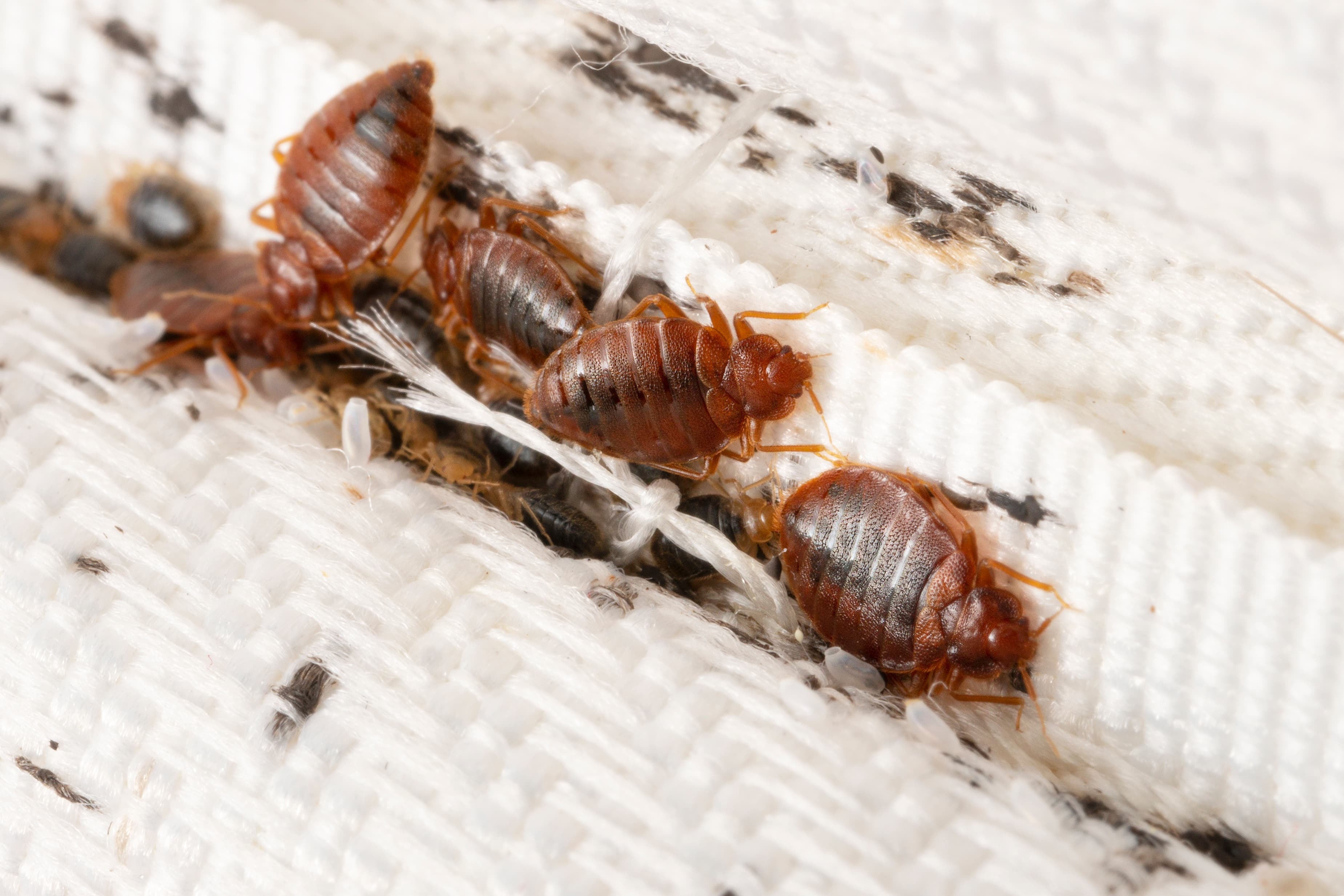
A detailed look at bed bugs infesting fabric seams, showcasing the alert for pest control measures in residential areas. (Credit: Shutterstock)
You found something on the mattress. A dark smear. A small, flat insect. Maybe a pattern of welts on your arm that wasn't there yesterday. The search engine rabbit hole starts — and within twenty minutes, you're oscillating between "it's probably nothing" and "I need to burn this bed."
Neither reaction helps. What helps is a clear framework: what bed bugs actually are, what evidence confirms their presence, what to do in the first 48 hours, and how to evaluate your treatment options without panic driving the decision. That is what this guide provides.
Bed bugs are a quality-of-life problem, not a health emergency. Health Canada confirms that they are not known to transmit disease. But they are persistent, psychologically draining, and — if mishandled in the first few days — easy to spread. The difference between a contained problem and a building-wide crisis often comes down to what you do before the exterminator arrives.
This guide is structured as five chapters that follow the order most homeowners actually experience the problem: identifying what you're dealing with, confirming it with real evidence, understanding why bites alone are unreliable, taking immediate containment action, and choosing the right treatment pathway. Read it in order or skip to the chapter that matches where you are right now.
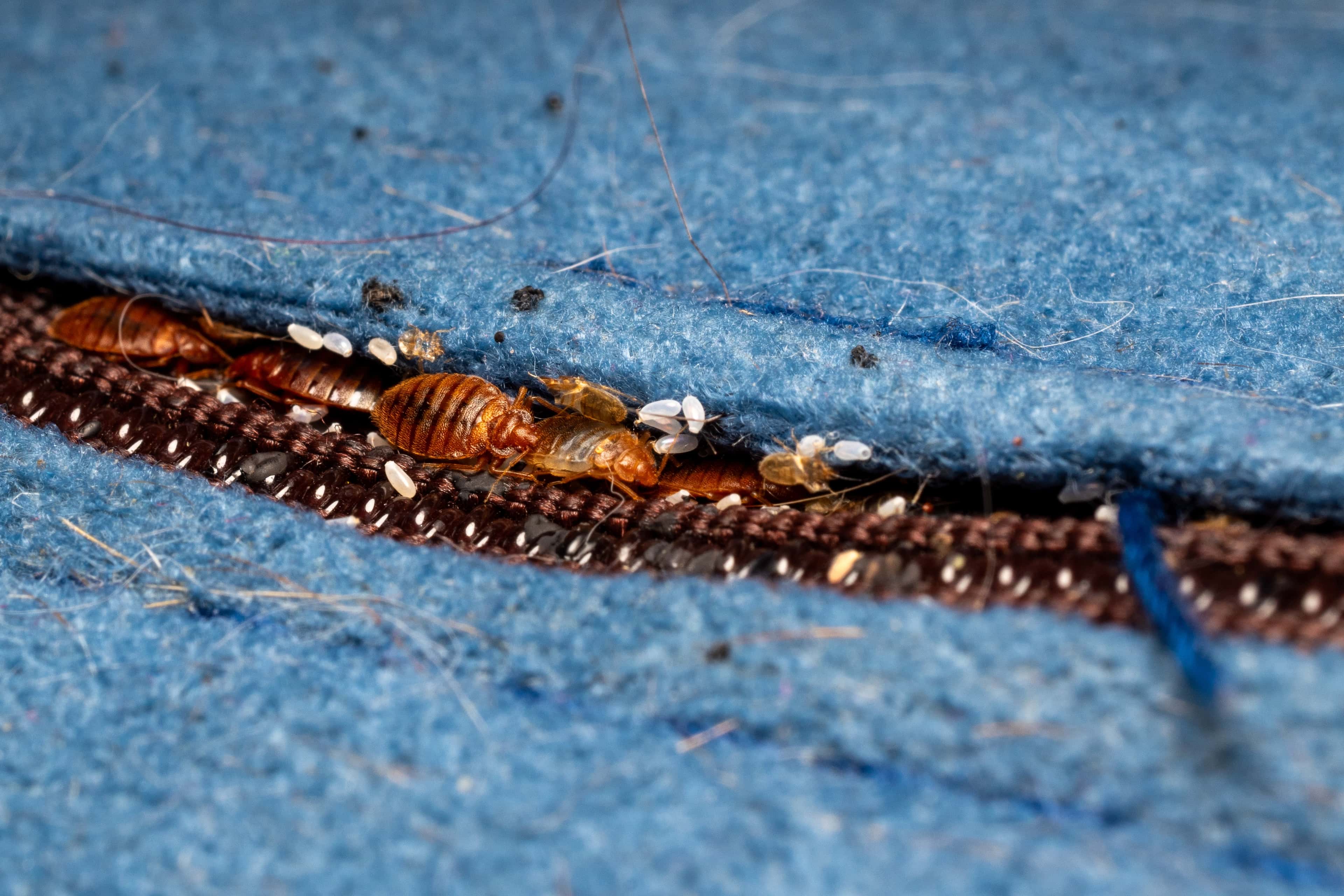
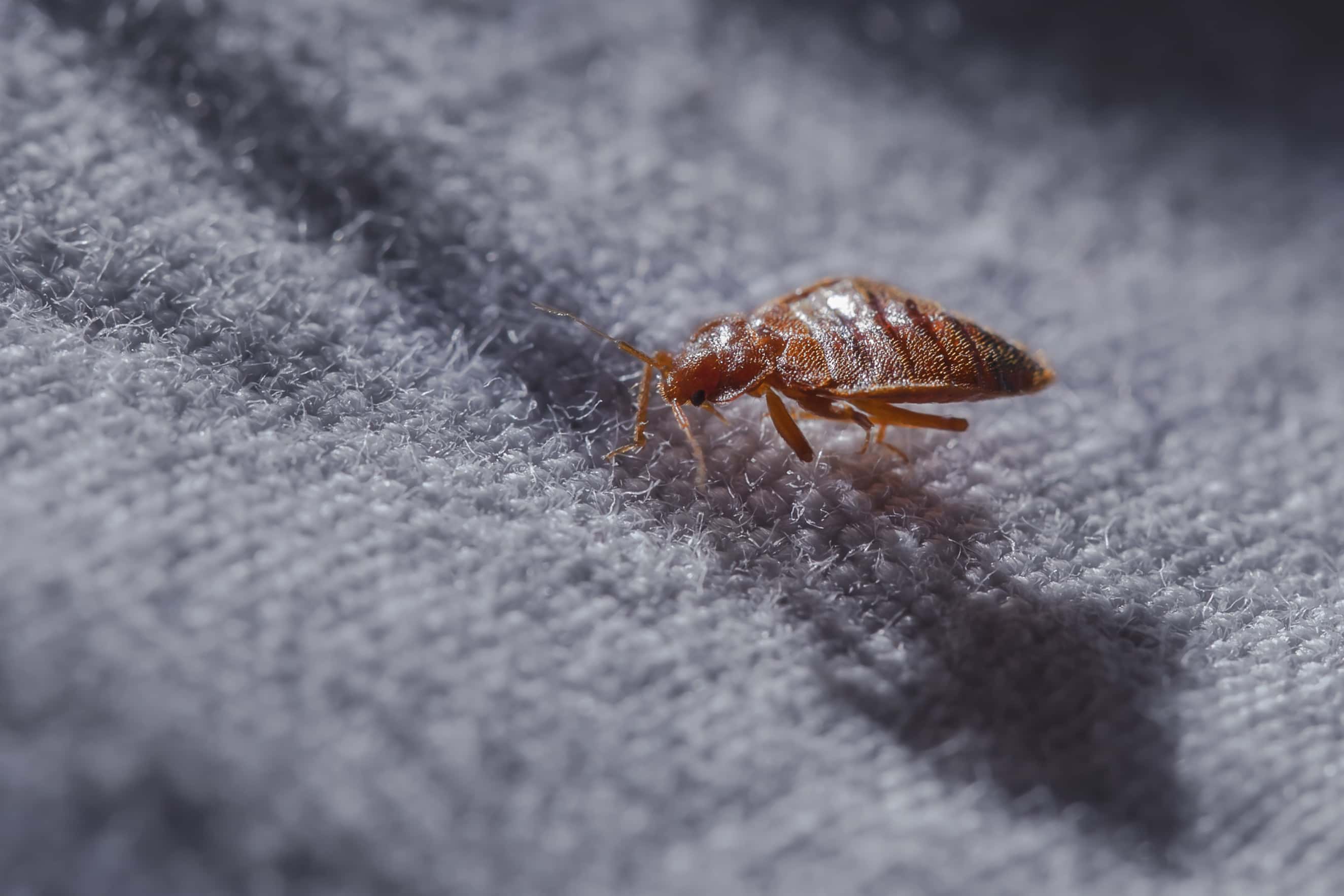
A bed bug is a small, wingless, blood-feeding insect. Adults are roughly the size of an apple seed — about 5 to 7 mm long — oval, flat, and brown. After feeding, they swell and darken to a reddish-brown. Nymphs (juveniles) are smaller, ranging from 1 to 5 mm, and translucent or pale before feeding. Eggs are roughly 1 mm, whitish, and typically glued into cracks where they are extremely difficult to spot without magnification.
They cannot fly. They cannot jump. They crawl, and they spread by hitchhiking — on luggage, furniture, clothing, electronics, books, and any item that moves between locations. This is how they arrive in your home, and it is how they move between rooms if containment fails.
Having bed bugs is not a sign of poor housekeeping. Public health agencies across Canada are explicit: anyone, in any type of housing — from five-star hotels to suburban homes to shelters — can get bed bugs. Infestations are not caused by dirt or neglect. Shame and stigma delay reporting and treatment, which increases spread. If you suspect bed bugs, the best thing you can do is act quickly and without embarrassment.
Bed bugs are nocturnal. During the day, they retreat to tight, dark harbourage sites close to where people sleep. Understanding their hiding preferences is the foundation of effective inspection.
Primary hiding zones (start here):
Secondary hiding zones (check these next):
In heavier infestations, bed bugs can spread to virtually any crack or crevice in a room. But early detection focuses on the bed and the furniture within arm's reach of it. That is where 70–80% of bed bugs in a typical infestation are concentrated.
Not all signs are equally reliable. Here is how to rank what you find:
The fecal spot wipe test is simple and useful. Dampen a cotton swab or white cloth and press it against a suspicious dark spot. Bed bug fecal matter — digested blood — will smear and leave a reddish-brown streak. Paint splatter, dirt, or mould will not.
You do not need professional equipment for a first inspection. Health Canada recommends a basic toolkit:
Step 1: Gather your tools. A flashlight, a rigid card (an old credit card cut to a triangle works well) for scraping seams and crevices, cotton swabs, rubbing alcohol or a damp white cloth for the wipe test, and a clear sealable container or zip-lock bag for collecting samples.
Step 2: Strip the bed. Remove all linens and pillows. Set them aside in a white plastic bag — do not carry them through other rooms yet.
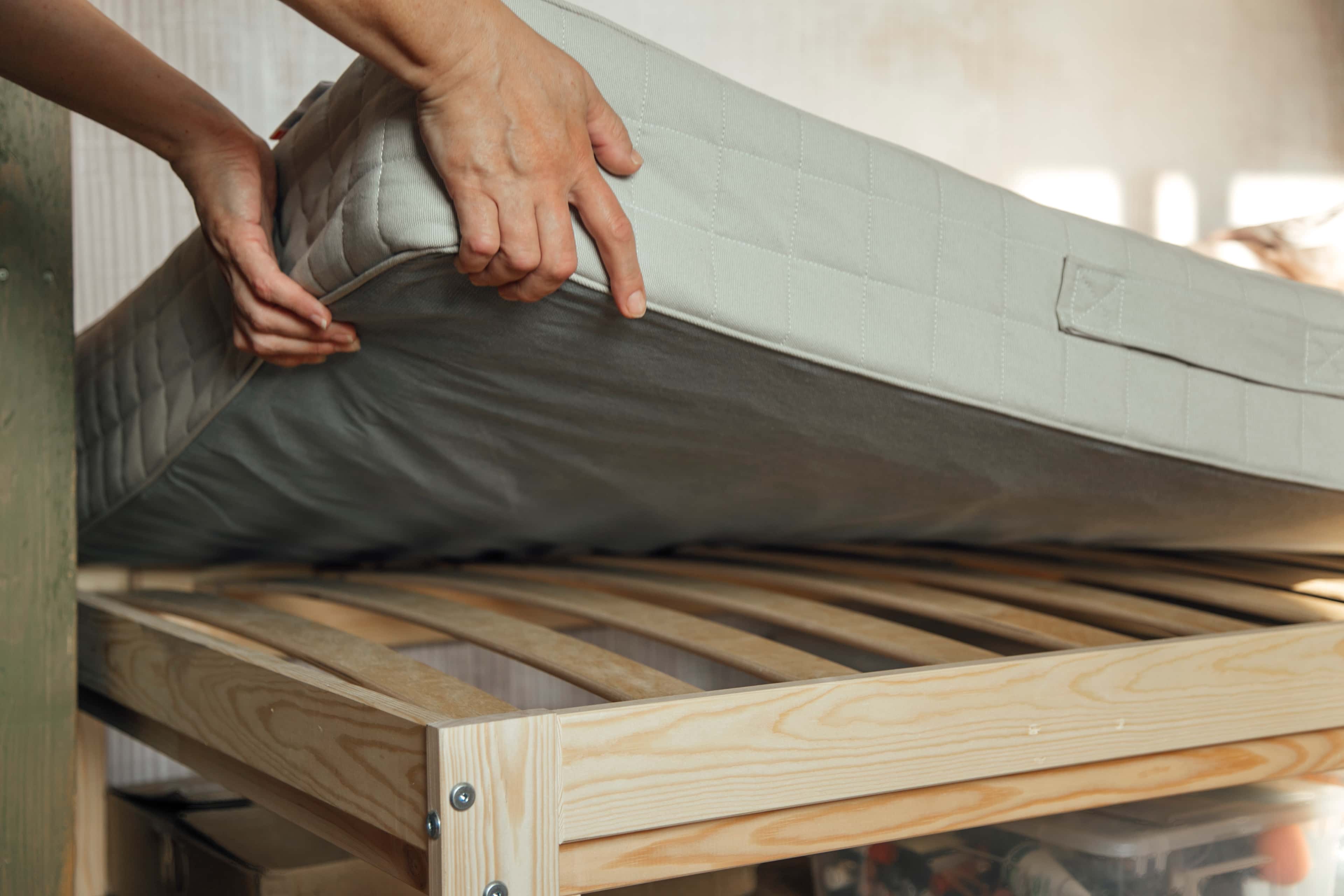
Step 3: Inspect the mattress. Slowly lift each corner. Run your flashlight along all seams, tufts, piping, handles, and air holes. Use the card to scrape along seams and check for insects, skins, eggs, or fecal spots.
Step 4: Inspect the box spring and frame. Check where the box spring meets the frame. Flip or tilt the box spring to inspect the underside fabric, especially along stapled edges. Examine the bed frame joints, screw holes, and any cracks.
Step 5: Expand outward. Check the headboard (front and back), nightstands, baseboards near the bed, and any upholstered furniture within a couple of metres. Remove electrical outlet covers if you are comfortable doing so — turn off the breaker first.
Step 6: Document everything. Photograph any evidence with your phone. Include a coin or ruler for scale. Note the date, location, and type of evidence.
If you find a suspected bed bug, Toronto Public Health advises collecting it for identification:
A preserved sample can save time. Some pest control companies and municipal public health offices can confirm identification without scheduling a full home visit.
Track your findings over days or weeks. Record the date, location (which room, which piece of furniture), type of evidence (live bug, fecal spot, cast skin, bite), and attach photos. This log gives a pest control professional a clearer picture of the infestation's scope and helps them prioritize treatment areas. It also creates a paper trail if you need to coordinate with a landlord or property manager.
This is the single most important thing to understand about bed bug bites: you cannot confirm or rule out an infestation based on skin reactions alone. The National Pesticide Information Center is unambiguous on this point, and Canadian clinical guidance reinforces it.
Here is why bites are unreliable:
The takeaway is straightforward. Bites are a clue, not a conclusion. If you have bites but no physical evidence of bed bugs after a thorough inspection, consider other explanations before spending money on treatment. If you have physical evidence — even without bites — you have a problem that needs attention.
If you are experiencing severe allergic reactions to bites (difficulty breathing, facial swelling, widespread hives), seek medical attention immediately. For persistent itching, over-the-counter hydrocortisone cream and oral antihistamines can provide relief while you address the underlying cause.
You have confirmed evidence of bed bugs — or strong enough suspicion to act. The next 48 hours are about containment: reducing your exposure, preventing the bugs from spreading to other rooms, and preparing the space for professional assessment. Every action in this section can be done without chemicals and without professional help.
1. Keep sleeping in the same room. This is counterintuitive, but it is critical. Health Canada specifically warns against moving to another bedroom. Bed bugs follow their host. If you relocate, surviving bugs will follow — or you will carry hitchhikers on your clothing and bedding — and start a new infestation in a previously clean room. Instead, make the bed safer.
2. Make your bed an island. This is the core containment tactic, and Ottawa Public Health outlines it clearly:
3. Heat-launder everything from the bed. Strip all linens, pillowcases, mattress protectors, and any clothing stored near the bed. Wash in hot water with detergent and dry on the highest heat setting for at least 30 minutes. Bed bugs die at temperatures above 50°C, and a standard household dryer on high comfortably exceeds that. Items that cannot be washed can go in the dryer alone on high heat for 30 minutes. Bag treated items in clean, sealed bags until the infestation is resolved.
4. Vacuum methodically. Use a vacuum with a crevice tool — a HEPA filter model is ideal. Vacuum all sides of the mattress, box spring, bed frame, headboard, baseboards, and any nearby upholstered furniture. After vacuuming:
5. Reduce clutter around the bed. The fewer hiding spots available, the fewer places bed bugs can harbour between feedings. Remove stacked books, magazines, clothing piles, and storage boxes from the floor near the bed. Bag items you are not using and seal them.
These are common instincts that backfire:
Do not use foggers or "bug bombs." They are ineffective against bed bugs because the pesticide droplets do not penetrate into hiding spots. Worse, they scatter bed bugs to adjacent rooms and wall voids, expanding the infestation. Professional pest management guidance consistently advises against them.
Bed bug treatment is not a single decision. It is a spectrum that depends on infestation severity, housing type, and budget. Here is how to think about it:
The containment actions described in the previous chapter — heat-laundering, vacuuming, bed isolation, decluttering — are not standalone treatments. They are support measures that reduce bite frequency, slow reproduction, and make professional treatment more effective. Canadian public health agencies are clear: bed bugs are very hard to eliminate and professional pest control is strongly recommended for confirmed infestations, especially in multi-unit buildings.
Additional DIY support steps include:
The initial inspection visit. A licensed pest control operator will inspect the home, confirm the infestation, assess severity, and recommend a treatment plan. Some companies use trained detection dogs for faster inspection in multi-unit buildings. Expect the operator to ask about your observations, examine the bed and surrounding furniture, and check adjacent rooms.
Chemical treatment. The operator applies targeted insecticides — typically a combination of liquid or aerosol sprays for exposed surfaces and dusts (such as diatomaceous earth or silica gel) for cracks and crevices. Treatment is directed at harbourage sites, not broadcast across the room. A second treatment is usually scheduled 10–14 days later to catch any nymphs that have hatched from eggs since the first application, because most insecticides do not kill eggs. Some infestations require a third visit. Estimated cost in Canada: $300–$1,500, depending on severity and property size.
Heat treatment. The operator raises room temperature to approximately 50–60°C using industrial heaters and fans, maintaining lethal temperatures for several hours. Heat kills all life stages — including eggs — in a single session. However, it provides no residual protection against re-introduction. Estimated cost in Canada: $1,200–$4,000+, depending on the size of the treatment area.
Integrated Pest Management (IPM). Canadian municipal and provincial resources recommend IPM as the best approach. IPM combines prevention, monitoring, physical controls, targeted chemical application, and ongoing assessment. It is not a single visit — it is a strategy. The pest control operator adjusts tactics based on results, and the homeowner continues support measures (laundering, vacuuming, monitoring interceptors) between professional visits.
Health Canada recommends these ongoing measures:
When returning from travel, Health Canada advises inspecting hotel rooms before unpacking (check mattress seams and headboard), keeping luggage off beds and floors (use the luggage rack or bathtub), and on returning home, vacuuming luggage and washing all trip clothing — dirty and clean — on hot with a minimum 30-minute hot dryer cycle.
No. Unlike lice or scabies mites, bed bugs do not live on the human body. They feed for a few minutes and then retreat to a nearby hiding spot. You may find them on clothing, but they do not burrow into skin or attach to hair.
They are primarily nocturnal feeders, but they will feed during the day if they are hungry and a host is present — for example, if someone naps on an infested couch in the afternoon. Darkness is a preference, not a requirement.
It is possible but uncommon. Bed bugs are most commonly spread through prolonged contact with infested furniture, luggage, or clothing. A brief sit on a bus seat is lower risk than staying in an infested hotel room or bringing home a used couch.
Not necessarily. In many cases, a combination of thorough vacuuming, steam treatment, and encasement can make the mattress safe to use during and after treatment. Discarding furniture should be a last resort, and if you do, wrap and label it properly to prevent spreading bugs to others.
In Canada, pest control operators should hold a valid provincial licence. Ask for their licence number, proof of insurance, and references. Check whether they are members of a professional association such as the Canadian Pest Management Association. Be cautious of operators who guarantee complete elimination in a single visit — that is rarely realistic.
Adult bed bugs can survive several months without a blood meal under favourable conditions, and some research suggests up to a year in cool, low-humidity environments. This is why Health Canada recommends leaving mattress encasements on for at least 12 months.
There is no scientific evidence that essential oils, ultrasonic devices, or other "natural" repellents effectively control bed bug infestations. Relying on these methods delays effective treatment and allows the infestation to grow.
Canadian public health agencies consistently confirm that bed bugs are not known to transmit diseases to humans. The main health impacts are skin reactions (ranging from none to itchy welts), secondary infections from scratching, and significant mental health effects including anxiety and insomnia.
Notify your landlord or property manager immediately. In multi-unit buildings, adjacent units should also be inspected because bed bugs travel through wall voids, electrical conduits, and plumbing chases. Coordinated treatment across affected units is far more effective than treating one unit in isolation.
Each has strengths. Heat treatment kills all life stages in a single session but costs more and provides no residual protection. Chemical treatment is more affordable but typically requires multiple visits because most products do not kill eggs. Many pest control professionals recommend combining both approaches within an IPM framework.
Your pest control operator will provide a specific preparation checklist. Common requirements include laundering and bagging all bedding and clothing, decluttering the treatment area, vacuuming thoroughly, and ensuring the operator has clear access to walls, baseboards, and furniture. Follow the checklist exactly — incomplete preparation reduces treatment effectiveness.
Bed bugs are cold-tolerant but not cold-proof. Sustained exposure to temperatures below -18°C for at least four days can kill them, but most household freezers may not reach or maintain that temperature consistently. Freezing individual items (in sealed bags) can work for small objects, but it is not a practical whole-room treatment strategy.
Landlord-tenant responsibilities for pest control vary by province and territory. This guide does not cover legal or tenancy disputes — contact your provincial tenant advocacy organization or landlord-tenant board for guidance specific to your situation.
Follow your pest control operator's timeline. For chemical treatment, treated surfaces typically need to remain undisturbed for several hours to a full day. Items stored in sealed bags can be returned once the operator confirms it is safe. Continue using encasements and interceptors as ongoing monitoring tools.
You can significantly reduce your risk but cannot guarantee complete prevention. Regular inspection of sleeping areas, careful handling of second-hand furniture, proper luggage management during travel, and awareness of the signs of infestation are the most effective prevention measures. Early detection is the best defence — a small, contained infestation is far easier and cheaper to treat than an established one.